

Drone Pilot Jobs in Canada: A Professional Career Guide for 2026
By 2033, the Canadian drone market is projected to reach a value of $19.5 billion. While the growth is undeniable, many aspiring operators find that simply owning a drone doesn't guarantee a seat at the table. You've likely realized that the path to securing drone pilot jobs Canada offers is often obscured by complex regulatory hurdles and the high cost of professional equipment. It's frustrating to invest in technology without a clear strategy for a return on that investment.
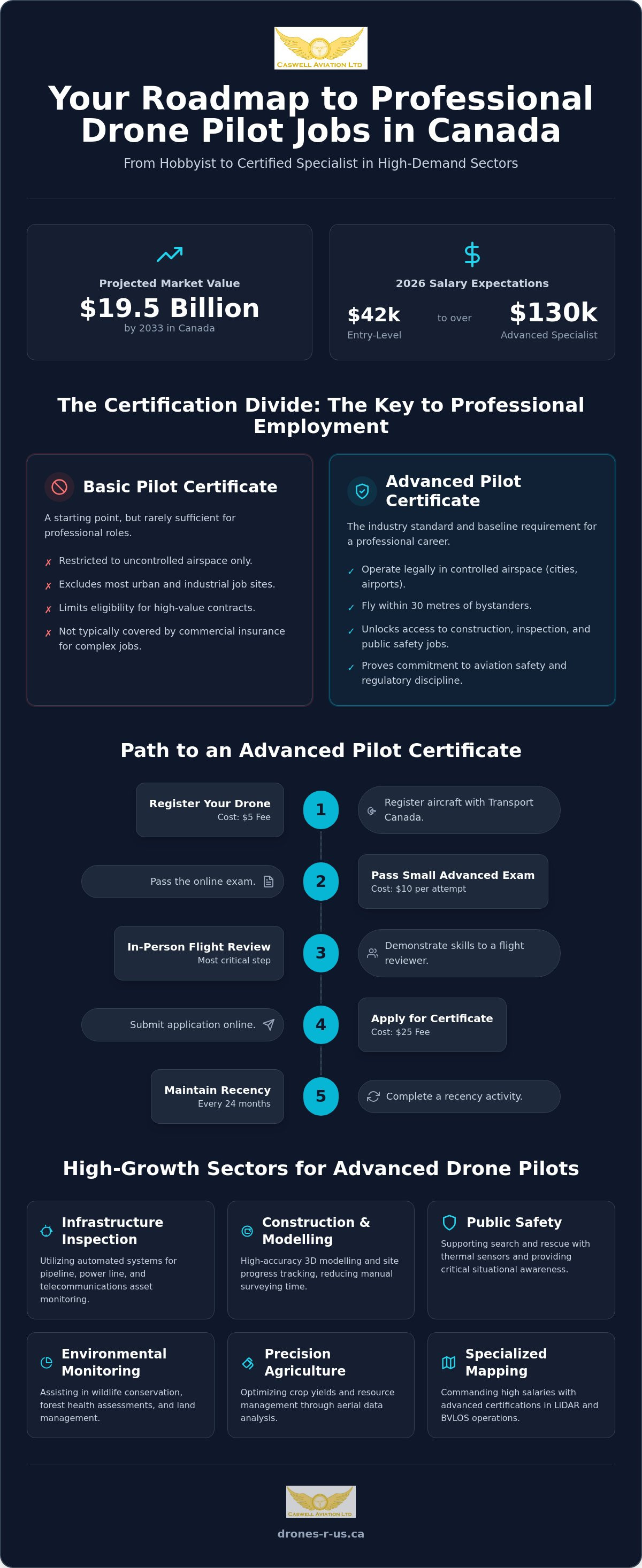
We've designed this guide to provide a grounded, professional roadmap for your career. You'll discover the exact steps required to transition from a hobbyist to a certified specialist in high-demand sectors like infrastructure inspection and specialized mapping. We will examine the current salary expectations for 2026, which range from $42,000 for entry-level roles to over $130,000 for advanced specialists. By the end of this article, you'll understand which Transport Canada certifications lead to the most stable employment and how to position yourself as a disciplined aviation professional in a competitive market.
Key Takeaways
- Identify the specific Transport Canada certifications required to move past basic operations and enter the professional workforce.
- Understand the transition from generalist flying to the specialized roles that define the current market for drone pilot jobs Canada has available.
- Learn which high-growth sectors, such as precision agriculture and 3D construction modelling, offer the most stable long-term career prospects.
- Master the professional standards for flight logging and portfolio development to prove your technical competency to hiring managers.
- Recognize the hardware and ergonomic requirements necessary to maintain safety and efficiency during intensive commercial field operations.
The Landscape of Drone Pilot Jobs in Canada for 2026
The Canadian Remotely Piloted Aircraft Systems (RPAS) market has moved past its experimental phase. In 2026, securing drone pilot jobs Canada offers requires more than just basic flight skills; it demands specialized technical knowledge. Employers no longer seek generalists who simply know how to fly. Instead, they prioritize data analysts, infrastructure inspectors, and precision agriculturists who use drones as professional tools. This shift toward specialization has created a distinct divide in the workforce between casual operators and disciplined aviation professionals.
Transport Canada compliance is the primary filter for modern HR departments. Without the proper credentials, a resume is typically discarded before a technical interview occurs. The role of RPAS in the modern economy is now foundational, supporting everything from telecommunications to resource management. This professionalization is reflected in the 2026 salary landscape. While entry-level pilots can expect to earn between $42,000 and $50,000 annually, those with specialized certifications in LiDAR mapping or BVLOS operations often command salaries exceeding $130,000. Professionals who invest in their credentials early find themselves in a much stronger position to negotiate these high-value contracts.
Emerging Sectors for Professional Pilots
The energy sector is currently a major employer of advanced pilots, utilizing automated systems for pipeline and power line inspections. Environmental monitoring has also become a significant field, where pilots assist in wildlife conservation and forest health assessments across Canada's vast wilderness. Additionally, public safety agencies have fully integrated drones into search and rescue operations, using thermal sensors to find missing persons in conditions where traditional ground teams might struggle. Construction firms also rely on RPAS for high-accuracy 3D modelling and site progress tracking, which significantly reduces the time required for traditional manual surveying.
Why a Basic Certificate Isn't Enough for Most Jobs
A Basic Pilot Certificate restricts you to uncontrolled airspace, which excludes the majority of urban and industrial job sites. From a corporate perspective, risk management is the deciding factor. Most commercial insurance providers won't cover operations in controlled airspace or near bystanders unless the pilot holds an Advanced Certificate. Adhering to Canadian drone regulations is a non-negotiable requirement for professional employment. Operating under a Basic certificate often limits your ability to respond to lucrative last-minute contracts in restricted zones, making you a less versatile asset for a flight department. Ultimately, your Transport Canada drone certification acts as a professional credential that proves your commitment to aviation safety and regulatory discipline.
Transport Canada Certification: Navigating the Path to Employment
Obtaining a Transport Canada drone pilot certificate is the definitive first step toward a career in this field. While many start with a Basic certificate, this level is rarely sufficient for professional employment. Most high-paying drone pilot jobs Canada offers in 2026 require an Advanced Pilot Certificate as a baseline requirement. This credential proves to employers that you possess the discipline to operate in controlled airspace and the technical knowledge to manage complex risks.
The path to professional certification is a methodical five-step process. First, you must register your aircraft for a $5 fee. Second, you must pass the Small Advanced Exam, which costs $10 per attempt. The third and most critical step is the in-person flight review. Fourth, once you've passed the review, you must apply for the certificate through the Transport Canada portal for $25. Finally, you must maintain your licence by completing a recency activity every 24 months. Staying compliant isn't just about following the law; it's about maintaining the professional standards that hiring managers expect.
Mastering the Advanced Drone Pilot Certification Canada
The Advanced certificate is the industry's minimum standard for urban or industrial work. It allows you to fly in controlled airspace and within 30 metres of bystanders, which are conditions found on almost every construction site or municipal project. Preparing for the Advanced Written Exam requires a deep understanding of meteorology, air law, and human factors. It's a rigorous assessment that filters out casual flyers. Preparing for your review with professional Advanced & Level 1 Complex Flight Reviews ensures you meet these high-stakes standards on your first attempt.
Level 1 Complex Operations: The Peak of the Career Ladder
In 2026, "Complex" operations define the highest tier of the industry. This involves flying over people using aircraft equipped with specialized safety parachutes or verified mitigation systems. Holding a Level 1 Complex Drone Certification Canada opens doors to high-tier corporate contracts that are unavailable to standard Advanced pilots. These roles often involve operating in the most challenging Canadian environments, from crowded urban centres to critical infrastructure hubs. It is the gold standard for those seeking the most lucrative and stable drone pilot jobs Canada provides for specialists.
High-Demand Sectors for Advanced Drone Pilots
The demand for drone operators has evolved beyond simple aerial photography. In 2026, the most lucrative drone pilot jobs Canada provides are found in sectors that require high-precision data collection. Industries such as agriculture now rely on RPAS for crop health analysis and precision spraying. Meanwhile, the telecommunications sector uses drones to inspect cell towers, which reduces the risk to human climbers. These roles require more than just flight proficiency. They require a deep understanding of industry-specific sensors and data processing workflows.
High-end cinematography remains a staple of the industry, particularly for real estate marketing and media production. However, the true growth is in technical fields where drones solve complex engineering problems. Professional pilots who can interpret thermal data or manage 3D modelling software find themselves in the highest demand. This specialization is what separates a professional from a hobbyist in the current Canadian market.
Construction and Progress Tracking
The construction industry has transitioned from using drones for static marketing photos to integrated Building Information Modelling (BIM) workflows. Modern project managers require accurate 3D models and orthomosaic maps to track site progress against architectural designs. This shift makes software proficiency in platforms like Pix4D or DroneDeploy as important as manual flight skills. For instance, Drone photography for construction in Calgary has demonstrated how weekly progress tracking can prevent costly grading errors. Pilots in this sector must understand coordinate systems and ground control points to ensure their data is survey-grade and actionable for engineers.
Specialized Industrial Inspections
Industrial inspections represent one of the fastest-growing segments for advanced pilots. Working near high-voltage power lines or volatile oil and gas infrastructure requires strict adherence to safety protocols and an Advanced Transport Canada drone pilot certification. Thermal imaging is now a standard tool for utility maintenance. It allows pilots to identify hot spots in electrical grids or structural weaknesses in wind turbines without shutting down operations.
Mastering flight in GPS-denied environments is another high-value skill. Pilots often need to fly inside boilers, under bridges, or within metal-heavy structures where satellite signals are blocked. These complex environments demand a calm, methodical approach and specialized hardware. Securing drone pilot jobs Canada in these niches often leads to long-term corporate contracts. Few operators possess the discipline and technical expertise to manage these high-risk missions safely while delivering the precision data that industrial clients require.
Building Your Career: From Flight Reviews to Full-Time Work
Transitioning from a newly certified pilot to a full-time professional requires a methodical approach to documentation and self-presentation. For those pursuing drone pilot jobs Canada offers, a flight log is your primary evidence of competency. It tracks not just hours, but the complexity of environments and airframes managed. Employers and insurance providers scrutinize these logs to verify your operational history and your ability to handle specific mission profiles. Maintaining a digital, backed-up log is a non-negotiable standard for any pilot seeking a career in the corporate sector.
A professional portfolio in 2026 isn't a collection of scenic photos. It is a technical showcase where you demonstrate your ability to generate accurate 3D models, thermal heat maps, or multispectral agricultural data. Show the process. Include examples of your pre-flight risk assessments and mission planning documents alongside your final deliverables. This transparency proves to hiring managers that you prioritize safety and regulatory discipline over simply capturing a visually appealing shot.
Networking within the Canadian aviation community is equally vital. Join organizations like the Canadian Owners and Pilots Association (COPA) or participate in industry-specific forums. These connections often lead to corporate opportunities before they are ever posted on public job boards. As you gain experience, you may choose to transition from a sole proprietor to a corporate drone pilot. This shift often involves moving into a flight department where you manage a fleet of aircraft and oversee complex regulatory compliance for a larger organization.
The Importance of Formal Training
Many self-taught pilots fail their Advanced Flight Review because they lack a structured understanding of air law and emergency procedures. Investing in professional drone training for small business in Alberta provides the discipline needed to pass these rigorous assessments. Choosing between online theory for flexibility and in-person sessions for practical skill development depends on your specific career goals. If you're ready to build a professional foundation, our Online Drone Courses and InPerson Training can help you master the technical requirements of the field.
Drafting a Drone-Specific Resume
A drone-specific resume must highlight more than just total flight hours. You should clearly list your certifications, specific airframes (such as DJI Enterprise or Autel series), and technical software proficiencies like GIS or AutoCAD. An often-overlooked but essential "add-on" is the Radiotelephone Operator's Certificate (ROC-A). This certificate allows you to communicate legally with air traffic control, which is a mandatory requirement for many high-tier industrial roles. Including these specific technical details is the most effective way to stand out when applying for the competitive drone pilot jobs Canada provides for specialists.
Professional Gear and Operations: Optimizing for Success
Professional drone pilot jobs Canada has available in 2026 require more than just basic flight skills; they require a commitment to using industrial-grade equipment. While consumer drones are excellent for initial practice, they often lack the sensor precision and redundancy required for high-stakes commercial contracts. Employers in sectors like energy and geomatics expect pilots to operate enterprise-level airframes that can deliver survey-grade data and withstand varied environmental conditions. Investing in professional hardware is a necessary step to move past entry-level roles and secure more lucrative corporate positions.
This commitment to professional-grade tools also applies to your training environment. Utilizing advanced simulation systems, such as the high-end full motion simulators from Race@Home, can help you develop the precise motor skills and situational awareness necessary to handle enterprise-level aircraft in challenging conditions.
Beyond the aircraft itself, your operational setup dictates your efficiency in the field. Professional missions often involve eight-hour days of continuous monitoring and data collection. Maintaining focus during these long shifts is critical for safety and data integrity. This focus is often supported by wearing appropriate gear; for example, high-performance premium fitness apparel Canada provides the comfort and mobility required for active days on-site. Pilots who neglect their operational setup often find that physical fatigue leads to avoidable errors. A disciplined approach to your gear, including how you manage your controller and monitor, is what separates a veteran operator from a novice.
The Role of Ergonomics in Professional Piloting
Pilot fatigue is a significant factor in operational incidents. When you are managing a complex mission in controlled airspace, your mental clarity is your most important asset. Physical strain from holding a heavy smart controller for hours can lead to a loss of precision in your control inputs. This is why choosing the best drone harness for smart controllers is a standard practice for industrial pilots. We utilize Fitek Gear Drone Harnesses for Smart Controllers to distribute the weight of the equipment across the torso. This setup enhances control and comfort during complex missions, allowing you to stay sharp and responsive throughout the entire workday.
Next Steps: Launching Your Career with Caswell Aviation Ltd
A Transport Canada certificate is a legal requirement, but it is the quality of your training that determines your employability. Our training programs at Caswell Aviation Ltd are designed to bridge the gap between holding a licence and performing a job with professional confidence. We focus on the procedural discipline that top-tier employers demand, including advanced mission planning and risk mitigation strategies. A mentor-led flight review offers more than just a certification; it provides a professional critique of your skills from an experienced practitioner. You can book your training or flight review at Caswell Aviation Ltd to ensure you meet the highest standards of the industry. By combining specialized training with professional-grade gear, you will be well-positioned to secure the most competitive drone pilot jobs Canada offers for the 2026 market.
Advancing Your Professional Aviation Career
Securing a position in the competitive market for drone pilot jobs Canada provides requires a commitment to technical excellence and regulatory discipline. You've seen that the transition from a hobbyist to a professional involves mastering specialized data collection, maintaining rigorous flight logs, and obtaining the necessary Transport Canada certifications. Whether you're targeting infrastructure inspections or precision agriculture, your success depends on the quality of your initial training and the reliability of your operational gear.
Caswell Aviation Ltd provides the resources you need to excel in this evolving industry. Our team of Transport Canada Qualified Flight Reviewers guides you through comprehensive Advanced and Complex training modules to ensure you meet the highest aviation standards. We also supply professional-grade Fitek Gear harnesses to help you maintain focus and precision during long field operations. By combining specialized knowledge with the right equipment, you'll be well-positioned to build a stable and lucrative career in the Canadian RPAS sector.
Get Certified for Your New Career at Caswell Aviation Ltd
The opportunities in 2026 are significant for those who treat drone piloting as a serious profession. We look forward to supporting your journey as you join the next generation of Canadian aviation experts.
Frequently Asked Questions
What is the average salary for a drone pilot in Canada in 2026?
Entry-level drone pilots in Canada generally earn between $42,000 and $50,000 annually. Experienced specialists in fields like LiDAR mapping or BVLOS operations can see salaries ranging from $70,000 to over $130,000. These figures vary based on your geographic location and the technical complexity of the missions you manage. Professional certification and specialized software skills are the primary drivers for higher pay in the current market.
Do I need a special licence to fly drones for work in Canada?
You must hold a Pilot Certificate issued by Transport Canada to fly any drone weighing between 250 grams and 25 kilograms for work. This is a legal requirement for all commercial operations in the country. Depending on your flight environment, you'll need either a Basic or an Advanced certificate. Operating without this credential can result in fines of up to $5,000 for commercial pilots and significant liability risks for your employer.
How do I get my Advanced Drone Pilot Certificate?
Obtaining an Advanced Certificate involves passing the Small Advanced Exam and completing an in-person flight review with a qualified reviewer. The exam fee is $10 per attempt, and there's a $25 fee to issue the certificate once you've passed your review. We recommend attending a professional flight school to prepare for these requirements. This structured approach ensures you meet the safety and regulatory standards necessary for high-tier drone pilot jobs Canada provides.
Can I get a drone pilot job with only a Basic Certificate?
While you can legally perform some work with a Basic Certificate, your employment options will be significantly limited. A Basic certificate restricts you to uncontrolled airspace and requires you to maintain a distance of 30 metres from bystanders. Most industrial and urban job sites are located in controlled airspace or near people, making the Advanced Certificate the practical minimum for professional employment. Employers typically prioritize candidates who can operate without these restrictive geographical limitations.
What industries hire the most drone pilots in Canada?
The agriculture, infrastructure, and energy sectors are currently the largest employers of professional drone pilots in Canada. These industries utilize RPAS for specialized tasks like crop health monitoring, pipeline inspections, and power line assessments. There's also significant growth in public safety and environmental conservation roles. Pilots who can provide technical data, such as thermal imaging or 3D models, find the most consistent opportunities across these high-demand fields.
How many flight hours do I need to be considered a professional?
There's no government-mandated minimum for flight hours, but most corporate employers look for at least 50 to 100 logged hours of commercial experience. Your flight log should demonstrate a variety of mission profiles and aircraft types rather than just total time in the air. For specialized roles, like industrial inspection, employers may require specific experience with enterprise-grade sensors. Consistency and a clean safety record are often more valuable than a high volume of unverified hours.
Is there a demand for drone pilots in the construction industry?
Demand in the construction industry is high, specifically for pilots who can produce BIM-integrated 3D models and orthomosaic maps. Drones are now essential for weekly site progress tracking and volumetric measurements of stockpiles. This technology helps project managers identify grading errors and maintain strict timelines. To succeed in this sector, you should complement your flight skills with proficiency in mapping software like Pix4D or DroneDeploy to deliver actionable data to engineers.
What gear do I need to start a professional drone career?
A professional career requires an enterprise-grade drone equipped with high-resolution or specialized sensors, such as thermal or multispectral cameras. You also need a reliable smart controller and ergonomic support gear, like a drone harness, to manage long field days safely. Commercial-grade insurance is a necessity to protect against liability. Investing in high-quality equipment and safety accessories ensures you can meet the rigorous operational standards expected in the 2026 drone pilot jobs Canada market.
Leave a comment