

Drone Advanced Written Exam Tips Canada: A 2026 Professional Study Guide
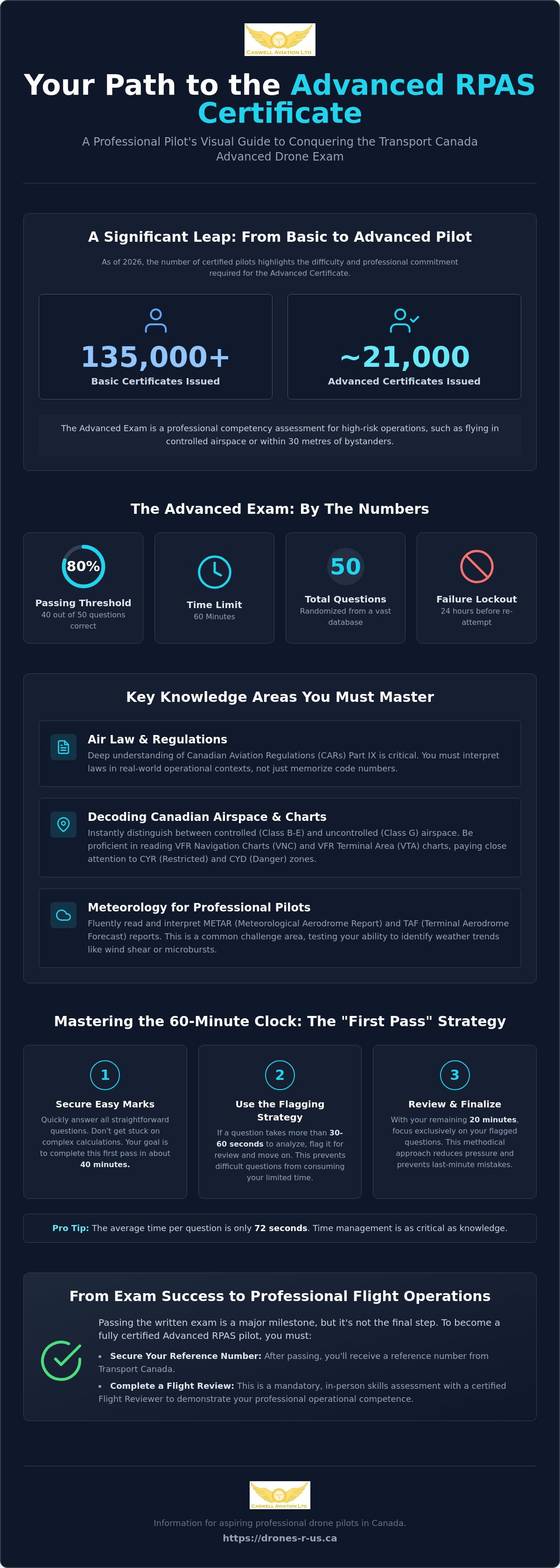
With over 135,000 Basic certificates issued compared to only about 21,000 Advanced Pilot Certificates as of 2026, the jump to professional operations is a significant challenge. If you're searching for drone advanced written exam tips Canada professionals use, you likely already realize that the 80% passing threshold and the strict 60-minute time limit for 50 questions make this exam a major hurdle. It's common to feel pressured by the clock, especially when you're trying to interpret complex METAR reports or navigate sectional charts that feel like a different language.
We understand that your goal is to pass on your first attempt and move toward your flight review with total confidence. This guide provides professional study strategies and technical insights that simplify the most difficult sections of the Transport Canada syllabus. We will examine the latest 2026 regulatory updates, clarify aviation weather patterns, and provide a methodical approach to managing your time during the test. By the end of this article, you'll have a clear, organized path to becoming a certified Advanced RPAS pilot and understanding your professional responsibilities in Canadian airspace.
Key Takeaways
- Understand the 80% passing threshold for the Advanced Small RPAS exam and why it requires a deeper technical understanding than the Basic certification.
- Identify critical knowledge areas including Air Law under CARs Part IX and the complexities of Canadian Airspace classifications.
- Discover essential drone advanced written exam tips Canada pilots use to organize digital resources like the Aeronautical Information Manual for rapid reference during the test.
- Learn the "First Pass" strategy to manage the 60-minute time limit and ensure you secure marks efficiently before tackling complex aviation weather questions.
- Prepare for the mandatory post-exam flight review by securing your Transport Canada reference number and understanding professional operational standards.
Understanding the Transport Canada Advanced Exam Challenge
The Small Advanced Exam serves as the primary gateway for pilots intending to operate in controlled airspace or within 30 metres of bystanders. This assessment is not merely a formality; the Advanced Exam is a professional competency assessment for high-risk drone operations. To succeed, you must move beyond the casual approach of the Basic certificate and adopt a disciplined aviation mindset. This shift involves understanding the deep legal framework of Canadian drone regulations, where every decision impacts public safety.
Achieving success requires more than just browsing the manual. Because Transport Canada pulls questions from a vast, randomized database, you can't rely on memorizing specific answers. Instead, you must understand the underlying principles of flight, meteorology, and air law. These drone advanced written exam tips Canada professionals rely on focus on building a foundational knowledge base that allows you to solve problems you haven't encountered before. It's about being prepared for the technical realities of the field.
The 80% Threshold: Why Precision Matters
The requirement to score at least 40 out of 50 questions is a deliberate safety measure. In professional operations, the margin for error is slim. Missing just 11 questions results in an immediate failure and triggers a 24-hour lockout before you can attempt the exam again. This high bar ensures that pilots operating near populated areas or within restricted zones possess the precision necessary to handle complex scenarios. You aren't just looking for the most likely answer. You're identifying the legally and technically correct response required by Transport Canada standards.
Time Management: The 72-Second Rule
Managing the 60-minute clock is often the most difficult part of the experience. You have approximately 72 seconds to read, analyze, and answer each question. While some regulatory questions are straightforward, others require significant time to process. Use these strategies to stay on track:
- Complex Calculations: Questions involving weight and balance or flight endurance can easily consume three to five minutes. Don't let these stall your progress.
- The Flagging Strategy: If a question takes more than 30 seconds to solve, flag it and move on. Secure the easier marks first to build a confidence buffer.
- Final Review: Aim to finish your first pass in 40 minutes. This leaves 20 minutes to address the flagged, high-difficulty items without rushing.
This methodical approach prevents the panic that often leads to avoidable mistakes in the final minutes of the session. When you treat the exam like a flight mission, your results will reflect that professional discipline.
Key Knowledge Areas You Must Master
Mastering the Advanced exam requires a shift from memorizing facts to understanding professional aviation standards. These drone advanced written exam tips Canada experts recommend prioritize the practical application of Air Law under CARs Part IX. You must be able to interpret regulations in the context of real-world flight operations rather than just reciting code numbers. This technical depth is what separates a professional pilot from a hobbyist.
Success in these areas builds the Pilot Decision-Making (PDM) skills required for safe operations. If you find these technical topics overwhelming, consider enrolling in online drone courses to receive structured, expert-led guidance. Mastering these knowledge areas is the only way to ensure safety and compliance in the field.
Decoding Canadian Airspace and Charts
Navigating the complexity of Canadian airspace is a core requirement for the 2026 certification standards. You need to distinguish between controlled airspace, such as Classes B through E, and uncontrolled Class G airspace instantly. VFR Navigation Charts (VNC) and VFR Terminal Area (VTA) charts provide the visual data needed to identify restricted zones. Pay close attention to CYR (Restricted) and CYD (Danger) designations. These are common areas for exam questions. Understanding these boundaries ensures you don't inadvertently enter airspace where you lack authorization.
Meteorology for Professional Drone Pilots
Weather interpretation is often the most challenging section for applicants. You must learn to read METAR and TAF reports fluently without relying on automated decoders. The exam tests your ability to identify trends, such as approaching wind shear or microburst conditions. Additionally, you must understand how density altitude, which is influenced by temperature and pressure, drastically alters RPAS performance. Cold Canadian winters also introduce the risk of airframe icing. This can lead to rapid lift loss and motor strain during critical flight phases.
RPAS Systems and Flight Theory
Professional competency includes a deep understanding of the four forces of flight: lift, weight, thrust, and drag. For multirotor pilots, this means knowing how motor RPM changes affect stability and battery drain. Lithium Polymer (LiPo) battery management is critical, especially when operating in sub-zero temperatures where voltage can drop unexpectedly. You must also be prepared to answer questions on emergency procedures, such as managing a fly-away or a link loss event. Knowing the physics behind these failures helps you respond with the precision required for an Advanced certificate.
Strategic Preparation: Online Courses vs. Self-Study
Deciding how to prepare for the Advanced exam is a choice between independent research and structured professional guidance. Self-study requires you to navigate the complexities of the Canadian Aviation Regulations (CARs) and the Aeronautical Information Manual (AIM) without a roadmap. This approach demands significant discipline and an ability to filter out irrelevant data. In contrast, online drone courses offer a curated experience that focuses strictly on what is required to pass the 2026 exam standards. This structured approach saves time and ensures you don't miss critical regulatory updates.
While Transport Canada officially recommends attending a flight school, they often fail to explain what makes a curriculum effective. A high-quality course doesn't just provide facts; it translates dry bullet points into operational knowledge. For those who require hands-on technical clarity, in-person training provides an opportunity to discuss nuances that digital text cannot fully convey. Applying practical drone advanced written exam tips Canada students have shared often leads back to the value of having a mentor to clarify complex airspace rules.
The Benefits of a Structured Curriculum
Information overload is a common reason for exam failure. A professional curriculum breaks down complex topics, such as Radio Theory and airspace coordination, into manageable modules. Instructors provide context that helps you understand the reasoning behind specific rules. Additionally, practice exams are essential for building the technical stamina required for the 50-question session. These simulations mirror the real test environment, allowing you to refine your 72-second-per-question pace and reduce test-day anxiety.
Essential Study Resources for 2026
Regardless of your chosen study method, you must be intimately familiar with specific regulatory documents. These serve as the primary sources for all exam questions:
- TC AIM (Aeronautical Information Manual): This document provides the official procedures and rules for all Canadian aviators.
- CARs Part IX: This is the legal foundation for drone regulations in Canada. You must understand every section related to Advanced operations.
For a comprehensive roadmap of the entire process, refer to The Complete Guide to Transport Canada Drone Certification. Using these resources correctly will ensure you are prepared for the technical rigour of the exam.
Exam-Day Tactics: Mastering the 60-Minute Clock
The 60-minute countdown begins the moment you click start. While some online forums suggest you can simply search your way to a passing grade, this is a dangerous misconception. The exam is an "open-book" test of your ability to find and apply information under significant pressure. To succeed, you must organize your digital resources before the timer starts. Have the CARs and the AIM open in indexed PDF format rather than relying on multiple browser tabs. These drone advanced written exam tips Canada professionals use ensure that you can locate a specific regulatory clause in seconds rather than minutes.
Mastering the search function requires knowing specific keywords. Instead of searching for general terms, use precise references like "901.25" or "visual line-of-sight" to jump directly to the relevant section. This level of preparation allows you to verify facts quickly without losing your rhythm. If you need a structured environment to practice these technical skills before the real test, you can book professional training to refine your exam readiness and technical knowledge.
Setting Up Your Testing Environment
Your physical workspace directly impacts your cognitive performance. The 60-minute clock does not pause for interruptions, so you must eliminate all potential distractions before beginning. A dual-monitor setup is highly recommended; keep the exam on one screen and your indexed references on the other. This setup prevents the constant switching of windows that leads to mental fatigue. Finally, verify that your internet connection is stable. A connection drop can lead to a "Technical Difficulties" reset, which adds unnecessary stress to an already high-stakes session.
How to Handle Ambiguous Questions
Transport Canada often phrases questions in a "best answer" format. This means multiple choices might seem plausible, but only one is technically complete according to the CARs. Use a process of elimination to narrow down your choices based on aviation logic. If you are stuck between two options, trust your initial instinct if you have studied the material thoroughly. Only spend time searching the CARs for questions where you have no clear lead to avoid draining your time bank.
The "First Pass" strategy is your most effective tool for time management. Aim to answer all easy, knowledge-based questions in the first 20 minutes. This builds a buffer for the final 40 minutes, which you can then dedicate to complex calculations or ambiguous regulatory interpretations. By the time you reach the final question, you should have enough time left for a focused review of any flagged items.
From Exam Success to Professional Flight Operations
Passing the Small Advanced Exam is a major milestone, but it's only the first phase of your professional journey. Once you submit your answers and receive your score, Transport Canada issues a unique Reference Number. This number is your ticket to booking a professional flight review, as it validates that you have mastered the theoretical requirements. These drone advanced written exam tips Canada pilots follow emphasize that the exam knowledge must now transition from the screen to the field. Professionalism involves applying those regulatory concepts directly to your pre-flight checklists and site risk assessments.
To understand the specifics of this practical assessment, read our guide on What is a Drone Flight Review in Canada?. Theory serves as the foundation, but the flight review is where you prove you can safely manage a mission in real-world conditions. This transition requires you to move from answering questions to executing procedures with precision.
The Flight Review: Putting Theory into Practice
During this evaluation, a flight reviewer will observe your ability to apply CARs Part IX in real time. They aren't just looking for flight skills; they are assessing your ability to conduct site surveys and deliver clear emergency briefings. This is the practical version of the written exam where theory meets operational reality. You must demonstrate that your knowledge of weather products and airspace boundaries translates into safe decision-making. For those looking to expand into high-risk environments, consider exploring Level 1 Complex Drone Certification Canada to further your professional capabilities.
Equipping the Professional Pilot
True mastery also involves the tools you use during long operational days. Professional pilots often use ergonomic equipment to maintain focus and safety. For instance, the role of a drone harness for smart controllers is critical in maintaining precise control while reducing physical fatigue during complex missions. A harness allows you to keep your hands free for adjustments or checklist reviews without compromising the safety of the flight.
Beyond your gear, remember that your Pilot Certificate, Advanced Operations does not expire, but it requires maintenance. You must complete a recurrent training activity every 24 months to remain compliant. This ongoing education ensures that you stay current with the evolving regulatory landscape of the Canadian drone industry. Staying disciplined in your study habits and operational standards will ensure a long, successful career in the RPAS sector.
Advancing Your Professional Aviation Career
Achieving a passing score on the Transport Canada Advanced exam requires a disciplined approach to both regulatory knowledge and technical time management. You now understand the importance of mastering CARs Part IX, interpreting aviation weather fluently, and using the 72-second rule to maintain your pace. By applying these drone advanced written exam tips Canada pilots can navigate the 60-minute clock with confidence and move closer to their required flight review.
Success in the written exam is the foundation for safe, compliant operations in controlled airspace. To ensure you are fully prepared for the technical rigour of the 2026 requirements, expert guidance is often the most efficient path forward. Start your professional journey with Caswell Aviation Ltd’s Online Drone Courses today. Our comprehensive online curriculum is specifically designed for the 2026 standards, and our Transport Canada qualified flight reviewers provide the expert support needed for Advanced and Level 1 Complex certifications. We look forward to seeing you in the air.
Frequently Asked Questions
Is the Canadian drone Advanced exam multiple choice?
Yes, the Small Advanced Exam consists of 50 multiple-choice questions. You must complete these questions within a 60-minute time limit. This format requires you to identify the most accurate regulatory or technical answer from four possible options. Because the questions are randomized from a large database, you'll need a comprehensive understanding of the subject matter rather than relying on simple memorization.
What happens if I fail the Transport Canada drone exam?
If you don't achieve the required passing grade, you must wait 24 hours before you can attempt the exam again. There is no limit on the number of attempts you can make, but you'll have to pay the $10 exam fee for each new session. This lockout period is designed to encourage further study and ensures that pilots don't simply guess their way through the technical requirements.
How much does the Advanced drone exam cost in Canada?
The fee for the Small Advanced Exam is $10 per attempt. After you successfully pass both the written exam and your flight review, you'll pay a separate $25 fee to apply for your Pilot Certificate – Advanced Operations. These are the standard fees set by Transport Canada for 2026. Applying specific drone advanced written exam tips Canada professionals recommend can help you avoid the cost of repeated attempts.
Can I take the Advanced exam without passing the Basic exam first?
Yes, you can take the Advanced exam without holding a Basic Pilot Certificate. Transport Canada doesn't require you to progress through the levels in any specific order. Many professional pilots choose to go directly to the Advanced level to save time and gain immediate access to controlled airspace operations. However, the technical difficulty is significantly higher, so thorough preparation is essential.
How long is the Transport Canada drone pilot certificate valid?
The Pilot Certificate – Advanced Operations doesn't have an expiry date. However, to keep your certificate valid for flight operations, you must complete a recurrent training activity every 24 months. This recency requirement ensures that professional pilots remain updated on the latest 2026 regulatory changes and safety protocols. Failing to complete this training will invalidate your privileges until the requirement is met.
Do I need to go to a drone flight school to pass the Advanced exam?
No, attending a flight school isn't a legal requirement, but Transport Canada strongly recommends it. The exam covers complex topics like METAR interpretation and airspace classifications that can be difficult to master through self-study. Professional training provides the structured drone advanced written exam tips Canada candidates need to navigate the 80% passing threshold and prepare for the subsequent flight review with confidence.
What is the passing grade for the Advanced drone exam?
The passing grade for the Small Advanced Exam is 80%. This means you must answer at least 40 out of the 50 questions correctly. This threshold is significantly higher than the 65% required for the Basic exam, reflecting the increased responsibility of flying in controlled airspace. Precision and a deep understanding of the CARs are necessary to meet this professional standard.
Can I use a calculator during the drone written exam?
Yes, you can use a calculator during the exam. Since the test is conducted online and is considered open-book, you're permitted to use tools that assist with technical calculations. You'll likely need a calculator for questions involving drone weight and balance, flight endurance, or unit conversions. Having your tools organized beforehand will help you stay within the 72-second-per-question time limit.
Leave a comment