

RPAS Complex Operations in Canada: A Guide to Level 1 Complex Certification
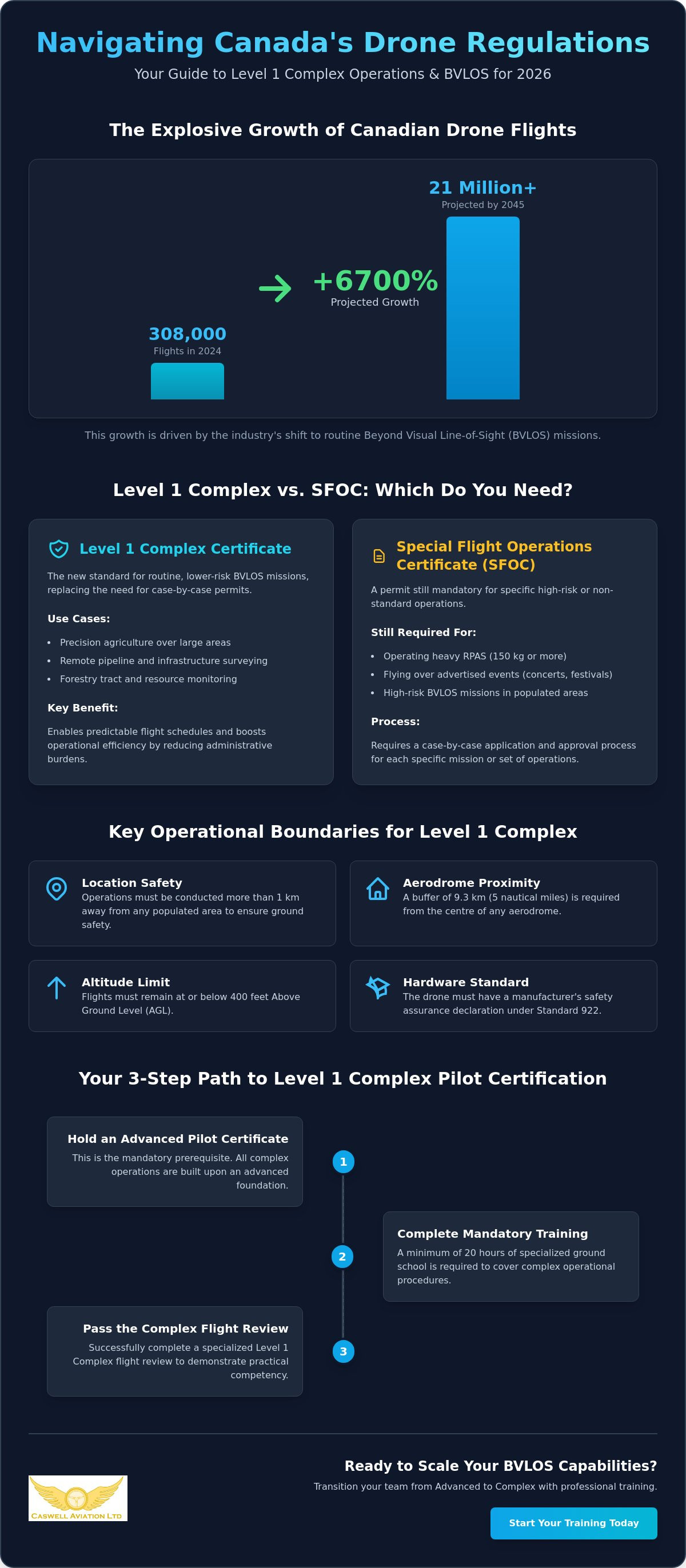
Did you know that drone flights in Canadian airspace are projected to surge from roughly 308,000 in 2024 to over 21 million by 2045? This massive growth is largely driven by the industry's shift toward routine Beyond Visual Line-of-Sight (BVLOS) missions. You might feel that the transition from Advanced to Complex categories is a daunting hurdle, particularly when trying to determine if your mission still requires an SFOC for complex drone operations Canada under the updated 2026 framework. It's common to feel overwhelmed by the technical requirements of Standard 922 safety declarations or the administrative weight of a new RPAS Operator Certificate (RPOC).
We understand that navigating these regulatory layers requires precision and a disciplined approach to aviation safety. This article will help you master the requirements for Level 1 Complex drone operations and show you how to scale your BVLOS capabilities. We'll examine the mandatory 20 hours of ground school, identify compliant hardware standards, and outline the steps to establish a professional RPOC to ensure your organization is ready for the future of Canadian flight.
Key Takeaways
- Understand how Level 1 Complex certification serves as the essential gateway for routine BVLOS missions in sectors like precision agriculture and infrastructure surveying.
- Identify specific scenarios that still require an SFOC for complex drone operations Canada, such as high-risk missions or operating heavy RPAS exceeding 150 kg.
- Master the two-step certification path, which requires a valid Advanced Pilot Certificate and the completion of a specialized Level 1 Complex flight review.
- Learn critical field safety protocols for complex missions, including identifying populated areas within 1 km and mitigating pilot fatigue during long-distance flights.
- Discover the framework for scaling your business from a single pilot to a professional RPAS flight department using the RPAS Operator Certificate (RPOC) model.
Understanding RPAS Complex Operations in Canada
The introduction of the Level 1 Complex category marks a significant shift in how Transport Canada manages national airspace. Historically, nearly every activity beyond the pilot's line of sight required a case-by-case SFOC for complex drone operations Canada. This process was often slow, and it created a bottleneck for companies ready to scale. The new Complex designation serves as a bridge, filling the regulatory gap between standard Advanced operations and high-risk, heavy-lift missions. It allows the industry to move toward routine, predictable flight schedules that don't rely on constant administrative approval.
Lower-risk BVLOS missions are now the backbone of modern Canadian industries. In precision agriculture, for instance, operators use these rules to monitor crop health over hundreds of hectares in a single flight. This provides a clear advantage over traditional line-of-sight methods that required multiple launch points. Similarly, in the surveying and resource sectors, drones inspect remote pipelines and forestry tracts without the pilot needing to follow the aircraft physically. By removing the requirement for individual permits for every flight, businesses realize a massive boost in operational efficiency and a much wider operational range.
What Qualifies as a Complex Operation?
A mission is classified as Level 1 Complex based on both the environment and the hardware used. Operations must occur more than 1 km away from any populated area to ensure ground safety. The aircraft must remain within uncontrolled airspace and fly at or below 400 feet above ground level (AGL). Additionally, manufacturers must provide a safety assurance declaration under Standard 922. This ensures the hardware is technically capable of the increased demands of BVLOS flight, whether the aircraft is a small or medium RPA. Understanding these boundaries is the first step before you apply for an SFOC for complex drone operations Canada for missions that fall outside these specific limits.
The Regulatory Framework for 2026
Transport Canada organizes these categories to maintain a high level of safety for all airspace users. Professional pilots must stay current with the latest Drone Regulations in Canada as they evolve to meet new technology. The 2026 framework reflects the full implementation of the November 2025 updates, which transitioned the industry from a permit-based system to a certification-based one. As you look to scale, professional Online Drone Courses and InPerson Training can help your team transition from Advanced to Complex status smoothly. Level 1 Complex operations are the legal standard for lower-risk BVLOS missions.
SFOC vs. Level 1 Complex: When Do You Need a Permit?
For years, pilots relied on a case-by-case application process to fly beyond their line of sight. This changed with the 2026 regulatory update. Now, many commercial missions that once required a lengthy application for an SFOC for complex drone operations Canada fall under the routine Level 1 Complex certificate. However, an SFOC remains mandatory for specific high-risk scenarios. If you plan to operate a heavy drone weighing 150 kg or more, or if your mission involves flying over advertised events like concerts or festivals, you must still apply for a certificate. High-risk BVLOS missions in populated areas also continue to require this specific permit.
The new system significantly reduces the administrative burden for lower-risk commercial missions. Instead of waiting for individual mission approvals, organizations can now establish an RPAS Operator Certificate (RPOC). This shifts the focus from individual pilot responsibility to a structured organizational standard. It requires an accountable executive and documented safety procedures, which provides a more professional framework for long-term operations. To build your foundation in these rules, you can consult our Transport Canada drone certification guide for detailed info.
Operational Limits and Airspace Navigation
Distinguishing between Advanced and Complex categories is vital for compliance. Advanced operations typically focus on proximity to people and navigating controlled airspace near urban centres. In contrast, Level 1 Complex operations prioritize distance from the pilot in unpopulated zones. One critical constraint for Complex missions is the 9.3 km buffer required from the centre of any aerodrome. Pilots must follow Transport Canada drone safety guidelines to ensure they aren't infringing on traditional aviation paths during their missions.
Hardware and Safety Declarations
You must realize that not every drone is legally capable of BVLOS flight. Manufacturers must submit a safety assurance declaration stating their aircraft meets Standard 922 requirements. This technical standard covers the reliability of the command and control links and the aircraft’s ability to remain airworthy during extended missions. Before investing in new equipment, check the Transport Canada list of declared systems to ensure your hardware is pre-validated for Complex flights. If you are unsure about your current fleet's status, our team can provide expert Advanced & Level 1 Complex Flight Reviews to verify your operational readiness.
Requirements for Level 1 Complex Pilot Certification
Transitioning to complex operations isn't just about upgrading your gear; it's about adhering to a higher standard of pilot competency. To move beyond the need for a case-by-case SFOC for complex drone operations Canada for routine missions, you must follow a specific regulatory path. This process ensures that every pilot operating BVLOS has the discipline and technical knowledge to manage an aircraft without direct visual contact. The certification process is methodical and requires a commitment to both theory and practical application.
- Maintain an Advanced Pilot Certificate: You must be at least 18 years old and hold a valid Small Advanced certificate before pursuing complex status. This serves as the mandatory prerequisite for all higher-level certifications.
- Complete Ground School and the Complex Exam: Transport Canada requires a minimum of 20 hours of ground school from a recognized flight school. After completing your studies, you must pass the 50-question Level 1 Complex online exam, which costs C$50.85, with a score of 80% or higher.
- Pass a Complex Flight Review: This in-person assessment focuses on your ability to manage BVLOS-specific risks rather than basic flight manoeuvres.
- Operate under an RPOC: Individual certification is only one piece of the puzzle. Your flights must be conducted under an organization's RPAS Operator Certificate (RPOC) to remain compliant with 2026 standards.
Preparing for the Complex Flight Review
During a professional flight review for complex operations, the reviewer assesses your ability to manage a mission through telemetry and remote sensors. You must demonstrate mastery over BVLOS emergency procedures, such as link loss protocols and unexpected airspace incursions. Stick skills are secondary to your ability to maintain situational awareness through your ground control station. It's helpful to understand What is a Drone Flight Review in Canada? before you book your session to ensure your procedures are up to date. Integrating tools like NAV CANADA Drone Flight Planning into your pre-flight routine will show the reviewer you prioritize national airspace safety.
Maintaining Pilot Recency and Safety
Earning your certificate is only the beginning. To keep your status valid, you must complete a recurrent training activity every 24 months. The 2026-27 edition of Transport Canada's self-paced study program is an efficient way to satisfy this requirement. Beyond the legal mandate, organizing your flight logs is a practical necessity for satisfying potential Transport Canada audits. A well-maintained logbook proves your operational history and commitment to safety standards. While the Level 1 certificate covers many routine scenarios, the discipline you build through recency remains essential if you eventually need to apply for an SFOC for complex drone operations Canada for a high-risk or heavy-lift project.
Field Operations: Safety, Ergonomics, and Gear
Executing a successful Level 1 Complex mission requires a shift in how you approach field safety. Unlike standard line-of-sight flights, BVLOS operations demand a rigorous site survey to ensure the aircraft remains at least 1 km away from any populated areas. This buffer is a hard regulatory requirement designed to protect the public in the event of a technical failure. If your pre-flight assessment reveals that you cannot maintain this distance, or if your mission involves flying over an advertised event, you must instead apply for an SFOC for complex drone operations Canada. Safety in the field is a matter of discipline, not just documentation.
Pilot fatigue is a significant risk factor during extended BVLOS missions. When you are no longer looking at the aircraft, your focus shifts entirely to the telemetry and video feed on your ground control station. This mental load, combined with the physical weight of holding a smart controller for several hours, can lead to decreased precision. Maintaining a high level of situational awareness requires more than just technical skill; it requires physical stamina. Professional operators prioritize ergonomics to ensure they stay sharp from takeoff to landing, especially when navigating uncontrolled airspace at the 400-foot AGL limit.
Maximizing Pilot Comfort with Professional Gear
Long missions are physically demanding on the neck and back. Using a drone harness for smart controller is essential for maintaining stability during complex manoeuvres. These tools distribute the weight of the hardware across your shoulders, which reduces strain and allows for more granular control over the joysticks. Fitek Gear harnesses are designed specifically for this purpose, supporting a disciplined flight posture that mirrors traditional aviation standards. If you want to improve your operational endurance, you can browse our professional drone harnesses to find the right fit for your kit.
Pre-Flight Checklists for Complex Missions
A structured approach to the flight line prevents avoidable errors. Your Transport Canada compliant drone operations checklist should include a verification of uncontrolled airspace status and a confirmation that you are outside the 9.3 km aerodrome buffer. You must also verify that your drone registration is current and that your Pilot Certificate is accessible, either digitally or in print. Weather requirements are also more stringent for complex flights; you must confirm that visibility and cloud clearance meet the specific operational limits defined in your RPOC. These steps ensure that every mission is conducted with the same level of precision expected of a commercial aviator.
Scaling Your Professional RPAS Operations
Scaling a drone business involves more than just adding aircraft. It requires a transition from a solo operator mindset to a structured RPAS flight department. This growth often necessitates a deeper understanding of when to rely on Level 1 Complex certification versus when to apply for an SFOC for complex drone operations Canada. Establishing an RPAS Operator Certificate (RPOC) is the primary step for organizations looking to formalize their procedures. This framework ensures that safety protocols remain consistent even as you add more pilots and more sophisticated hardware to your fleet. It provides the accountability required by Transport Canada for routine BVLOS operations. For larger organizations, integrating mission-critical visualization solutions from Activu Corporation can help manage the high-density data feeds typical of a professional control room environment.
Choosing a veteran mentor for advanced and complex training provides a competitive edge. Experience in traditional aviation brings a culture of discipline and thoroughness that is often missing in the rapid tech sector. Caswell Aviation Ltd supports national drone operations across Canada by bridging this gap. We provide the technical authority needed to handle the 2026 regulatory landscape while remaining approachable as a local service provider. Whether you are looking to expand into precision agriculture or industrial inspections, having a partner who understands the weight of compliance is essential for long-term success. We help you move from basic flight to mission-critical operations with confidence.
Online and In-Person Training Pathways
Professional development in the RPAS sector requires a blended approach. Online drone courses offer the flexibility needed to master theory and prepare for the Level 1 Complex online exam. However, in-person training remains a necessity for mastering complex field operations. Real-world instruction allows pilots to practice BVLOS manoeuvres under the guidance of an expert. This hands-on experience is where you learn to manage telemetry lags and sensor failures in a controlled environment. It significantly reduces the risk of common pilot errors that lead to costly equipment damage or regulatory fines. This combination ensures that your team is not only certified but truly competent in high-stakes environments.
The Caswell Aviation Ltd Advantage
Our team leverages years of aviation expertise to ensure your organization remains fully compliant with Transport Canada standards. We don't just teach the rules; we help you build a culture of safety. Beyond certification, we provide access to high-quality aerial imagery services for industrial applications. This allows you to realize the full potential of your RPAS fleet while maintaining the highest technical standards. The next step in your professional journey is ensuring your pilots are ready for the field. You can Book your Advanced or Level 1 Complex Flight Review with Caswell Aviation Ltd today to secure your place in Canada's growing drone economy.
Preparing for the Future of Canadian BVLOS Flight
Level 1 Complex certification provides the essential framework needed to move beyond the constraints of standard line-of-sight missions. By mastering the mandatory ground school requirements and completing a specialized flight review, you ensure your operations are both compliant and professional. While certain high-risk missions or heavy-lift projects still require a specific SFOC for complex drone operations Canada, this new tiered system allows most commercial teams to scale through an established RPAS Operator Certificate. Success in this sector depends on a disciplined approach to both regulatory knowledge and field execution.
You don't have to navigate these technical hurdles alone. Our team offers comprehensive online and in-person training pathways led by Transport Canada qualified flight reviewers. We also provide specialized Fitek Gear ergonomic harnesses to maintain your precision during extended missions. Master your complex operations with Caswell Aviation Ltd training and flight reviews. We are ready to help you reach your professional aviation goals with confidence.
Frequently Asked Questions
What is the main difference between Advanced and Level 1 Complex operations?
The primary difference lies in the visual requirement and the operational environment. Advanced operations focus on flying within the pilot's visual line of sight near people or in controlled airspace. Level 1 Complex operations allow for Beyond Visual Line-of-Sight (BVLOS) flight, provided the aircraft remains in uncontrolled airspace and stays away from populated zones.
Can I fly BVLOS with just an Advanced Drone Pilot Certificate?
No, an Advanced certificate alone does not permit BVLOS flight in Canada. You must obtain a Level 1 Complex Pilot Certificate or apply for a mission-specific SFOC for complex drone operations Canada. This process ensures the pilot has completed the mandatory 20 hours of ground school and passed the required complex flight review for lower-risk BVLOS missions.
What is an RPAS Operator Certificate (RPOC) and do I need one?
An RPAS Operator Certificate (RPOC) is an organizational-level requirement for businesses conducting BVLOS missions. It involves appointing an accountable executive and documenting formal safety and training procedures. If you are conducting complex operations under the current framework, your missions must be conducted under a valid RPOC to remain compliant with Transport Canada regulations.
How do I know if my drone is eligible for Level 1 Complex operations?
Eligibility depends on the manufacturer's safety assurance declaration. The aircraft must meet the technical standards of Standard 922 for complex operations. You can verify this by checking the Transport Canada list of declared systems or by reviewing the safety assurance documentation provided by your drone manufacturer to ensure it meets BVLOS requirements.
How far away from people must I be for a Complex operation?
You must maintain a distance of at least 1 km from any populated area during a complex operation. This buffer is a critical safety requirement for lower-risk BVLOS flights. If your flight path requires closer proximity to people or urban centres, you will likely need to apply for a high-complexity SFOC for complex drone operations Canada instead.
Does a Level 1 Complex certificate allow me to fly in controlled airspace?
No, Level 1 Complex operations are strictly limited to uncontrolled airspace. Flights must also remain at or below 400 feet above ground level (AGL). If your mission requires entry into controlled airspace, you must follow standard NAV CANADA authorization protocols or seek a specific SFOC depending on the nature and risk level of the operation.
How long is the Level 1 Complex Pilot Certificate valid in Canada?
The certificate itself does not have an expiry date, but your right to exercise its privileges depends on meeting recency requirements. You must complete a recurrent training activity every 24 months. This is typically achieved by completing the Transport Canada self-paced study program to ensure your knowledge of current regulations and safety protocols remains up to date.
What are the penalties for flying complex operations without the proper certificate?
Flying without the proper certification can result in substantial fines under the Canadian Aviation Regulations. Individuals can face penalties of up to $5,000, while corporations may be fined up to $25,000 for non-compliance. Additionally, unauthorized operations can lead to the suspension of your pilot certificate and may jeopardize your ability to secure drone insurance or future operational permits.
Leave a comment