

Golf Course Drone Photography Calgary: The 2026 Professional Standards Guide
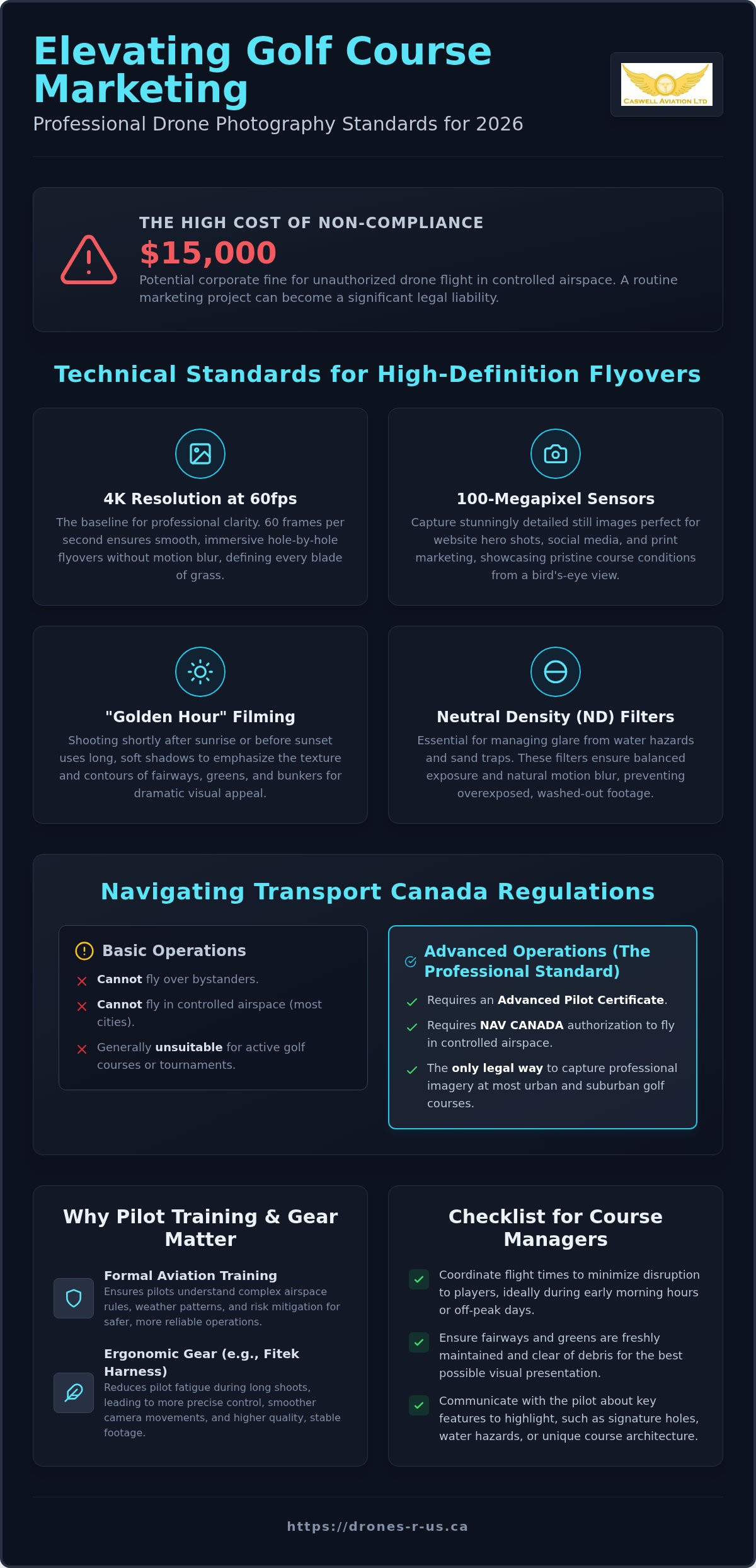
Unauthorized drone flight in controlled airspace can result in corporate fines of up to $15,000, turning a routine marketing project into a significant legal liability. For course managers and tournament organizers, the desire for high-impact visuals often clashes with the complexities of aviation law. You recognize that professional golf course drone photography Calgary is no longer just a luxury; it's a standard requirement for competitive digital marketing. However, the risk of hiring an uncertified pilot or receiving poor-quality imagery that fails to capture the true layout of your greens is a valid concern.
We understand the need for a balanced approach that prioritizes both artistic excellence and rigorous safety protocols. This guide provides a comprehensive look at the 2026 professional standards for aerial imagery. You'll discover how to transform your course marketing through stunning hole-by-hole flyovers while ensuring full compliance with Transport Canada regulations. We'll cover everything from the technical benefits of 100-megapixel sensors to the necessity of Advanced Pilot Certificates and NAV CANADA authorizations, giving you total peace of mind for your next tournament or seasonal promotion.
Key Takeaways
- Learn how 4K resolution and 60fps frame rates create immersive hole-by-hole flyovers that traditional ground-level photography cannot match.
- Understand the critical legal distinction between Basic and Advanced operations to ensure your golf course drone photography Calgary project remains fully compliant with Transport Canada.
- Access a practical checklist for course managers to prepare fairways and greens for an aerial shoot while minimizing disruption to players.
- Discover why hiring pilots with formal aviation training and ergonomic gear, such as Fitek harnesses, leads to more stable footage and professional results.
- Realize the importance of "golden hour" lighting to emphasize the texture of fairways and enhance the visual appeal of your marketing materials.
Elevating Golf Course Marketing with Professional Aerial Imagery
Professional golf course drone photography Calgary has transitioned from a novel luxury into a fundamental marketing requirement. In a competitive local market, relying on traditional ground-level photography is often insufficient to capture the full scope of a property. High-definition 4K flyovers provide an immersive experience, allowing potential players to understand the strategic flow of each hole before they even step onto the first tee. This shift toward aerial perspectives offers a comprehensive view of the course architecture that ground shots simply cannot replicate. It allows a club to tell a story about its landscape, maintenance standards, and overall prestige through a specialized drone aerial photography and video service.
By utilizing advanced drone technology, clubs can highlight their signature holes and unique landscape features from angles that were previously only accessible via expensive helicopter charters. These visuals emphasize the designer's intent, showing the strategic placement of bunkers, water hazards, and green contours. Because these operations are governed by strict unmanned aerial vehicle regulations, professional services ensure that these stunning views are captured safely and legally. This technical discipline is what separates a professional marketing asset from a hobbyist's video.
The Impact on Membership and Green Fee Sales
Visualizing the course layout is vital for converting website visitors into members or green fee payers. High-definition video serves as a virtual tour, giving prospective members a clear sense of the facility’s value and aesthetic appeal. Beyond video, aerial stills act as powerful hero images for websites and social media platforms. They provide immediate proof of excellent course conditions, showcasing lush fairways and pristine greens from a bird's eye view. This level of transparency builds trust with golfers who want to ensure the course is in peak condition before booking a round. It’s an effective way to communicate maintenance quality without requiring a physical site visit.
Aerial Visuals for Tournament and Event Promotion
Drones are uniquely suited to capturing the scale and energy of major tournaments and clubhouse events. Creating dynamic promotional reels for corporate golf days or weddings helps the sales team demonstrate the venue's versatility and scenic beauty. These visuals also create new revenue streams through specialized sponsor opportunities. High-quality aerial footage can be edited to include branded overlays, providing sponsors with premium visibility that traditional signage lacks. For club tournaments, drone imagery captures the atmosphere of the day, from the crowded practice range to the final putt on the eighteenth green. This creates a lasting record that encourages future participation and enhances the club's professional image.
Technical Standards for High-Definition Course Flyovers
High-quality golf course drone photography Calgary requires specific hardware settings to ensure professional results. Shooting in 4K resolution is the baseline for clarity, but the frame rate is equally critical. Capturing at 60fps allows for smooth hole-by-hole transitions, especially during fast-paced flyovers where lower frame rates often cause jarring motion blur. This technical precision ensures that every blade of grass and bunker edge remains sharply defined. Adherence to Transport Canada drone regulations is also a prerequisite for any commercial operation, ensuring that these high standards are met within a legal and safe framework.
Lighting plays a decisive role in the final aesthetic of a course. Scheduling flights during the 'golden hour', the period shortly after sunrise or before sunset, emphasizes the texture of fairways and greens through long, soft shadows. To manage the intense glare from water hazards and white sand traps, professional pilots utilize Neutral Density (ND) filters. These act as sunglasses for the camera, maintaining a natural motion blur and balanced exposure without overexposing the bright elements of the landscape. This level of detail is necessary for capturing precise topographical data that accurately represents the course's challenges.
Optimizing Angles for Strategic Course Overviews
Achieving the right perspective involves more than just gaining height. Pilots must calculate the ideal altitude to show both the green and the approach, usually between 30 and 60 metres depending on the specific terrain. Using subtle gimbal movements helps reveal hidden hazards or doglegs that aren't visible from the tee box. A balanced portfolio includes wide-angle panoramic shots to show the course's scale, contrasted with detailed close-ups of the 18th green to highlight the club's flagship features. These varied angles provide a comprehensive strategic overview for the golfer.
The Importance of Pilot Stability and Precision Gear
Precision flight paths are impossible without stable control over the aircraft. This is why professional pilots often utilize a drone harness for smart controller to distribute the weight of the equipment across the torso. Reducing pilot fatigue directly impacts the quality of the footage; a comfortable pilot can focus entirely on the cinematography rather than struggling with a heavy remote. High-quality hardware and ergonomic tools are the foundation of professional-grade imagery. If you're looking to improve your own results, investing in professional drone services can ensure your marketing materials meet these rigorous standards.
Navigating Transport Canada Regulations for Golf Course Operations
Operating a drone for commercial purposes requires a disciplined approach to aviation law. It is not merely about taking photos; it involves adhering to a strict regulatory framework designed to ensure public safety. In Canada, the distinction between Basic and Advanced operations is determined by the proximity to bystanders and the classification of the airspace. Most projects involving golf course drone photography Calgary fall under Advanced operations because the flight often occurs within 30 metres of golfers or staff. Choosing an uncertified pilot exposes the club to significant legal risk, as unauthorized flight in controlled airspace can result in corporate fines of up to $15,000.
A professional pilot must hold a valid Transport Canada drone certification to operate legally on a commercial site. This credential proves the pilot has passed the necessary exams and understands the safety margins required when flying near people. Safety protocols on a course include maintaining a safe distance from players and ensuring the aircraft never flies directly over individuals without specific equipment and certifications. Organizations like the Drone Pilot Association of Canada emphasize these professional standards to maintain the industry's reputation for safety and reliability.
Liability insurance is another non-negotiable requirement for operations on private property. While Transport Canada does not mandate insurance for all drones, most commercial contracts require at least $2 million in public liability coverage. This protects the golf course from property damage or personal injury claims. Verifying a pilot's insurance and certification should be the first step in any procurement process.
Advanced Operations and Complex Airspace
Many golf courses are located in controlled airspace near airports, which requires NAV CANADA authorization before takeoff. Pilots must understand what is a drone flight review Canada to ensure they have the competency to communicate with air traffic control. For sophisticated tasks, such as Beyond Visual Line of Sight (BVLOS) mapping, a Level 1 Complex certification may be required. These high-level certifications ensure the pilot can manage the technical demands of complex environments without compromising safety.
Risk Mitigation and Safety Planning
A thorough pre-flight site survey is essential to identify obstacles like power lines, tall trees, or irrigation flags. Pilots must also maintain a comprehensive flight log and maintenance records as per drone regulations Canada 2024. This documentation is vital for demonstrating compliance during a Transport Canada audit. In controlled areas, the pilot uses the NAV Drone app to submit flight plans, ensuring that local air traffic control is aware of the operation. This methodical planning reduces the risk of incidents and ensures a professional, uninterrupted shoot.
Planning Your Drone Session: Best Practices for Course Managers
A successful project involving golf course drone photography Calgary requires meticulous logistical planning. High-definition aerial imagery reveals every detail of the terrain, making course preparation a critical prerequisite. To ensure the property looks its best, managers should coordinate with the groundskeeping crew to schedule a fresh mow of the fairways and greens immediately before the flight. This ensures the turf patterns are crisp and visually appealing from above; you can visit Mowing Route Density to discover high-quality equipment rentals that help achieve this professional finish. Additionally, removing maintenance vehicles, temporary signage, or irrigation flags from the intended flight path prevents visual clutter in the final marketing materials. A professional drone pilot will often request a site walk-through to identify these details before the aircraft ever leaves the ground.
Communication with members and guests is equally important. Providing advance notice of drone operations helps manage expectations and reduces potential noise complaints. Most clubs find that placing a notice on the tee-sheet or sending a brief email to the membership is sufficient. If the shoot occurs during active play, the pilot must maintain the safety distances discussed in the regulatory sections of this guide. Clear signage at the first tee can also inform visiting golfers that a professional flight is in progress, ensuring a smooth experience for everyone on the property.
Weather conditions significantly impact both safety and image quality. Pilots typically look for days with wind speeds below 20 km/h to maintain aircraft stability and ensure smooth, jitter-free footage. It's also vital to coordinate with the irrigation schedule. Wet fairways can create unwanted reflections or hot spots in the video, especially during the early morning hours. Utilizing the low-angled light of sunrise emphasizes the natural contouring of the course, providing a three-dimensional feel to the hole-by-hole flyovers. This specific timing is what allows professional golf course drone photography Calgary to stand out from amateur attempts.
Safety Coordination on the Ground
Establishing safe operational zones is a fundamental part of the pre-flight briefing. Managers should designate specific takeoff and landing areas that are well-removed from active play and spectator traffic. During the session, using spotters is a professional standard; they monitor the sky for low-flying manned aircraft and watch the ground for incoming golfers. A clear communication channel between the pilot and the pro shop ensures that the flight team can pause operations if a group is approaching a specific hole. This disciplined approach minimizes disruption and maintains a safe environment for everyone. For a truly professional result that respects the flow of your course, consider booking our drone aerial photography and video services.
Professional Aerial Solutions: Why Pilot Training and Gear Matter
The highest standard of golf course drone photography Calgary is achieved when technical mastery meets artistic vision. Pilots who also serve as aviation educators bring a level of discipline to the field that hobbyists cannot match. When a pilot has a comprehensive understanding of flight physics and regulatory frameworks, they no longer struggle with basic flight mechanics. This mastery allows them to dedicate their full mental bandwidth to the creative aspects of cinematography, such as framing the perfect reveal of a hidden green or tracking a ball's flight path with precision. This fusion of skills ensures that every marketing asset is both visually stunning and technically sound.
A deep understanding of an aircraft's behaviour in various wind conditions ensures that every movement is intentional and smooth. This level of control is a direct result of rigorous training and a commitment to professional standards. By hiring pilots who stay current with the latest drone pilot jobs Canada standards, course managers ensure their project is handled with the precision of a seasoned professional. This Master Practitioner approach translates into marketing materials that reflect the prestige and quality of the facility.
The Link Between Training and Cinematography
Professional cinematography requires a pilot who understands how to move a camera through three-dimensional space with fluid grace. Advanced training programs emphasize the importance of smooth acceleration and deceleration to avoid jarring footage that distracts the viewer. When a pilot understands the aerodynamic limits of their gear, they can execute complex manoeuvres that highlight the course's architecture from unique, engaging angles. This technical foundation is what allows for the creation of truly immersive hole-by-hole flyovers that captivate prospective members and tournament organizers alike.
Equipping for Excellence
Maintaining focus during a full day of field operations requires the right ergonomic support. Utilizing a Fitek Gear drone harness is an essential practice for professional pilots. These harnesses distribute the weight of the smart controller across the torso, significantly reducing neck and shoulder fatigue during long sessions on the fairways. When a pilot is physically comfortable, they can maintain a high level of precision throughout the entire shoot, ensuring that the final hole of the day is captured with the same care as the first.
Specialized gear like smart controller harnesses allows the operator to keep their eyes fixed on the camera monitor, ensuring perfect framing and exposure in every shot. This commitment to professional equipment and advanced training protects the course's reputation by delivering a product that reflects the club's own standards of excellence. Caswell Aviation Ltd serves as a holistic partner in this process, providing the training, specialized gear, and professional imagery services required to elevate a course's digital presence. Professional golf course drone photography Calgary is an investment in your brand's visual legacy, and the right combination of skill and gear is what secures that value.
Advancing Your Course's Digital Presence through Professional Standards
Securing high-quality golf course drone photography Calgary requires a commitment to both technical precision and aviation safety. The difference between a generic aerial photo and a professional marketing asset lies in the pilot's ability to manage complex regulations while capturing immersive 4K flyovers. Adhering to Transport Canada standards ensures your project remains legal, while specialized ergonomic gear like Fitek harnesses allows for the stability needed to showcase your course's unique architecture accurately.
Caswell Aviation Ltd supports your goals as a Transport Canada Advanced Certification training provider and professional flight reviewer. We provide the expertise required to navigate controlled airspace and the retail gear necessary for elite field operations. Whether you're preparing for a major tournament or updating your membership materials, choosing a partner who values discipline over flashy marketing protects your club's reputation. We remain dedicated to providing the technical authority your facility deserves.
Book Your Professional Aerial Imagery Session with Caswell Aviation Ltd to transform your course's visual narrative. We look forward to helping you capture your facility from a new perspective.
Frequently Asked Questions
Do I need a special permit to have a drone fly over my golf course in Canada?
You don't need a specific permit for the land itself, but the pilot must have the correct Transport Canada certification for the airspace. If your course is near an airport, the pilot needs NAV CANADA authorization via the NAV Drone app. Professional golf course drone photography Calgary requires an Advanced Pilot Certificate in most cases because flights often occur near staff or players. Ensuring your pilot is certified protects the club from legal liability.
Will drone photography disturb my members during their round?
Disruption is minimal when flights are scheduled during off-peak hours or the early morning "golden hour". Modern drone technology is significantly quieter than older models, making them less intrusive to players. Professional pilots coordinate with the pro shop to ensure they only fly when groups are at a safe distance. This methodical approach allows for high-quality imagery without affecting the pace of play or the member experience.
What is the difference between a basic and an advanced drone pilot certificate?
A Basic Pilot Certificate allows for operations in uncontrolled airspace at least 30 metres away from bystanders. An Advanced Pilot Certificate is required for operations in controlled airspace or within 30 metres of people. Since golf courses are active environments with players and staff, most commercial imagery projects require an Advanced certificate. This certification ensures the pilot has the technical training to manage complex flight environments safely and legally.
How long does a typical golf course drone shoot take to complete?
A typical session for a full 18-hole course generally takes between four and six hours to complete. This timeline includes the initial site survey, safety briefing, and the actual flight time required for hole-by-hole flyovers. Factors such as weather conditions and the complexity of the course layout can influence the duration. Planning the shoot during a single morning session often provides the most consistent lighting and turf conditions for the final marketing assets.
Can drones be used for course maintenance and turf health monitoring?
Drones are highly effective tools for course maintenance and turf management. Specialized sensors can capture data that identifies irrigation issues, pest infestations, or nutrient deficiencies before they are visible to the naked eye. High-resolution mapping allows groundskeeping crews to monitor the health of fairways and greens with extreme precision. This data-driven approach helps optimize resource allocation and ensures the course remains in peak condition throughout the playing season.
What happens if a drone pilot is not certified by Transport Canada?
Hiring an uncertified pilot exposes both the individual and the golf course to significant financial penalties. Transport Canada can issue fines up to $15,000 for corporations involved in unauthorized drone operations. Beyond the legal risks, uncertified pilots often lack the liability insurance required to protect the property in the event of an accident. Choosing a certified professional ensures that the operation meets federal safety standards and industry best practices.
How much does professional golf course drone photography cost in 2026?
The cost of professional golf course drone photography Calgary varies depending on the project's scope and technical requirements. Basic packages focusing on clubhouse stills and a few signature holes are typically more accessible than comprehensive 4K cinematic flyovers of the entire property. Factors such as the need for specialized sensors or complex airspace authorizations also influence the final investment. Course managers should request a detailed proposal that outlines the specific deliverables and safety protocols included.
Is it safe to fly drones near water hazards and tall trees on the course?
It is safe to fly near hazards and trees when the pilot utilizes advanced obstacle avoidance technology and maintains a high level of situational awareness. Professional pilots often use ergonomic gear like Fitek harnesses to ensure steady, precise control over the aircraft in tight spaces. These tools reduce fatigue and allow the operator to focus entirely on the flight path. Proper pre-flight planning identifies these obstacles early, ensuring a safe and productive session.
Leave a comment