

The Essential Guide to Drone Controller Neck Strap Harness Systems in 2026
The most critical safety feature for your next complex drone mission isn't found in your flight software; it's strapped to your chest. Many professional pilots in Canada eventually realize that a basic drone controller neck strap harness often falls short when missions stretch into hours rather than minutes. You likely already know the physical toll of neck strain or the persistent worry of dropping an expensive smart controller while managing precise stick movements. These ergonomic challenges don't just cause discomfort; they can compromise the safety and precision at the centre of your operations.
We believe that maintaining high operational standards requires equipment that supports your body just as much as your technical objectives. This guide shows you how a professional harness system improves flight precision, reduces pilot fatigue, and ensures safety during long-duration Canadian drone operations. We will examine the ergonomic benefits of specialized gear, the resulting improvements in flight stability, and how a professional setup reflects the disciplined safety mindset required for modern aviation standards.
Key Takeaways
- Understand how transitioning the weight of your remote from your neck to your torso improves long-term control and focus during complex missions.
- Learn how a high-quality drone controller neck strap harness prevents muscle fatigue and the resulting "stick drift" that can compromise flight precision.
- Connect your equipment choices to Transport Canada safety standards by reducing the risk of dropped controllers and uncontrolled flight incidents.
- Identify the specific material requirements and attachment mechanisms needed to ensure your gear survives the rigours of the Canadian field.
- Discover why Fitek Gear is the preferred choice for professional pilots who prioritize ergonomic health and operational reliability.
What is a Drone Controller Neck Strap Harness?
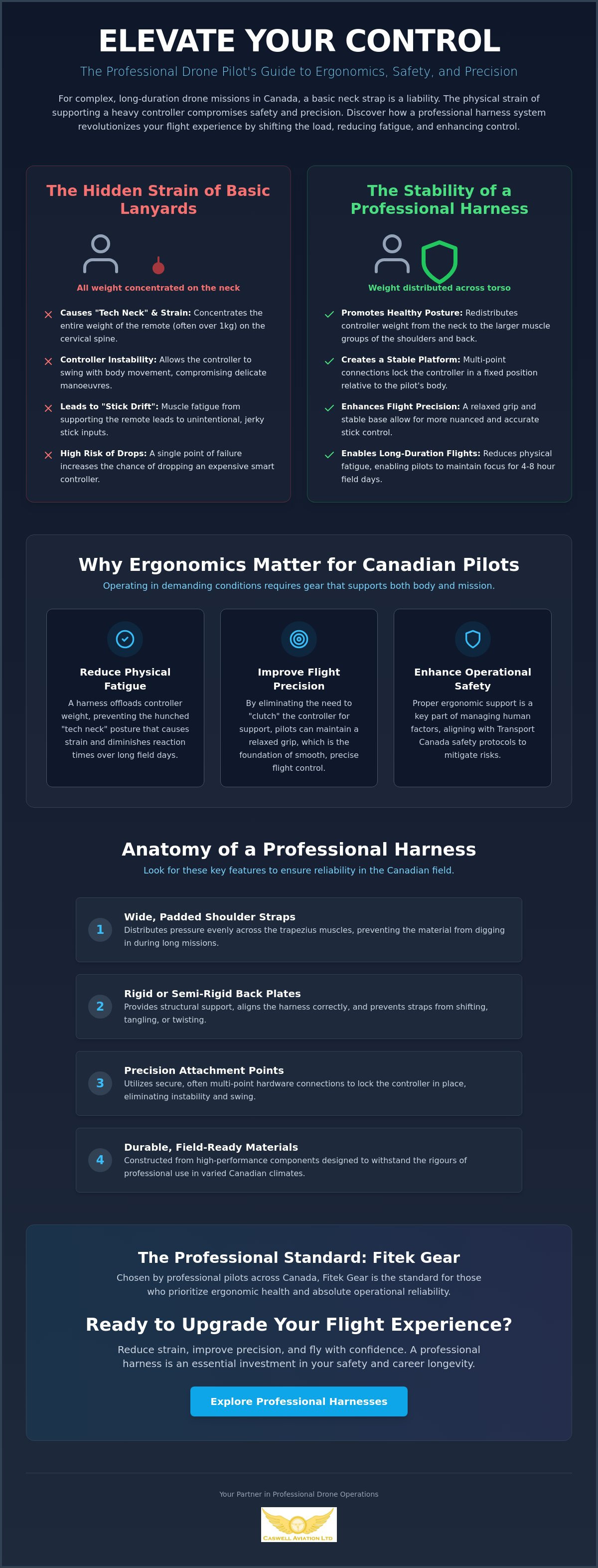
A drone controller neck strap harness serves as a specialized load-bearing system designed specifically for the modern RPAS pilot. It isn't merely a piece of string to keep the remote from hitting the ground; it's a structural interface between the operator and the hardware. The primary function of this system is to redistribute the weight of modern smart controllers from the cervical spine to the larger muscle groups of the shoulders and upper back. This provides a secure, hands-free environment that is essential for complex field operations. When you use a professional harness, you create a stable centre of gravity that allows for more nuanced control during flight.
Most professional systems consist of several high-performance components designed for the rigours of the field:
- Shoulder Straps: Wide, padded bands that prevent the material from digging into the trapezius muscles.
- Back Plates: Rigid or semi-rigid sections that align the harness and prevent straps from tangling or shifting.
- Controller Attachment Points: Precision-machined hardware that secures the remote to the harness, often using multi-point connections for maximum stability.
Lanyards vs. Harnesses: Understanding the Difference
Single-point lanyards are often included with consumer drones because they are portable and inexpensive. However, they concentrate the entire weight of the remote onto a narrow strip of fabric at the back of the neck. This often results in "swinging," where the controller moves with every step or gust of wind. Professional pilots prioritize multi-point harnesses because they lock the remote into a fixed position relative to the body. This stability is essential for maintaining consistent control over radio control systems during delicate manoeuvres. A harness ensures the controller stays exactly where you need it, which allows your hands to focus entirely on the sticks rather than supporting the device's weight.
The Evolution of Drone Control Gear
The shift toward professional harness systems mirrors the technical advancement of the industry. Early hobbyist remotes were lightweight plastic shells that required very little effort to hold. Today, integrated smart controllers feature high-brightness screens, internal cooling systems, and large batteries, often weighing over a kilogram. Supporting this mass for an eight-hour shift requires more than a simple strap. Pilot ergonomics is the science of reducing physical strain to maintain flight focus. As commercial applications expand across Canada, ergonomic field gear has transitioned from a luxury to a baseline requirement for operational safety and pilot longevity.
Why Ergonomics Matter for Canadian Drone Pilots
Canadian RPAS pilots often face demanding environmental conditions, from the humid summers of Southern Ontario to the sub-zero winters of the Prairies. Operating a drone for several hours requires sustained mental and physical focus. Without a proper drone controller neck strap harness, the weight of the remote forces the pilot into a hunched posture. This "tech neck" position creates tension in the cervical spine and shoulders. Over a four to eight-hour field day, this strain accumulates, leading to diminished reaction times and physical discomfort that can jeopardize mission success.
Fatigue isn't just about feeling tired; it manifests as physical instability. When muscles in the forearms and shoulders tire from supporting a heavy smart controller, "stick drift" or jerky movements often occur. These unintended inputs happen because the pilot is subconsciously trying to adjust their grip to relieve pressure. Understanding the Transport Canada perspective on pilot fatigue is essential for commercial operators who must manage human factors as part of their safety protocols. Proper ergonomic support through a harness helps mitigate these risks by offloading the weight and stabilizing the pilot's centre of gravity.
Reducing Physical Fatigue and Strain
A relaxed grip is the foundation of precise flight. When a harness supports the controller, the pilot no longer needs to "clutch" the device to keep it steady. This reduces the risk of long-term musculoskeletal issues, such as carpal tunnel or chronic shoulder impingement, which are common among career pilots. By maintaining a neutral posture, you ensure that your energy is directed toward the sticks rather than fighting gravity. Pilots who prioritize their physical health often find they can maintain higher levels of concentration throughout the day. If you are looking to professionalize your setup, exploring high-quality drone flight gear and training can help you meet the rigorous demands of the Canadian industry.
Improving Flight Precision and Control
Smooth cinematic pans and complex inspection paths require fine motor control. A secured controller provides a "stable platform" that remains stationary even if the pilot needs to move or shift their stance. This is particularly beneficial in cold-weather flying. Canadian winters require heavy gloves, which can make a handheld remote feel slippery or bulky. A harness ensures the controller stays fixed, allowing you to use insulated gear without the fear of dropping the unit. Additionally, the harness naturally aligns the screen at the optimal angle for visibility, which helps reduce glare and prevents the pilot from constantly tilting their head to see telemetry data.
Safety and Compliance: A Transport Canada Perspective
Safety in RPAS operations isn't just about the airworthiness of the aircraft. It extends to the pilot and their ground control equipment. Adhering to Transport Canada safety regulations requires a proactive approach to risk management. A drone controller neck strap harness fits perfectly into a robust Safety Management System (SMS) by addressing the human-machine interface. By securing the remote to your torso, you eliminate the risk of a catastrophic failure caused by a physical slip. This level of discipline is especially vital when preparing for an advanced drone flight review Canada, where examiners look for a professional approach to equipment management and hazard mitigation.
Mitigating Operational Risks
A dropped controller during a critical landing or a low-altitude manoeuvre can lead to an uncontrolled flight event. These incidents are often preventable with the right gear. A harness acts as a secondary tether, ensuring the control link remains physically accessible even if your hands slip. This security allows you to manage multiple tasks safely, such as checking a secondary tablet for telemetry or clearing a landing zone of bystanders. Using high-quality gear also signals professionalism to your clients. It demonstrates that you operate according to Transport Canada drone certification standards by prioritizing reliability over mere convenience.
Standardizing Your Pilot Kit
Integrating a harness into your standard operating procedures (SOPs) ensures consistency across every mission. It should be a mandatory item on your pre-flight checklist. When selecting gear, you must ensure the harness doesn't interfere with emergency movements or your ability to reach other tools. The best systems realize a balance between total security and quick-release capability. This allows you to detach the controller rapidly if an emergency procedure requires you to move away from the equipment. Professionalism is found in these details. A standardized kit reduces the cognitive load on the pilot, allowing for better decision-making when it matters most.
Key Features to Look for in a Professional Harness
Selecting a drone controller neck strap harness requires moving beyond generic consumer-grade options. For professional RPAS operations, your equipment must withstand the rigours of diverse Canadian environments. High-grade ballistic nylon is the industry standard for durability. This material resists fraying even when dragged through dense brush or exposed to coastal moisture. You should look for reinforced stitching at every load-bearing joint. These potential points of failure are often overlooked in cheaper alternatives but are vital when supporting a remote worth thousands of dollars.
Attachment mechanisms also vary significantly between models. Permanent screw-in mounts offer the highest level of security, as they cannot accidentally unclip during a mission. However, many pilots prefer heavy-duty metal quick-release clips for their versatility. These allow you to detach the remote quickly for storage or hand-offs during multi-pilot operations. Regardless of the clip style, the hardware should be made of corrosion-resistant metals rather than plastic to ensure longevity. If you are ready to upgrade your field kit, you can browse professional drone harnesses and accessories designed for these exact specifications.
Load Distribution Architecture
The geometry of the harness determines how well it manages weight over a long shift. X-back designs are generally superior for weight dispersal because they cross the straps over the centre of the back. This prevents the straps from sliding off the shoulders during movement. Wide shoulder straps are equally important. They distribute the downward force over a larger surface area, which prevents the material from cutting into the skin. Stability straps that wrap around the waist or lower torso are an additional feature to consider. These prevent the controller from bouncing or swaying while you walk between flight locations.
Compatibility with Smart Controllers
A professional harness must not interfere with the primary functions of your hardware. You must ensure the mounting bracket does not block cooling fans, antennas, or any portion of the touchscreen. Many high-end systems include dedicated mounts for the DJI Smart Controller and RC Pro to maintain a perfect balance. A well-balanced remote stays level without needing constant manual adjustment. This allows for a more ergonomic interaction with the sticks. Always verify if the specific mounting hardware for your controller model is included in the package before purchasing.
Comfort must be maintained across all four seasons. Breathable mesh padding is essential for preventing heat buildup during peak summer operations in regions like Southern Ontario. Conversely, the harness must offer enough adjustment range to fit over a bulky winter parka. High-quality sliders should stay locked once set, ensuring the remote remains at your preferred height throughout the mission.
Fitek Gear: The Professional Standard for Canadian Pilots
Fitek Gear has established itself as the specialized solution for professional RPAS operators who have outgrown the limitations of consumer accessories. While we previously discussed the ergonomic and safety benefits of stabilization, the choice of a specific drone controller neck strap harness often comes down to long-term reliability in the field. Fitek harnesses are engineered to handle the substantial weight of integrated remotes like the DJI RC Pro or the Autel Smart Controller, moving the burden from the cervical spine to the pilot's core. This equipment represents a shift toward a more disciplined, aviation-centric approach where every tool is selected for its contribution to mission success.
There is a direct synergy between professional training and professional-grade equipment. High-level flight operations require sustained concentration that's difficult to maintain when fighting physical fatigue or equipment instability. By utilizing a Fitek Gear drone harness for smart controllers, you ensure your hardware is securely anchored. This stability allows you to apply the precision techniques learned during complex flight reviews without the distraction of a shifting remote.
Designed for Field Reliability
The rugged construction of Fitek gear is specifically suited to withstand the diverse Canadian outdoor conditions, from the coastal moisture of British Columbia to the abrasive dust of the Prairies. Professional pilots consistently report that these systems transform the "all-day" experience by preventing the cumulative strain that often occurs during back-to-back flight sessions. Fitek’s commitment to pilot comfort as a means of increasing mission success is evident in their use of high-density padding and ventilated mesh. These materials ensure that the pilot remains as sharp in the final hour of a shift as they were during the initial pre-flight check.
Finalizing Your Professional Pilot Setup
Integrating a harness into your standard operating procedures is a key step in refining your aerial photography and video workflow. A stable controller leads to smoother gimbal movements and more confident flight paths, particularly during low-altitude manoeuvres. Caswell Aviation Ltd supports pilots across the country by providing access to elite gear alongside online drone certification Canada. This holistic approach ensures that your technical knowledge is matched by your physical equipment.
Your next step should be a thorough assessment of your current equipment to identify any ergonomic gaps. As the Canadian drone industry continues to professionalize, the difference between a standard operation and a master practitioner is often found in the reliability of their field gear. Elevating your standards today will ensure your longevity and success in the evolving RPAS sector.
Professionalizing Your Flight Operations
Transitioning to a professional drone controller neck strap harness is a definitive step toward higher operational reliability. By prioritizing ergonomic endurance, you reduce the physical fatigue that often leads to pilot error during long shifts. You also align your gear with the safety-first mindset expected of Transport Canada certified pilots. A stabilized controller isn't just about comfort; it's a critical tool for maintaining flight precision and ensuring the security of your hardware in the field.
Fitek Gear provides the specialized support required for modern smart controllers. These systems are built for ergonomic field endurance and are trusted by professionals across Canada to handle the rigours of commercial missions. If you're ready to improve your flight stability and safety, View the Fitek Gear Professional Harness Collection today. Investing in the right support system ensures you can focus on the mission ahead while maintaining the highest standards of the industry. We look forward to seeing your operations reach new heights of precision and safety.
Frequently Asked Questions
Is a neck strap better than a full harness for hobbyist drone flying?
For short hobbyist flights lasting under 20 minutes, a basic neck strap is often sufficient for simple security. It provides a baseline level of protection against accidental drops. However, if a hobbyist transitions to longer flight sessions or uses a heavier integrated remote, a full harness offers far better weight distribution and long-term comfort.
Will a drone controller harness fit over a heavy winter jacket?
Yes, professional harnesses are designed with significant adjustability to accommodate heavy Canadian winter parkas and tactical vests. You should look for models with extended sliders that allow the straps to expand without losing the centered position of the remote. This ensures you maintain a consistent ergonomic setup regardless of the season or your clothing layers.
Can I use a neck strap with the DJI Smart Controller or RC Pro?
While you can use a neck strap, it is generally discouraged for these specific units due to their substantial weight. Integrated smart controllers often weigh over one kilogram. Supporting this mass solely from the cervical spine can lead to significant neck strain over time. A multi-point harness is the recommended standard for these heavier professional devices.
Does using a harness improve the stability of my aerial video?
Using a drone controller neck strap harness improves video stability by providing a fixed, steady platform for your remote. When the controller is anchored to your torso, your hands are no longer required to support its weight. This freedom allows for much smoother and more precise stick inputs during cinematic pans and complex flight manoeuvres.
How much weight can a professional drone harness typically support?
Most professional-grade harnesses are engineered to support weights far exceeding standard drone controllers, often rated for loads of five kilograms or more. High-grade nylon and reinforced metal hardware ensure that even the heaviest integrated ground stations remain secure. The limiting factor is usually the pilot's physical comfort rather than the structural breaking point of the harness itself.
Are there specific Transport Canada rules regarding drone controller straps?
There are no specific regulations that mandate the use of straps, but they are highly encouraged under general safety and fatigue management guidelines. Transport Canada emphasizes pilot focus and risk mitigation during all operations. Using a harness is considered a best practice for preventing uncontrolled flight incidents that could be caused by dropped or slipping equipment.
Can a drone harness help with hand fatigue or "controller thumb"?
Yes, a harness significantly reduces hand fatigue by removing the requirement to clutch the remote to keep it steady. By offloading the device's weight to your shoulders and back, your fingers and thumbs can maintain a lighter and more relaxed grip. This helps prevent the cramping and repetitive strain issues often associated with long-duration commercial flight operations.
What is the best material for a drone neck strap to prevent irritation?
High-density ballistic nylon with a padded mesh lining is the preferred material for professional field use. The mesh allows for breathability during humid summer missions, while the smooth nylon prevents the strap from chafing against your neck or clothing. Reinforced stitching ensures the material remains stable and does not stretch or fray after repeated exposure to the elements.
Leave a comment