

The Best DJI Smart Controller Harness Canada: A 2026 Professional Guide
For a professional drone pilot, a multi-point harness is not merely an accessory but a foundational tool that transforms a heavy remote into a stable, ergonomic flight station. Finding the right DJI smart controller harness Canada professionals trust is the difference between a successful eight-hour mission and a day cut short by avoidable physical strain. You likely already know the frustration of chronic neck pain caused by standard lanyards. It's an unnecessary risk. Hand fatigue during high-precision manoeuvres with an RC Pro or RC Plus controller can quickly compromise flight safety.
This guide will show you how a professional-grade harness improves your flight precision, eliminates physical fatigue, and provides the security your expensive hardware requires in rugged Canadian environments. We'll explore the technical advantages of multi-point systems and explain why Fitek Gear has become the industry standard for serious operators. By the end of this article, you'll understand how to organize your field setup for maximum safety and comfort during long-duration missions. We'll also look at how these tools help you maintain the high standards required for Advanced RPAS certification.
Key Takeaways
- Transition from standard neck straps to multi-point systems to effectively distribute weight and eliminate chronic pilot fatigue during long missions.
- Apply the 90-degree ergonomic rule to your controller setup to enhance flight precision and protect against repetitive strain injuries.
- Evaluate material durability, such as stainless steel and reinforced polycarbonates, to ensure your DJI smart controller harness Canada selection survives rugged field conditions.
- Improve your cockpit resource management by utilizing a stable, hands-free platform that allows for efficient management of flight logs and checklists.
- Follow a structured implementation process to properly adjust and maintain your Fitek Gear for optimal performance and equipment safety.
Beyond the Neck Strap: Why Professionals Require a DJI Smart Controller Harness
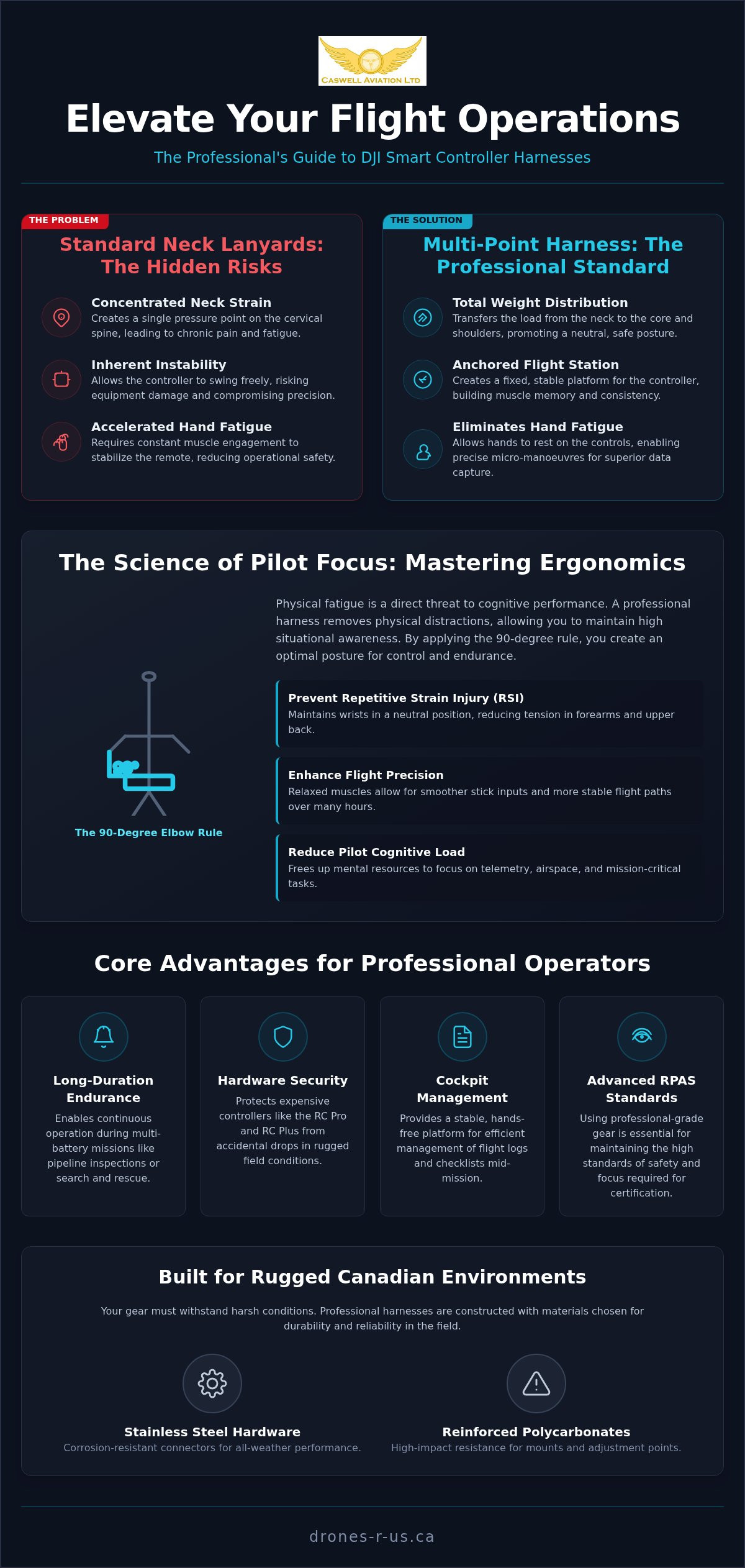
A professional drone harness is a dedicated multi-point weight distribution system designed to support heavy flight hardware. While a basic neck strap uses a single point of contact, an ergonomic four-point harness spreads the load across the shoulders and upper back. This distinction is critical for pilots transitioning from hobbyist flights to professional-grade endurance missions. The 2026 generation of controllers, such as the RC Pro, RC Plus, and the newer RC Plus 2, offers advanced capabilities but introduces significant weight that standard accessories cannot manage effectively. Investing in a high-quality DJI smart controller harness Canada professionals trust ensures that your equipment remains a stable extension of your body rather than a physical burden.
The Problem with Standard Neck Lanyards
Standard lanyards create a concentrated pressure point on the cervical spine. This setup acts as a fulcrum, where the weight of the controller pulls the head forward and strains the neck muscles. Over an eight-hour field day, this leads to chronic pain and decreased situational awareness. Beyond physical discomfort, single-point straps are inherently unstable. They allow the controller to swing freely when the pilot moves or bends down to check gear. This lack of security risks expensive hardware damage and makes precision thumb-stick movements difficult. Without a fixed anchor point, the pilot must constantly use their arm muscles to stabilize the remote, which accelerates hand fatigue and reduces operational safety.
The Advantages of a Multi-Point System
Multi-point systems transfer the controller's weight from the neck to the core and shoulders. This structural shift allows for a neutral posture, which is essential for maintaining focus during complex Advanced RPAS operations. A four-point harness creates a fixed "flight station" that stays in the same position relative to the pilot's hands. This consistency builds muscle memory, as the sticks and buttons are always exactly where the pilot expects them to be. A stable platform also enables superior gimbal control. When the controller is anchored to the torso, small, precise adjustments and manoeuvres become easier to execute. This stability is a requirement for capturing professional-grade aerial data. Selecting the right DJI smart controller harness Canada provides ensures safety and precision in rugged environments.
Ergonomics and Endurance: The Science of Pilot Focus
Physical fatigue is more than a nuisance; it's a direct threat to cognitive performance. In aviation, this is known as increasing the "pilot load." When your body is focused on managing neck or shoulder pain, your brain has fewer resources to process telemetry, airspace changes, or emergency procedures. Using a professional DJI smart controller harness Canada operators rely on allows you to maintain high situational awareness by removing the physical distractions of heavy gear. This stability is a prerequisite for safety in complex environments.
Effective ergonomics starts with the 90-degree rule. Your elbows should remain at a right angle, with your wrists in a neutral, straight position. This alignment prevents repetitive strain injury (RSI) and ensures consistent control input. By suspending the controller at the correct height, a harness facilitates this posture naturally. This reduces the tension in your forearms and upper back, allowing for smoother stick inputs and more stable flight paths over several hours of operation.
Eliminating Hand Fatigue and Wrist Strain
A significant benefit of a four-point system is that it changes how you interact with the remote. Instead of gripping the controller to support its weight, your hands simply rest on it. This shift is crucial for precision. When your muscles are relaxed, you can execute the micro-manoeuvres required in "Fine" or "Cine" flight modes with much greater accuracy. High-quality mounting brackets also play a role by creating a balanced centre of gravity. This ensures the screen remains at the optimal viewing angle without requiring constant manual adjustment, allowing you to keep your eyes on the data.
Long-Duration Mission Management
Industrial missions like pipeline or powerline inspections often require hours of continuous operation. During multi-battery missions, de-rigging to rest your arms isn't always practical. A harness allows you to stay in the loop without physical degradation. In search and rescue (SAR) operations, where every second counts, a pilot must remain alert until the very end of the mission. Ergonomic gear ensures you maintain focus during the final, most critical minutes of a flight when landing in tight spaces or navigating obstacles. If you're preparing for a complex operation, consider how upgrading your flight station can improve your overall mission success rate.
Selecting the Best DJI Smart Controller Harness in Canada
Choosing a professional DJI smart controller harness Canada pilots can rely on requires looking beyond aesthetics to the engineering level. In a country with extreme seasonal shifts, your gear must withstand more than just the weight of the remote. High-quality materials like stainless steel and reinforced polycarbonates are essential for maintaining structural integrity in sub-zero temperatures and high-humidity environments. Professional hardware should also provide a wide adjustment range. A harness that fits perfectly over a summer t-shirt must also expand to accommodate bulky winter parkas or high-visibility safety vests without compromising the pilot's range of motion.
The mounting mechanism is another critical factor. While clip-on systems offer speed, screw-in brackets provide the absolute security required for heavy units like the RC Plus. These brackets ensure the controller remains a rigid part of the flight station, preventing the micro-vibrations that can occur with cheaper, elasticated alternatives. When you select a harness, you're choosing the primary interface between your body and your aircraft. Reliability is the only metric that matters.
Technical Features of Fitek Gear
The Fitek Gear systems available through Caswell Aviation are precision-engineered to meet these professional requirements. These harnesses feature mounting brackets specifically designed for the RC Pro and RC Plus, ensuring a perfect fit that won't obscure ports or buttons. One of the most practical features is the inclusion of quick-release buckles. These allow a pilot to step out of the rig in seconds during a break or when transitioning between different roles on a flight crew. The materials used in Fitek products are selected for their durability in the Canadian cold, resisting the brittleness that often affects lower-grade plastics.
Weight Distribution and Balance
A well-designed harness should allow the controller to sit naturally at an angle between 45 and 90 degrees. This positioning ensures the screen is always within the pilot's primary field of view while keeping the control sticks at the optimal height for the hands. A cross-back strap design is superior to parallel straps because it prevents the harness from slipping off the shoulders during active movement. When properly adjusted, you should be able to realize a perfectly balanced setup that allows for "hands-off" hovering. This stability is not just about comfort; it's a safety feature that ensures the drone remains under control even if the pilot needs to momentarily adjust a piece of peripheral gear or consult a digital map.
Operational Safety and Transport Canada Compliance
Operational safety in drone aviation requires a disciplined approach to gear and procedures. A DJI smart controller harness Canada pilots utilize is an essential component of Cockpit Resource Management (CRM). It organizes the flight station, allowing the pilot to focus on the mission rather than struggling with equipment positioning. This stability significantly reduces the risk of dropped controller incidents. A dropped remote is a critical safety hazard that can lead to unintended stick inputs, signal loss, or aircraft fly-aways. By anchoring the hardware to your torso, you ensure that even in a stumble or sudden movement, the aircraft remains under positive control. This level of physical security is a hallmark of professional aviation culture.
Professionalism in the field is often measured by how well a pilot manages their environment. Using a harness isn't just about comfort; it's about maintaining the high standards expected in the 2026 drone industry. When you're operating under Advanced rules, your attention must be divided between the aircraft, the airspace, and your telemetry. A harness provides the structural support needed to manage these tasks without physical strain interfering with your judgment.
Managing Checklists and Flight Logs
Transport Canada standards emphasize the importance of thorough documentation and procedural adherence. During complex operations, pilots must manage flight logs and emergency checklists while maintaining control of the drone. A stable harness allows you to use a tablet or logbook mid-mission safely without needing to land the aircraft. This capability is vital for maintaining a "sterile cockpit" environment where distractions are minimized and every action is recorded. Demonstrating this level of organization is often a key factor in passing a professional flight review. It shows the reviewer that you have the tools to manage the high standards required for Transport Canada drone certification.
Situational Awareness and Safety
Maintaining Situational Awareness (SA) is a core requirement of the latest regulatory updates. A harness reduces "head-down" time by positioning the screen in your natural line of sight. You don't have to look down as far to check telemetry, which keeps your eyes closer to the aircraft's position in the sky. This setup also allows the pilot to react quickly to ground hazards, like bystanders or vehicles, without losing the controller. Gear reliability is a pillar of safe flight operations described in the Canadian drone regulations. If you're serious about your professional standing, you should invest in a certified harness system today to ensure your operations remain compliant and safe.
Implementing Fitek Gear into Your Professional Workflow
Integrating a professional DJI smart controller harness Canada pilots trust into your daily routine is about more than just comfort. It is about creating a repeatable, safe process for every mission. The goal is to make the equipment feel like a natural extension of your body. When you first receive your Fitek Gear, take the time to adjust the strap lengths in a controlled environment. Once you find the optimal height where the controller sits comfortably at your waist, lock those settings. This "set and forget" approach ensures that your muscle memory remains consistent across every deployment. It allows you to focus entirely on the flight telemetry rather than adjusting your gear mid-air.
Transitioning from training to commercial operations requires a shift in how you manage your kit. Rapid deployment in the Canadian wilderness often involves working in unpredictable conditions. Organizing your harness and brackets so they are easily accessible in your transport case saves valuable time on-site. By maintaining a standardized setup, you reduce the cognitive load during the pre-flight phase. This discipline is what separates a hobbyist from a professional practitioner.
Field Setup and Adjustment
Proper adjustment is particularly important when working in diverse climates. You must ensure the harness fits securely over different layers of seasonal clothing. In the winter, you will need extra slack to accommodate heavy parkas, while summer operations require a tighter fit over high-visibility vests. Beyond fit, daily maintenance is mandatory. Inspect the mounting screws and attachment loops before every flight. Vibrations from travel and rugged field use can loosen hardware over time. A quick check ensures your RC Pro or RC Plus remains securely anchored. This simple habit prevents equipment failure and maintains the integrity of your flight station.
Why Professionals Choose Caswell Aviation
Caswell Aviation provides more than just specialized equipment. We are practitioners who understand the specific demands of the industry. Our team has extensive experience in various sectors, including those highlighted in our guide to drone pilot jobs in Canada. This background allows us to offer hardware that we have personally vetted in the field. We support pilots through every stage of their career, from initial training to complex commercial operations. By choosing professional gear like Fitek, you are committing to a higher standard of safety and efficiency. We are dedicated to elevating the standard of Canadian RPAS operations by providing the tools and knowledge necessary for success.
Optimizing Your Command Centre for 2026
Professionalism in drone aviation is built on the foundation of safety, precision, and endurance. Moving beyond standard neck straps to a dedicated multi-point system is a critical step for any operator looking to improve their field performance. By distributing weight to your core and stabilizing your controller, you eliminate the physical distractions that compromise situational awareness. This transition ensures your gear remains secure in rugged environments while allowing you to focus entirely on the mission at hand.
Finding the right DJI smart controller harness Canada professionals rely on is essential for meeting the rigorous demands of Advanced RPAS operations. As a specialized retailer of Fitek Gear, Caswell Aviation provides equipment that is field-tested by Canadian aviation professionals. We combine expert-led drone training with the specialized hardware you need to succeed. You can upgrade your flight station with a professional Fitek Gear harness to ensure your setup is ready for long-duration missions. We look forward to helping you elevate the safety and efficiency of your flight operations.
Frequently Asked Questions
Is a DJI smart controller harness really better than a neck strap?
Yes, a harness is superior for professional use because it distributes weight across your shoulders and back rather than concentrating it on the cervical spine. While a neck strap allows the controller to swing and pull on your neck, a multi-point harness creates a stable flight station. This setup reduces chronic pain and improves situational awareness during long missions. It ensures the remote stays in a fixed position, which is essential for high-precision manoeuvres.
Will the Fitek Gear harness fit the DJI RC Pro and RC Plus?
Yes, the Fitek Gear system is specifically engineered for compatibility with the DJI RC Pro and RC Plus, including the newer RC Plus 2 models. The precision-machined mounting brackets attach securely to the existing mounting points on these controllers. This ensures a perfect balance without blocking any ports, buttons, or cooling vents. Professional pilots choose this DJI smart controller harness Canada solution because it accommodates the significant weight of these advanced industrial remotes.
Does using a harness help with Transport Canada flight reviews?
Using a harness demonstrates a high level of professional discipline and cockpit resource management during a flight review. It shows the reviewer that you have organized your environment to maintain a safe workspace and can manage checklists or logs hands-free while hovering. While not legally mandated, it reflects the safety-first mindset required for Advanced RPAS certification. It helps you maintain steady control inputs, which is a key metric evaluated by flight reviewers.
Can I wear the harness over a thick winter parka during Canadian winters?
Yes, professional harnesses are designed with a wide adjustment range to fit over bulky seasonal gear. You can easily expand the straps to accommodate a thick winter parka or a high-visibility safety vest without losing the ergonomic benefits. This flexibility is vital for Canadian operations where temperatures and clothing requirements shift dramatically. The quick-release buckles and durable materials are tested to remain functional and resist brittleness even in extreme sub-zero conditions.
How does a harness improve the precision of my drone photography?
A harness improves photography precision by providing a stable, unmoving platform for your hands to rest on. When your arms don't have to support the weight of the remote, your muscles remain relaxed. This allows for the micro-manoeuvres and smooth gimbal tilts required for high-end cinematic shots. By anchoring the DJI smart controller harness Canada pilots use to the torso, you eliminate the small tremors caused by muscle fatigue during long-duration shoots.
Is it difficult to install the mounting brackets on the DJI Smart Controller?
No, the installation process is straightforward and typically takes less than five minutes. The mounting brackets utilize the existing threaded holes on the back of the DJI Smart Controller or RC Pro. You simply align the bracket and secure it with the provided stainless steel screws. Once the bracket is installed, it can remain on the controller permanently, allowing you to clip the harness on and off in seconds using the quick-release connectors.
Are these harnesses adjustable for different body types and heights?
Yes, these systems feature four-point adjustment to accommodate a wide variety of body types and pilot heights. You can modify the length of the shoulder straps and the waist belt to ensure the controller sits at the optimal ergonomic height for your reach. This custom fit is essential for maintaining the neutral arm angle recommended for reducing repetitive strain. The cross-back design ensures the straps stay in place regardless of your physical build.
What happens if I need to quickly disconnect the controller from the harness?
The system includes industrial-grade quick-release buckles that allow for near-instant disconnection. If you need to hand the controller to a co-pilot or set it down during a break, you can unclip it in one smooth motion. These connectors are designed for high-cycle reliability, ensuring they won't accidentally release while in flight. This feature is critical for operational efficiency and allows for rapid transitions between different roles on a professional flight crew.
Leave a comment