

Aerial Video Production: Planning, Safety and Professional Results
What makes an aerial shot useful is not how dramatic it looks, but how clearly it serves the message. For aerial video production Calgary projects, the communication goal should guide the flight plan, shot choices and final format from the start.
A useful project brief answers three questions: what should viewers understand, who is the content for, and where will they watch it? Those answers help determine whether aerial footage is the right approach, which views will support the message and how the shoot needs to be planned. Safety requirements also shape what can be captured.
This guide explains how a project moves from brief to capture, including how to define the scope, choose shots and plan for safe drone operations under Canadian aviation requirements. Caswell Aviation Ltd provides aerial photography and video tailored to client requirements. The steps below can help you prepare a focused brief and understand what makes aerial footage useful for your goals.
Key Takeaways
- Start with the communication goal so aerial footage supports the subject, audience and intended platform.
- A clear brief identifies what to film, who the content is for and what viewers should understand.
- Match the shot to the purpose: wide views establish context, controlled movement shows activity, and closer views highlight relevant details.
- Creative plans must account for operating conditions, including location, airspace, people, weather and aircraft.
- Caswell Aviation tailors aerial photography and video to client requirements, aligning the visual approach with the project’s intended use.
Aerial Video Production: What It Delivers Beyond an Impressive View
Aerial video production is planned filming from an airborne camera platform, with each shot selected to communicate something about the subject or setting. Rather than starting with what can be filmed from above, ask what the audience needs to understand and whether an aerial view will help.
Height can reveal relationships that are difficult to see from the ground. A wide view can show how a site fits into its surroundings, while a measured movement can trace a route or show activity across a space. Including familiar features in the frame can also help viewers read scale. The value comes from the information the perspective adds, not height alone.
Ground-level filming shows a subject from within its surroundings; aerial video can show how that subject relates to the wider space. That difference matters when viewers need orientation, layout or a sense of movement. Footage added only for visual effect may look striking but leave the audience no clearer about the subject. The history and techniques of aerial photography offer useful context for how an elevated viewpoint can serve different purposes.
When an aerial perspective supports the message
Start with the audience’s likely question. Do viewers need to understand where a subject sits within a larger area? A wide establishing view can provide context. Are they trying to follow activity through a space? A controlled moving shot may make the sequence easier to understand. Does the message depend on the relationship between a feature and its surroundings? An aerial view may make that relationship clearer.
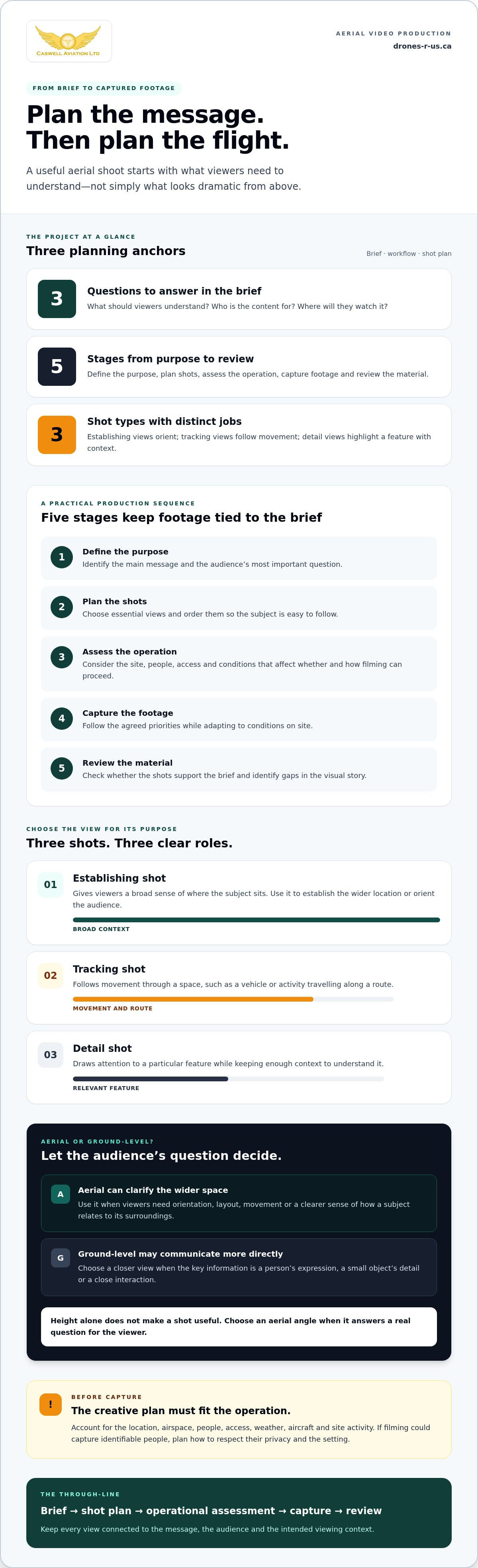
Not every project benefits from filming overhead. If the important information is a person’s expression, a small object’s detail or a close interaction, a ground-level view may communicate it more directly. Choose an aerial angle when it answers a real question, rather than assuming an elevated shot is automatically more effective.
What shapes the finished visual story
The subject, setting, camera movement and shot sequence all influence how viewers interpret aerial footage. Decide what the opening image needs to establish: the broader location, the subject’s position or activity already underway. A wide shot can orient viewers before the sequence moves to closer contextual views that reveal relevant features.
Consider how each shot connects to the next. A slow, deliberate movement may help viewers follow a route, while a steady view can give them time to take in a layout. These are creative choices to match to the brief, not a formula for every project.
Before filming, define the intended audience, the main point to communicate and where the content will appear. These details help identify relevant views and avoid shots that distract from the message. Caswell Aviation tailors aerial photography and video to client requirements, shaping the visual approach around the project’s purpose.
How Professional Aerial Video Moves from Brief to Captured Footage
A focused shoot begins before the aircraft is prepared. The brief sets the communication goal and guides shot planning, operational assessment, capture and review. Each stage keeps filming connected to the intended use instead of producing attractive but unrelated clips.
A production brief turns the project’s message into a practical plan for what to film, why it matters and how the footage will be used. Explain who needs to see the video, where it will appear and what viewers should understand or feel afterward. A company overview, for example, may need to orient viewers to a site, while a process video may need to show how activity moves through a space.
- Define the purpose. Identify the main message and the audience’s most important question.
- Plan the shots. Select essential views and sequence them to make the subject easy to follow.
- Assess the operation. Consider the site, people, access and conditions that affect whether and how filming can proceed.
- Capture the footage. Follow the agreed priorities while adapting to conditions on site.
- Review the material. Check whether the captured shots support the brief and identify gaps in the visual story.
Turning the project brief into a practical shot plan
Separate must-have shots from optional ideas. An establishing shot gives viewers a broad sense of where the subject sits. A tracking shot follows movement, such as a vehicle or activity travelling through a space. A detail shot draws attention to a particular feature while retaining some context. Naming the purpose of each view helps prevent a collection of disconnected clips.
Choose movement to suit both the subject and viewing context. A measured pass may make a route easier to follow; a steady view may give viewers time to understand a layout. Keep the shot list flexible enough to account for site conditions, while protecting the essential views that serve the message.
Preparing for an efficient capture session
Discuss site access, activity and timing constraints before filming. A changing work area, moving subjects or restricted access can affect where and when a planned view can be captured. Coordinating these details helps align the shot plan with what is happening on site and reduces the risk of planning a sequence that cannot be filmed as intended.
Operational assessment also considers privacy. If filming could capture identifiable people, plan how to respect their privacy and the setting. Transport Canada’s privacy guidance for drone users provides a useful reference. Caswell Aviation tailors aerial photography and video to client requirements. A clear brief is a practical starting point for tailored aerial video services.
Choosing Aerial Shots and Deliverables That Fit the Project
The right aerial shot depends on what viewers need to understand. A broad view can orient them, a moving shot can show progression, and a closer contextual view can draw attention to a relevant feature. Select footage that serves the communication goal and viewing context, rather than trying to include every possible angle.
Choose aerial shots for what they explain, not for spectacle alone. Aerial video projects can serve different audiences and uses, so the shot plan should reflect the specific brief.
Matching aerial shots to common project goals
Use this comparison to connect a visual approach to the viewer’s question. It’s a planning guide, not a fixed formula; the subject and setting affect which shots will communicate clearly.
- Orient viewers or show scale: A wide establishing view can show where a subject sits and how it relates to its surroundings.
- Show progression or activity: Controlled movement can follow a subject or show how something moves through a space.
- Draw attention to a feature: A closer contextual view can make a relevant detail easier to notice while retaining some sense of its setting.
An aerial view isn’t always the clearest choice. If the message depends on a person’s expression, a ground-level interaction or a small feature that is hard to distinguish from above, filming from the ground may provide better context. Aerial imagery works best when its perspective adds information rather than obscuring the details that matter.
Planning content for websites and social channels
Where viewers will watch the content should inform framing and sequence. A landscape presentation may suit a wide composition that establishes the setting, while a vertical presentation may need the subject framed with less horizontal context. Discuss the intended channel early so shot choices reflect how people will see the material.
Think about sequence, too. An opening view can establish location, followed by movement that guides attention and a contextual view that supports the main point. The brief should identify whether the priority is an overview, a sense of activity or a particular relationship between subjects. Plan the selection and presentation around that use instead of assuming one approach fits every platform.
Video and still aerial photographs meet different needs. Video can show movement or connect several views in sequence; a still photograph can provide a single image for a page or other visual placement. One doesn’t automatically replace the other. Caswell Aviation tailors aerial photography and video to client requirements, with the project’s intended application guiding the choices.
Safe, Responsible Aerial Filming in Canada
A creative brief can identify the shots a project needs, but it can’t determine on its own whether a flight can proceed. Operational planning must account for the location, airspace, people nearby, weather and aircraft. These factors can shape the flight plan, limit available shots or require the filming approach to change.
Safety and creative planning go together. A route or camera movement that suits the message must also fit the conditions and applicable operating requirements. Reviewing Canadian drone regulations and Transport Canada guidance is part of planning a responsible shoot, not a step to leave until the aircraft is ready to fly.
Operational factors that shape an aerial shoot
Assess the site and proposed flight area first. Airspace affects where operations may take place, while buildings, trees and other obstacles can affect the planned path and available views. People and site activity matter as well: a busy work area may call for a different approach from a clear, controlled location. Discuss access and activity in advance so the shot plan reflects conditions on site.
Weather and visibility can also affect whether a planned shot is practical. Conditions may change how safely the aircraft can be operated or whether the subject can be filmed as intended. A preferred shot is never more important than a safe decision. The plan should allow for adjusting or postponing capture when conditions do not support the operation.
Planning within Canadian operating requirements
Transport Canada requirements depend on the operation. Applicable rules can vary with factors such as the aircraft, where it will fly and the nature of the operation. General planning, including reviewing airspace and site conditions, doesn’t replace checking which requirements apply to the specific flight. For current information on pilot certification, consult Transport Canada’s drone pilot certification guidance alongside the applicable Canadian Aviation Regulations.
For a commercial shoot, build this assessment into the production plan before finalizing the shot sequence. If a location or condition limits one planned view, the creative approach may need to change. Alternative angles or a revised sequence can preserve the communication goal without treating the original shot as essential at any cost. A focused brief makes those adjustments easier by keeping attention on what viewers need to understand.
Caswell Aviation provides aerial photography and video tailored to client requirements, with project planning shaped around the intended use and operating context. Plan your aerial video project with Caswell Aviation.
Plan an Aerial Video Project with Caswell Aviation
Turn the communication goal into a practical project brief. Caswell Aviation provides aerial photography and video tailored to client requirements, with the intended audience and use guiding the visual approach. You don’t need every shot worked out in advance. A clear outline of what the content should communicate is a focused starting point.
Gather these details to help shape the aerial imagery:
- Purpose: What should the content explain, show or help viewers understand?
- Subject: What needs to be filmed, and what surrounding context matters?
- Audience: Who will view the content, and what do they need to take away?
- Intended use: Where will it appear, such as on a website or social channel?
- Essential shots: Which views or scenes are central to the message?
- References and site context: Are there visual examples, access details or site activity that could help guide planning?
What to include in an aerial video brief
Be specific about the subject and intended viewers. Instead of asking only for a broad view, describe what it needs to reveal, such as the relationship between a site and its surroundings. Note where the content will appear and what viewers should understand after watching. Essential scenes, visual references and relevant site details help distinguish must-have footage from optional ideas.
A brief doesn’t need to dictate every camera movement. It should explain the communication goal clearly enough to guide shot selection while leaving room for practical planning. If a particular scene depends on site activity or access, include that context so it can inform the approach.
From planned footage to a usable visual asset
After capture, assess the imagery against the original purpose. Does it give viewers the context they need? Does each selected view support the main point, or distract from it? This review keeps the project connected to its goal rather than treating footage collection as the measure of success.
The useful selection and presentation depend on the brief. A project may call for a sequence that conveys movement, still aerial photographs that provide a single clear view, or a combination suited to its intended use. Plan presentation and delivery details around those needs rather than assuming one format fits every project.
For a focused starting point, share your purpose, subject, audience and essential scenes with Caswell Aviation. Discuss your aerial imagery project and its intended use.
Give Your Aerial Project a Clear Starting Point
Decide what viewers should understand after seeing your content. That priority can keep planning focused, guide visual choices and give the finished material a clear purpose. Include the intended audience and where the content will be used in your initial project brief.
Caswell Aviation provides professional aerial photography and videography tailored to client requirements. A clear brief connects the imagery to its intended application while leaving room to shape the approach around the project. You don’t need every production detail settled before beginning. A defined purpose and a few essential visual priorities are enough to start a practical discussion.
Discuss your aerial video project with Caswell Aviation and take the next step towards visual content shaped for your goals.
Frequently Asked Questions
Can aerial video production include aerial photography?
Yes. An aerial project can include still photographs as well as video, depending on the brief. Stills can provide a single image for a website banner, presentation or project update, while video can show activity unfolding over time. Identify whether you need moving footage, still images or both when discussing the project. Caswell Aviation provides aerial photography and video tailored to client requirements.
Is drone footage suitable for small business marketing?
It can be, if an elevated perspective helps communicate something customers need to know. A business with a distinctive location, a large site or a process that makes more sense from above may find aerial images useful in marketing content. Consider the intended customer and channel first. If the aerial view doesn’t clarify the offer or setting, another visual approach may communicate more directly.
Can aerial video be filmed indoors?
Indoor drone filming may be possible in some settings, but it depends on the space, aircraft, people present and operational considerations. Tight rooms, low ceilings, moving people and fragile surroundings can constrain flight paths and camera views. A large, clear interior differs from a busy public space. Describe the location and activity in the project brief so the proposed visual approach accounts for the environment.
How much footage should an aerial video project capture?
There’s no universal footage length that suits every project. The useful amount depends on the final purpose, how many distinct scenes are needed and whether the subject’s activity must be shown at different moments. A short sequence for a webpage may need different coverage from a longer presentation. Plan around the essential shots and intended edit, rather than treating more recorded footage as automatically more useful.
Can aerial video accurately show property boundaries?
Aerial footage can show visible features such as fences, roads or changes in landscaping, but those visuals shouldn’t be treated as proof of a legal property line. Boundaries may not be physically marked, and camera perspective can make features appear differently positioned. If an exact boundary matters to a decision, rely on appropriate survey or legal records. Use aerial video to illustrate a setting, not establish its surveyed limits.
Does wind affect aerial video quality?
Yes. Wind can affect aircraft stability and make smooth, consistent footage harder to capture. It may also influence whether a planned movement or viewpoint is practical on the day. Conditions vary across locations and over time, so the operator assesses them as part of the flight decision. If wind compromises safe operation or the intended image, adjusting the plan takes priority over attempting to preserve a particular shot.
Leave a comment