

The Professional Guide to Drone Event Photography and Aerial Cinematography
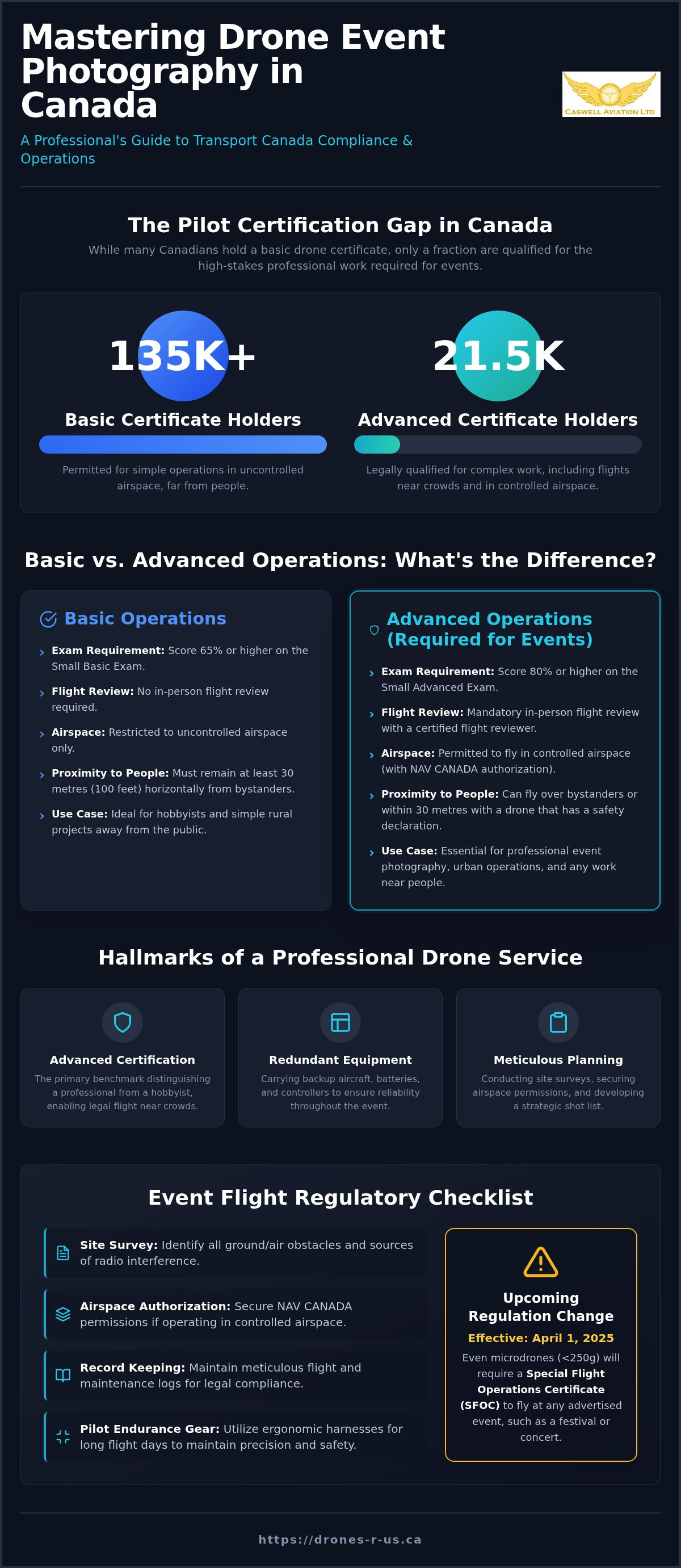
Did you know that while over 135,000 Canadians hold a Basic drone certificate, only 21,472 have achieved the Advanced Operations status necessary for high-stakes professional work? For those managing drone event photography Calgary projects, this gap represents the difference between a hobbyist and a certified professional who can legally operate near bystanders. You likely recognize that capturing a crowded festival or corporate gathering involves more than just a steady hand; it requires navigating a complex web of Transport Canada regulations and safety protocols.
This guide will help you master the technical, regulatory, and ergonomic requirements for capturing high-quality aerial footage across Canada. We will examine the legal prerequisites for event flights, including the November 2025 regulation changes and the mandatory SFOC for microdrones at advertised events. You'll also learn how to identify qualified pilots and why specialized gear, such as ergonomic harnesses for long flight days, is essential for maintaining precision from takeoff to landing.
Key Takeaways
- Understand the legal distinctions between Basic and Advanced Operations to ensure every flight complies with current Transport Canada regulations.
- Identify why an Advanced Pilot Certificate is a mandatory requirement for most drone event photography Calgary contracts involving crowds or controlled airspace.
- Learn how to utilize professional ergonomic harnesses to mitigate pilot fatigue and maintain safety during demanding, multi-hour event schedules.
- Develop a strategic shot list that integrates with the event itinerary to capture a professional balance of wide-angle "hero shots" and close-up cinematography.
- Recognize how formal RPAS training and Advanced certification serve as the primary benchmarks for distinguishing professional services from hobbyist operations.
Defining Professional Drone Event Photography in the Modern Era
Professional aerial photography is more than just operating a flying camera. It is a disciplined branch of aviation that merges cinematic vision with strict safety protocols. Historically, capturing these views required expensive helicopter rentals or fixed-wing aircraft. The history of aerial photography highlights a significant transition toward the agility and efficiency of Remotely Piloted Aircraft Systems (RPAS). Drones now provide a practical method for achieving angles that were once physically or financially out of reach.
The Aesthetic Advantage of Aerial Perspectives
Drones are uniquely suited for capturing the immense scale of outdoor festivals and large-scale gatherings. A ground-level camera often fails to illustrate the density of a crowd or the complex layout of a major venue. Aerial platforms allow pilots to highlight venue architecture and event logistics from perspectives that ground crews cannot access. The use of high-definition video in highlight reels adds a cinematic layer that significantly increases the production value of event media. This perspective allows viewers to see the entire scope of the coordination and effort involved in a large production.
Distinguishing Professionals from Hobbyists
The most critical differentiator is the possession of a valid Pilot Certificate for Advanced Operations. While hobbyists might have basic flying skills, they lack the legal authority to operate in controlled airspace or within 30 metres of bystanders. For those hiring Drone Aerial Photography and Video services, the professional standard is defined by reliability and redundancy. This includes bringing backup aircraft, extra batteries, and professional-grade data management workflows to the site. A professional standard is the consistent combination of technical camera skill and rigorous aviation discipline.
Transport Canada Compliance for Large-Scale Event Operations
Legal compliance in Canadian aviation is a matter of public safety and professional liability. For anyone managing drone event photography Calgary projects, understanding the strict gap between Basic and Advanced operations is the first step. Basic operations require a 65% score on the Small Basic Exam and limit flights to uncontrolled airspace, far from bystanders. However, most professional events occur in urban centres or near crowds, which triggers the requirement for an Advanced Operations Pilot Certificate. This certification involves passing the Small Advanced Exam with a score of 80% or higher and successfully completing an in-person flight review.
The regulatory landscape is constantly evolving to accommodate new technology. As of April 1, 2025, even microdrones weighing under 250 grams require a Special Flight Operations Certificate (SFOC) to operate at an advertised event. Pilots must also adhere to the 24-month recency requirement to keep their certificates valid. You can review the full criteria for Transport Canada pilot certification on the official government portal to ensure your team meets every legal prerequisite before takeoff.
Step-by-Step Regulatory Preparation
Professional preparation begins with a comprehensive site survey. This document identifies physical obstacles like power lines and tall structures, but it also accounts for radio frequency interference that could compromise the link between the controller and the aircraft. If the event is located within controlled airspace, the pilot must secure NAV CANADA permissions well in advance. Maintaining meticulous flight logs and maintenance records is not just a best practice; it is a legal requirement that proves the airworthiness of the equipment and the compliance of the pilot. If you are preparing for these complex requirements, Advanced RPAS training can help bridge the gap between hobbyist knowledge and professional certification.
Managing Risk in Crowded Environments
Safety in a live event environment relies on more than just the pilot. A Visual Observer (VO) is a critical team member who maintains constant situational awareness, watching for other aircraft or ground hazards while the pilot focuses on the cinematography. Clear communication channels with event security and local authorities ensure that drone operations don't interfere with other safety protocols. Establishing physical safety cordons and designated takeoff and landing zones prevents bystanders from accidentally entering the flight path. These Standard Operating Procedures (SOPs) are essential for managing risks like battery failures or unexpected weather shifts during a high-profile gathering.
Maximizing Pilot Endurance with Professional Gear and Ergonomics
Professional drone operations are physically demanding. An 8-hour shift at a large-scale event is a test of endurance and focus. Fatigue is a primary risk factor in any aviation environment. It reduces reaction times and degrades decision-making capabilities. When executing drone event photography Calgary assignments, pilots must maintain peak performance from the first flight to the final sunset shot. Physical comfort is not a luxury; it is a fundamental component of a safe flight operation.
The evolution of drone technology has introduced more capable but heavier hardware. Integrated smart controllers have replaced basic remotes. These devices feature high-resolution screens and advanced processing power. While they improve the pilot's situational awareness, they are significantly heavier than their predecessors. Holding several kilograms of equipment for hours creates localized strain on the neck, shoulders, and wrists. This tension can lead to "stick shake" or micro-movements that ruin a cinematic shot.
The Benefits of an Ergonomic Drone Harness
A professional harness is a mandatory tool for career pilots. It distributes the weight of the smart controller across the shoulders and upper back rather than the neck. This stabilization allows the pilot to use their hands solely for control precision rather than supporting the weight of the remote. By securing the controller against the body, the pilot achieves a more stable platform for fine motor movements. This setup reduces long-term musculoskeletal issues and ensures that the final hour of filming is as steady as the first. Precision is the hallmark of a professional, and proper ergonomics makes that precision sustainable.
Essential Hardware for Event Success
Visibility is a constant challenge in the field. High-brightness monitors are necessary for clear viewing in direct Canadian sunlight. Without a screen capable of at least 1000 nits, a pilot cannot accurately judge exposure or framing, which leads to unusable footage. Redundant storage solutions are also critical. Professionals utilize high-speed data transfer tools and on-site backup workflows to protect every byte of client data. For those seeking to upgrade their operational efficiency, Caswell Aviation Ltd offers Fitek Gear drone harnesses designed specifically for integrated smart controllers. These systems are built to handle the rigours of continuous event coverage while maintaining pilot comfort.
Organize your field kit for rapid battery swaps. A modular charging station ensures a constant supply of fresh power throughout the day. This systematic approach allows for continuous coverage, ensuring that no key moments of the event are missed due to equipment downtime.
Strategic Flight Planning for Dynamic Event Environments
Successful aerial coverage depends on a structured plan that anticipates the event's rhythm. A professional shot list must align perfectly with the official itinerary. This ensures the pilot is airborne during critical moments, such as grand openings, awards presentations, or keynote speeches. Managing drone event photography Calgary projects requires a technical balance between expansive wide-angle "hero shots" that show the venue's scale and intimate close-ups that capture the energy of the crowd. These varying perspectives provide editors with the necessary variety to build a compelling narrative.
Battery management is a technical necessity for continuous coverage. Pilots must calculate flight durations to ensure they have sufficient power for unmissable transitions. Weather also plays a decisive role in flight planning. Wind speeds and shifting light throughout the day require constant adjustments to flight paths and camera settings. A professional operator monitors these variables in real time to maintain visual consistency across all recorded clips. If you are looking for high-quality production for your next corporate or public gathering, consider our Drone Aerial Photography and Video services.
Coordinating with Ground Crews
Post-Event Data Management and Delivery
The professional workflow continues long after the final landing. Sorting through hours of high-bandwidth footage requires an efficient system to identify key highlights quickly. Colour grading is another essential step; aerial footage must be matched to the colour profiles of ground-based cameras to ensure a seamless viewer experience. Finally, the secure delivery of these large files is the last stage of the professional process. Using high-speed data transfer tools and redundant cloud storage protects the client's investment and ensures the media is ready for immediate marketing use.
Establishing Authority through Advanced Certification and Training
Establishing authority is the final step in moving from a casual operator to a recognized industry professional. In the competitive field of drone event photography Calgary, clients require more than just a high-quality portfolio; they need verified proof of competency. Transport Canada Advanced certification is the primary credential that separates professionals from hobbyists. This certification doesn't just grant legal access to controlled airspace; it signals to event organizers that you possess the discipline of a trained aviator. Formal training provides the technical foundation required to manage the complex risks inherent in live event environments.
Transitioning from a hobbyist to an Advanced RPAS Pilot involves a shift in mindset. It's no longer about simply getting a good shot; it's about maintaining a safe operational environment for every person on the ground. Positioning your business as a Transport Canada-compliant service provider builds immediate trust with corporate clients and insurance providers. This compliance is a powerful marketing tool that justifies professional rates and secures high-stakes contracts. When you invest in advanced training, you're investing in the long-term stability and reputation of your services.
The Path to Advanced Certification
Preparing for the Small Advanced Exam requires a comprehensive understanding of air law, meteorology, and human factors. While self-study is possible, many pilots prefer structured online courses to ensure they cover all regulatory requirements. In-person training is also vital for mastering complex flight manoeuvres and emergency procedures. These practical sessions build the muscle memory needed to react correctly during unexpected hardware failures. For a detailed breakdown of these requirements, consult The Complete Guide to Transport Canada Drone Certification to organize your study plan.
Booking Your Professional Flight Review
The final step in the certification process is a Transport Canada-sanctioned flight review. This evaluation is conducted by an authorized reviewer who assesses your ability to plan and execute a safe mission. During the review, you'll need to demonstrate proficiency in site surveys, emergency protocols, and aircraft control. Common mistakes often involve skipping minor steps in a pre-flight checklist or failing to maintain proper situational awareness. A successful review validates your operational safety and clears the way for your Advanced Pilot Certificate. You can learn more about this process by reading What is a Drone Flight Review in Canada? to prepare for your evaluation.
By achieving these certifications, you ensure that your drone event photography Calgary operations meet the highest standards of the Canadian aviation industry. This commitment to excellence protects your business, your equipment, and the public.
Advancing Your Professional Aerial Career
Mastering drone event photography Calgary requires a transition from artistic experimentation to rigorous aviation standards. You must prioritize Transport Canada compliance and pilot endurance to deliver consistent results in high-pressure environments. By integrating strategic flight planning with ergonomic equipment, you ensure that every mission is executed with precision and safety. These professional habits distinguish certified pilots from casual operators and protect the integrity of the industry.
Caswell Aviation Ltd provides the specialized resources needed to excel in this demanding market. As authorized Transport Canada Flight Reviewers with expertise in Advanced and Level 1 Complex operations, we offer the training necessary to navigate complex regulatory frameworks. We are also the exclusive Canadian retailer of Fitek Gear, ensuring you have access to the ergonomic harnesses required for long event schedules. Book your Advanced Drone Training or Flight Review with Caswell Aviation Ltd today to elevate your operational standards. Your commitment to professional development is the most effective way to secure high-value contracts and build a sustainable career in aerial cinematography.
Frequently Asked Questions
Do I need a special license for drone event photography in Canada?
Yes, you must hold a valid Pilot Certificate from Transport Canada for any commercial drone event photography Calgary project. If the event is in a city centre or near bystanders, an Advanced Operations Pilot Certificate is required. Additionally, as of April 1, 2025, even microdrones weighing under 250 grams require a Special Flight Operations Certificate (SFOC) to operate at advertised events. Always verify your pilot's credentials before the event begins.
Can a drone fly directly over people at a public event?
Flying directly over bystanders is restricted and requires specific safety declarations from the manufacturer. Most drones are limited to flying within 30 metres of people under an Advanced certificate; they cannot fly over them unless the hardware has been specifically assured for that operation. Professionals use zoom lenses to capture action while maintaining a safe lateral distance from the crowd. This approach ensures public safety without sacrificing the quality of the footage.
What insurance is required for professional drone event operations?
Professional liability insurance is a standard requirement for any commercial aerial operation. While Transport Canada doesn't specify a minimum insurance amount for all certificates, most event venues and corporate clients require proof of liability coverage. This insurance protects against property damage or personal injury. A professional pilot will always provide a certificate of insurance as part of their contract, which typically ranges from $1 million to $5 million in coverage.
How much does it cost to hire a professional drone photographer for an event?
Hiring costs depend on the technical requirements and the duration of the event. Rates vary significantly based on the number of pilots, the type of aircraft used, and the complexity of the post-production editing required. Factors like travel distance and the need for specialized gear also influence the final quote. It is best to request a detailed proposal that outlines all deliverables and potential expenses to ensure the service meets your project needs.
What happens if the weather is bad on the day of the event?
Operations are grounded if weather conditions exceed the aircraft's safety limits. High winds, precipitation, and extreme cold can compromise flight stability or damage sensitive electronics. Professional pilots monitor real-time aviation weather reports to make informed go or no-go decisions. Most service contracts include a weather clause that outlines rescheduling procedures or cancellation fees. This ensures that safety remains the primary focus even when environmental conditions are unpredictable.
How long can a drone fly before needing a battery change?
A typical professional drone flies for 20 to 45 minutes on a single battery. To maintain continuous coverage for drone event photography Calgary, operators use a systematic "hot swap" rotation with multiple batteries. This allows one set of batteries to charge while another is in use. By managing power cycles efficiently, a pilot can provide a near-constant aerial presence throughout a multi-hour event without missing key moments or grand openings.
Is a drone harness like Fitek Gear really necessary for short events?
A specialized harness is essential for maintaining control precision and pilot health. Even during shorter sessions, the weight of a smart controller creates significant strain on the neck and wrists. Using a system like Fitek Gear stabilizes the remote against the body, which eliminates "stick shake" and ensures cinematic smoothness. This ergonomic support allows the pilot to focus entirely on the shot rather than the physical discomfort of holding heavy equipment.
What is the difference between an Advanced and a Basic drone certificate?
The primary difference involves the proximity to people and the type of airspace. A Basic certificate is for flights in uncontrolled areas more than 30 metres from bystanders. An Advanced certificate is required for controlled airspace or for flying within 30 metres of people. Achieving Advanced status requires passing a more difficult exam and completing an in-person flight review. This higher level of certification is the standard for most professional event environments.
Leave a comment