

The Art of Memorial Garden Aerial Photography: A Professional Canadian Guide
Capturing the true essence of a final resting place requires more than just a camera; it requires a vantage point that respects the sanctity of the ground while revealing its hidden geometry. You recognize that traditional ground-level photos often fail to illustrate the thoughtful design and peaceful scale of a cemetery or remembrance site. This is where professional memorial garden aerial photography bridges the gap between technical precision and emotional reverence. Many families and site managers worry that drones might disturb the quiet atmosphere or conflict with complex Transport Canada regulations, but when handled with a veteran's discipline, these tools become silent observers of history.
In this guide, you'll discover how high-resolution drone imagery can preserve a visual legacy with unparalleled clarity while ensuring full compliance with Canadian aviation laws. We'll explore the specific requirements for a Pilot Certificate – Advanced Operations, which is typically mandatory for these public spaces, and look at how to plan flights that prioritize privacy and peace. From understanding the 122-metre altitude ceiling to selecting the right equipment for a serene finish, this article provides the roadmap for creating a lasting digital archive of your most cherished landscapes.
Key Takeaways
- Understand how elevated perspectives reveal the intentional design and scale of remembrance sites that remain hidden at ground level.
- Navigate the complexities of Transport Canada regulations to ensure your memorial garden aerial photography remains fully compliant and respectful of public safety.
- Identify the professional-grade equipment necessary for high-resolution, low-noise imagery that captures the fine details of floral textures and stonework.
- Learn the essential protocols for site permissions and visitor privacy to maintain the serene atmosphere of sensitive memorial grounds.
- Realize the value of advanced flight training and specialized gear in executing high-stakes missions with precision and technical authority.
The Unique Value of Aerial Perspectives in Memorial Gardens
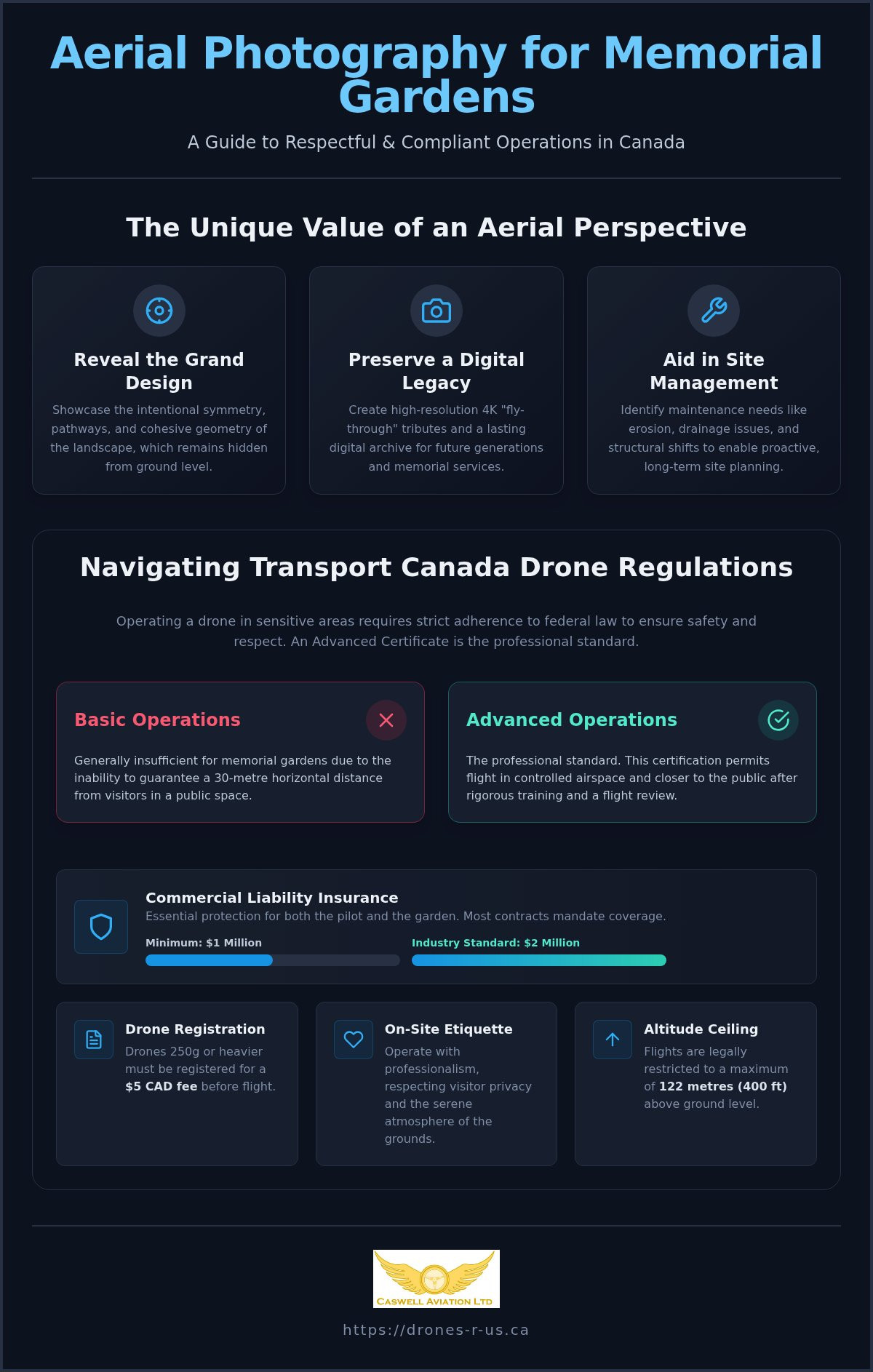
Memorial garden aerial photography serves as a sophisticated bridge between traditional remembrance and modern documentation. While ground-level views capture the intimacy of a single headstone or floral arrangement, they often fail to convey the deliberate geometry of the entire site. Professional drone imagery reveals the "grand design" that landscape architects intended, showcasing the symmetry, pathways, and natural borders that define a place of rest. This perspective transforms a collection of individual plots into a cohesive, intentional sanctuary.
Preserving a Legacy Through High-Resolution Imagery
Families often seek out these services to create a comprehensive visual record that outlasts physical changes to the landscape. By utilizing high-resolution sensors, pilots can produce a digital twin of a memorial site, ensuring that the current state of the grounds is preserved for future generations. 4K video provides a unique opportunity for "fly-through" tributes. These are frequently used during memorial services to provide a peaceful, "heavenly" perspective that honours the deceased. This vantage point offers a sense of scale and serenity that ground-based photography simply cannot replicate, making it an essential tool for modern commemorative practices.
A Tool for Garden Managers and Designers
Beyond emotional value, memorial garden aerial photography is a critical utility for professional site maintenance and long-term planning. The history of aerial photography shows its long-standing utility in mapping and surveying, and today's drone technology applies this heritage to garden management. Overhead perspectives allow managers to identify drainage issues or structural shifts in stonework that aren't easily visible from the walking path. This technical data is invaluable for maintaining the integrity of the site's original vision.
- Growth Documentation: Tracking seasonal changes and floral development to inform future planting and pruning schedules.
- Structural Oversight: Identifying erosion or settling in retaining walls and pathways before they become safety hazards.
- Accurate Mapping: Creating high-resolution maps for visitor navigation centres and digital kiosks to improve the guest experience.
These technical applications ensure the garden remains a well-maintained sanctuary for all visitors. By integrating professional drone services, managers can transition from reactive repairs to proactive site planning. This methodical approach to documentation supports both the aesthetic beauty and the functional longevity of the garden.
Navigating Transport Canada Regulations for Sensitive Sites
Operating a drone in a place of rest involves more than just artistic talent; it requires strict adherence to federal law. Most memorial gardens are considered "near people" environments under Transport Canada drone regulations. Because you cannot always guarantee a 30-metre horizontal distance from bystanders in a public cemetery, a Basic Operations certificate is often insufficient. For professional memorial garden aerial photography, an Advanced Operations certificate is the standard requirement. This ensures the pilot has the necessary training to fly in controlled airspace and closer to the public without compromising safety or decorum.
Holding a valid Transport Canada drone certification is a non-negotiable mark of professional credibility. Beyond the certificate, commercial operations require specific liability insurance. Most professional contracts in Canada mandate a minimum of $1 million in coverage, though $2 million is becoming the industry standard. This protection is vital for both the pilot and the garden management, covering potential incidents in these high-value, sensitive landscapes. All drones weighing 250 grams or more must also be registered with Transport Canada for a $5 CAD fee before they can legally fly in these areas.
Advanced Certification for Urban Memorial Sites
Many remembrance sites are located within controlled airspace or near built-up residential areas. In these scenarios, a Level 1 Complex certification becomes necessary to operate safely and legally. Achieving this level of proficiency requires passing a professional flight review, which validates a pilot's ability to handle complex missions and emergency procedures. Pilots must also coordinate with NAV CANADA for flight authorizations when working in restricted zones. This disciplined approach ensures that every flight is planned with the same precision and care as the garden's own architecture.
Compliance and Safety Checklists
Safety starts long before the propellers spin. A thorough pre-flight site survey is essential to identify physical hazards like tall heritage trees, power lines, or narrow monument corridors. Every mission should follow a structured protocol to maintain the highest safety standards.
- Verify Registration: Ensure the aircraft is registered and the certificate is on hand.
- Airspace Check: Use authorized apps to confirm the site's airspace status and any active NOTAMs.
- Bystander Management: Establish a clear safety perimeter and identify a visual observer if the site is busy.
- Weather Minimums: Monitor wind speeds to ensure the drone can hover steadily without risking a collision with delicate stonework.
Following these protocols maintains the high standards expected in the aviation industry. If you are looking to upgrade your skills for these sensitive missions, you can explore the advanced training programs designed to help you meet these rigorous Canadian requirements with confidence.
Technical Excellence: Capturing the Serenity of the Landscape
Achieving professional-grade memorial garden aerial photography requires more than basic flight skills. It demands a technical setup optimized for high-fidelity detail and low-noise operation. Large sensors, typically one inch or larger, are essential for capturing the subtle colour gradients in floral displays and the intricate textures of heritage stonework. These sensors provide the dynamic range needed to preserve detail in both bright highlights and deep shadows, which is a frequent challenge in diverse garden environments. High-resolution imagery ensures that even the smallest inscriptions remain legible when zooming into a wide-angle shot.
Precision control is the foundation of cinematic imagery. When executing slow, deliberate passes over sensitive sites, even minor hand tremors can disrupt the visual flow. Utilizing a drone harness for smart controller allows the pilot to distribute the weight of the hardware, providing the stability required for perfectly smooth movements. This ergonomic support ensures that the aircraft remains steady, allowing the pilot to focus entirely on framing and composition rather than physical fatigue. These steady movements are vital for creating the respectful, contemplative pace required for memorial content.
Lighting the Way: The Golden Hour Advantage
Timing is the most critical element in garden photography. Midday sun creates harsh, unflattering shadows that make a serene landscape look abrasive and cluttered. Professional pilots prioritize the "Golden Hour"—the period shortly after sunrise or before sunset. This soft, directional light emphasizes the garden's contours and provides a respectful, warm aesthetic. In wooded sections where contrast is high, Neutral Density (ND) filters are employed to manage light intake, enabling a slower shutter speed for natural-looking motion blur in video. This approach ensures the final product reflects the inherent peace of the grounds.
Compositional Strategies for Memorial Sites
Strategic framing turns a simple photograph into a storytelling tool. The "Top-Down" or nadir view is particularly effective for memorial sites, as it transforms garden layouts into symmetrical, geometric patterns that are invisible from the ground. For central monuments, a slow "Orbit" shot adds a sense of grace and importance. During these manoeuvres, pilots must strictly follow privacy guidelines to ensure no grieving visitors are inadvertently filmed. Combining these high-altitude perspectives with ground-level detail shots creates a comprehensive visual narrative that honours the site from every angle.
Post-processing should remain subtle and grounded in reality. The goal is to enhance the natural beauty of the site, not to create an artificial or over-saturated look. Careful colour grading can correct for shifting light conditions during a flight, ensuring a consistent look across the entire digital archive. This final step polishes the raw data into a professional visual legacy that stands as a lasting tribute.
Memorial Flight Etiquette: Privacy and Professionalism
Professionalism in memorial garden aerial photography is defined by transparency and deep respect for the environment. While some online forums suggest "stealth" flying to avoid notice, this approach is both unethical and a significant liability risk. A veteran pilot understands that a successful mission is one where the serenity of the garden remains entirely undisturbed. This begins with a commitment to open communication and a strict adherence to ethical flight boundaries. Respect is a requirement, not an option.
Obtaining explicit permission from garden management and landowners is a mandatory prerequisite for any flight. Site managers have a duty to protect the peace of their visitors; they must know exactly who is operating in their airspace and for what purpose. Additionally, active funeral services are absolute "no-fly" zones. A professional pilot monitors the site schedule closely and grounds the aircraft immediately if an unscheduled service begins. This level of situational awareness ensures that the dignity of the deceased and the privacy of grieving families are never compromised. You must always realize that your presence is secondary to the purpose of the grounds.
Communication with Stakeholders
Clear documentation builds trust with site authorities. Your formal request for aerial access should be professional and detailed, outlining the specific areas to be photographed and the intended use of the imagery. You must provide site managers with digital copies of your Transport Canada certification and proof of your liability insurance. If the memorial garden is located near a residential centre, it is also standard practice to notify the local community. This proactive approach prevents noise complaints and reassures neighbours that the flight is a regulated, professional operation.
Minimizing the Drone Footprint
The goal of every flight is to be as invisible as possible. Utilizing low-noise propellers is a technical requirement for maintaining the quietude of a remembrance site. These specialized blades reduce the high-pitched whine often associated with smaller drones, allowing the aircraft to blend into the natural ambient sounds of the wind and birds. Efficiency is key to a respectful mission.
- Discreet Operations: Launch and land from out-of-the-way locations to avoid drawing a crowd or interrupting a visitor's path.
- Operational Efficiency: Limit your flight time to only what is necessary for your pre-planned shot list to minimize the duration of overhead noise.
- Visual Decorum: Wear professional, muted attire that matches the somber atmosphere of the site while maintaining necessary safety visibility.
Executing these missions with discipline ensures that the visual legacy you create is untainted by operational disruptions. If you require a partner who values these standards as much as technical precision, you can book a professional aerial session to capture your memorial site with the highest level of care and expertise.
Professional Aerial Solutions with Caswell Aviation
Caswell Aviation operates at the intersection of technical aviation discipline and sensitive creative execution. Our approach to memorial garden aerial photography is rooted in a culture of safety and regulatory compliance. We realize that these missions require a pilot who is both a skilled technician and a respectful observer. By maintaining Transport Canada Advanced and Level 1 Complex certifications, we provide a service that prioritizes public safety and site decorum above all else. Our team utilizes specialized Fitek Gear Drone Harnesses for Smart Controllers to ensure the steady, precision control required for long-duration documentation. This equipment allows our pilots to maintain focus during complex manoeuvres, ensuring every frame is captured with the stability that a site of remembrance deserves.
Expert Training for Precision Pilots
Our educational programs are designed for those looking to master the complexities of sensitive flight operations. We offer comprehensive online drone courses that cover the nuances of urban photography and current regulatory frameworks. For those seeking hands-on mastery, our in-person training sessions focus on smooth flight manoeuvres and emergency procedure management. These programs are essential for anyone looking to enter the field of drone pilot jobs Canada, where professionalism and certification are the primary barriers to entry. We don't just teach you how to fly; we teach you how to operate as a professional aviator with the discipline of a veteran mentor.
Get Started with Your Memorial Project
Every remembrance site has unique requirements, from heritage tree canopies to specific visitor hours. We offer custom aerial imagery packages tailored to the specific needs of Canadian memorial gardens and cemeteries. Our consultation process involves a thorough review of site-specific requirements and airspace restrictions. We assist site managers and families in choosing the right technical approach for professional-grade results that honour the legacy of the grounds. This methodical planning ensures that every mission is executed without disturbing the quietude of the garden. Contacting Caswell Aviation for a professional aerial imagery quote is the first step toward creating a serene, high-resolution visual record of your most valued landscapes. We provide the technical authority and local approachability needed to handle these high-stakes projects with confidence.
Preserving Remembrance with Professional Precision
Professional memorial garden aerial photography is a specialized field that demands a unique blend of technical mastery and deep emotional respect. You've seen how professional drone operations provide a vantage point that ground-level photography cannot match, revealing the intentional beauty of a site's grand design. Executing these flights requires strict adherence to Transport Canada regulations to ensure the safety and privacy of all visitors. This disciplined approach protects the sanctity of the grounds while delivering a high-resolution visual legacy that serves both families and site managers.
As active members of the Canadian aviation community, Caswell Aviation brings a culture of discipline to every mission. Our Transport Canada Certified Flight Reviewers use specialized ergonomic gear to maintain the steady, precise control necessary for these sensitive environments. This ensures your project is captured with the highest standards of professionalism and technical authority. If you're ready to document a place of rest with unparalleled detail, you can contact Caswell Aviation for professional aerial imagery services. We look forward to helping you preserve these important landscapes with the care they deserve.
Frequently Asked Questions
Is it legal to fly a drone over a cemetery or memorial garden in Canada?
Yes, it's legal under Transport Canada's framework, but you must respect the property owner's rights. Most cemeteries are private or municipal property, meaning you need explicit authorization to take off or land on their grounds. Additionally, you must comply with the Privacy Act. If the site is located in controlled airspace, you also need NAV CANADA authorization before the propellers spin to ensure your operation is fully compliant.
Do I need a special permit for memorial garden aerial photography?
You don't need a specific "memorial permit" from the government, but you must hold a valid Pilot Certificate for the category of flight you're performing. Most memorial garden aerial photography missions require an Advanced Certificate because these sites are public spaces where maintaining a 30-metre distance from bystanders is difficult. You also need a written access agreement from the site management to ensure you're covered for insurance purposes and local bylaws.
How much does professional memorial garden photography typically cost?
Professional fees for memorial garden aerial photography vary based on the project's complexity, the required flight time, and the level of post-processing needed. Factors such as the location's airspace classification and the need for specialized equipment like low-noise propellers will influence the final quote. Since every remembrance site has unique geographic challenges, most professional providers offer customized packages rather than flat rates. This ensures the technical requirements of the garden are met.
Can I use a micro-drone (under 250g) to avoid Transport Canada regulations?
While micro-drones under 250 grams don't require registration or a pilot certificate, they are not exempt from all rules. You must still operate in a way that doesn't endanger aviation safety or people on the ground. Landowner permission and privacy laws apply to all aircraft regardless of weight. For professional results, micro-drones often lack the sensor size and wind stability needed for high-resolution memorial documentation, which can compromise the quality of your visual legacy.
What is the best time of day to photograph a garden from the air?
The "Golden Hour" during sunrise or sunset is the ideal time for garden photography. This period provides soft, directional light that highlights the textures of the landscape without creating the harsh shadows found at midday. Early morning sessions are particularly effective for memorial sites because they often coincide with lower visitor volumes. This timing helps maintain the quietude of the garden while capturing the most respectful and serene aesthetic for the final digital archive.
How do I handle privacy concerns from families or visitors?
Managing privacy concerns requires a proactive and transparent approach. You should coordinate with garden management to ensure no active services are scheduled during your flight. If visitors are present, maintain a respectful distance and use a visual observer to explain the operation if anyone approaches. Following official privacy guidelines ensures that you don't capture identifiable faces or sensitive moments, which preserves the dignity of everyone at the site and maintains professional standards.
What should I do if a memorial garden manager denies my flight request?
You must respect the site manager's decision if they deny your request. Memorial gardens are sensitive environments, and managers have the authority to restrict activities that might disturb visitors. If a request is denied, you can try providing proof of your Advanced certification, insurance, and a detailed safety plan to demonstrate your professional discipline. If they still decline, you should look for alternative sites or ground-based methods that meet their specific requirements for remembrance.
Do I need an Advanced Certificate to sell memorial garden photos commercially?
The requirement for an Advanced Certificate depends on the flight environment rather than the commercial nature of the work. If the garden is in controlled airspace or if you'll be flying within 30 metres of bystanders, an Advanced Certificate is mandatory. Because memorial gardens are typically open to the public, it's nearly impossible to guarantee the safety distances required for a Basic Certificate. Most professional pilots maintain Advanced status to ensure they can operate legally.
Leave a comment