

Questions to Ask Before Hiring a Drone Pilot in Canada
A polished portfolio and a low quote don’t tell you whether a drone pilot is right for your project. The questions to ask before hiring a drone pilot should show how their experience fits your needs, how they plan for safety and site conditions, and exactly what they’ll deliver.
Comparing proposals can be difficult when each describes different services, formats, or production steps. Before you commit, clarify the scope and discuss details that could affect the plan, such as regulations, site access, and weather. A focused conversation can surface gaps before they become surprises.
Use this checklist to assess project scope, relevant experience, operational planning, deliverables, and communication. You’ll learn what to discuss before requesting aerial photography or video and how to compare proposals on more than flight time alone. Clear requirements help shape the content around your needs and set expectations from the start.
Key Takeaways
- Use the questions to ask before hiring a drone pilot to clarify what your images or footage need to communicate and how they’ll be used.
- Compare relevant project examples and operating experience, not flight hours alone.
- Discuss how the pilot will plan for the site, nearby people, privacy, weather, and coordination with other activities.
- Agree on image and video formats, editing expectations, usage, schedule, review steps, and delivery method.
- Compare proposals by how specifically they address your brief, from project scope to communication and deliverables.
Start with the mission: what should a drone pilot understand about your project?
The right questions depend on what you need the aerial content to accomplish, where it will be captured, and how you plan to use it. A property overview for a website calls for different images than a video showing how a site connects to its surroundings. Before discussing equipment or flight time, explain what the images or footage should communicate, who will use them, and where they’ll appear.
This context gives the pilot a practical basis for planning photography or video around your project. It also helps separate essential requirements from preferences, so the discussion stays focused on the result instead of a list of shots without a clear purpose.
Which project details should you define before contacting a pilot?
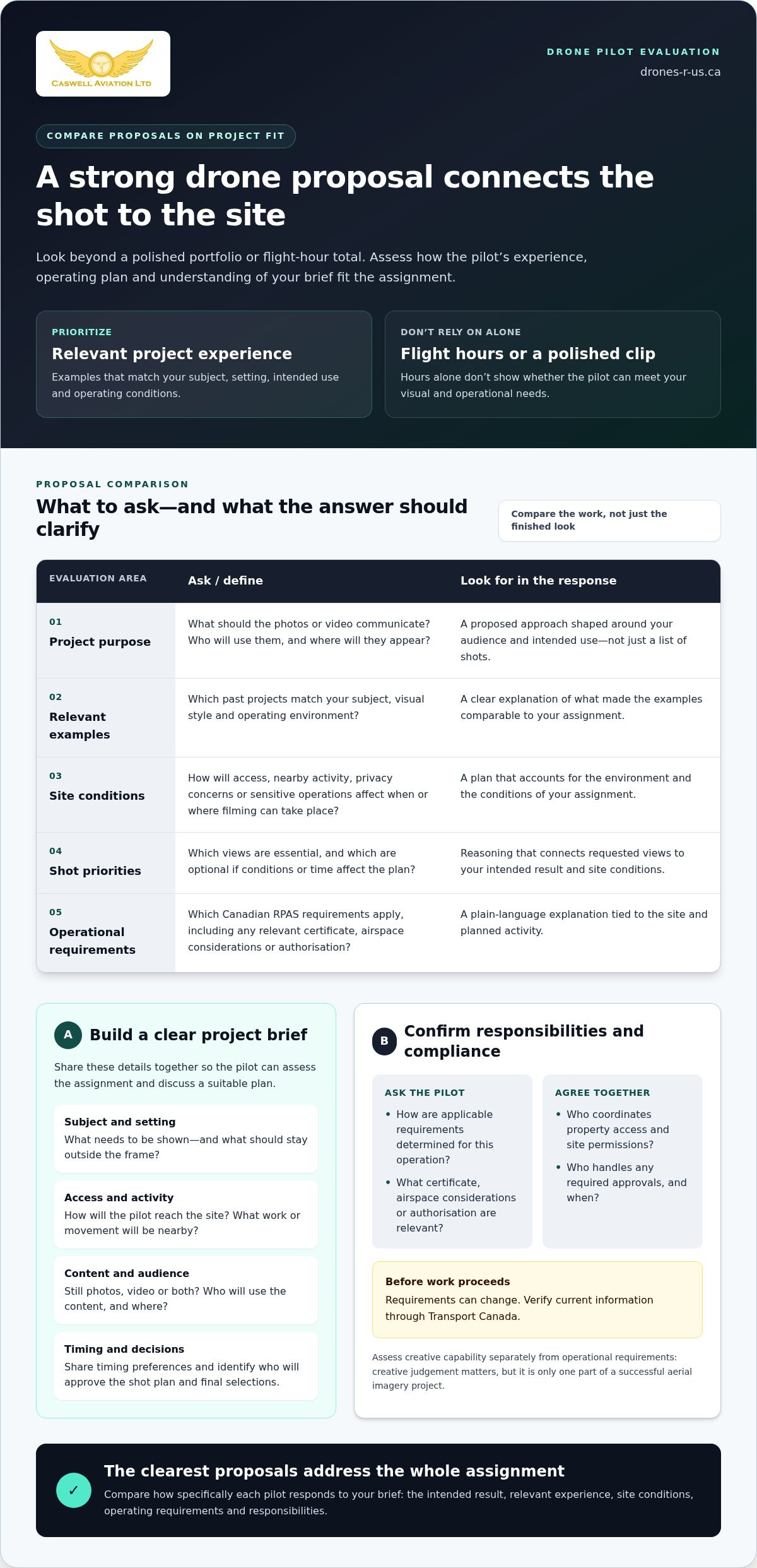
Describe the subject and setting in plain language. Identify what needs to be filmed, the audience, and the intended use, such as a website, presentation, or promotional video. Include access arrangements, nearby activity, privacy concerns, and any sensitive operations that could affect when or where filming can take place. These details help the pilot assess the assignment and discuss a suitable plan.
- Subject and setting: What needs to be shown, and what should remain outside the frame?
- Access and activity: How will the pilot reach the site, and what work or movement will be happening nearby?
- Shot priorities: Which views are essential, and which are optional if conditions or time affect the plan?
A short project brief makes those details easier to share. For example: “We need aerial photos and a short video of our commercial property for a website update. The site is at [location or access details], with regular vehicle movement near the main entrance. We prefer filming in the morning during [date range]. [Name or role] will approve the shot plan and final selections.” This gives the pilot a useful starting point without assuming every requested view will be possible. Site conditions and operational requirements still inform the plan.
How do you explain the result you need?
Be clear about whether still photography, video, or both are the priority. If you have visual references, explain what you like about them, such as the angle, pacing, or sense of scale. Treat references as inspiration unless a particular shot or output is a firm requirement. For a general overview of drone types and applications, see Understanding drone technology.
A useful project brief connects the subject, intended audience, use, site conditions, timing preferences, and decision-maker in one clear description. These questions to ask before hiring a drone pilot make the conversation more productive: the pilot can respond to the actual assignment, and you can assess whether the proposed approach fits.
Ask about relevant experience and Canadian RPAS operating requirements
Experience matters most when it relates to your assignment. Ask to see examples that match your subject, setting, and intended use, then discuss what made those projects comparable. A pilot who has filmed a property, for example, may know how to show its layout. A project involving active site operations can require different coordination and planning.
Flight hours alone don’t show whether a pilot can meet your visual and operational needs. Look for clear reasoning about the work: how the pilot would approach the requested views, account for the environment, and plan around your assignment’s conditions. Creative judgement is important, but it’s only one part of a successful aerial imagery project.
What experience is relevant to your assignment?
Review representative photos or video, and ask which parts of the work relate to your project. Compare the subject, visual style, and operating environment, not just the finished look. A polished clip can demonstrate editing skill, but you’ll also want to know whether the pilot has handled similar access conditions, nearby activity, or timing constraints.
Assess creative capability separately from operational requirements. Can the pilot explain how the proposed approach supports your intended use while accounting for the site? These questions to ask before hiring a drone pilot help you judge relevant experience without treating a large portfolio or high flight-hour total as proof of project fit.
What should you clarify about qualifications and compliance?
In Canada, remotely piloted aircraft systems (RPAS) are subject to Transport Canada requirements, and the rules for a flight depend on the planned operation. Ask how the pilot determines which requirements apply to your assignment, including any relevant certificate, airspace considerations, or authorisation. A useful answer explains the requirements in plain language and relates them to the site and planned activity.
Also establish who will coordinate property access, site permissions, and any required approvals. Responsibilities can involve the client, site operator, and pilot, so agree on who handles each step and when. Requirements can change, so verify current information through Transport Canada before the work proceeds. For additional context, consult the articles The Complete Guide to Transport Canada Drone Certification in 2026 and Drone Regulations in Canada: The 2026 Professional Reference Guide.
Caswell Aviation Ltd provides online and in-person training for Transport Canada Advanced and Level 1 Complex certifications, as well as professional flight reviews. For tailored drone aerial photography and video, discuss relevant experience and operating requirements early so the assignment can be planned around them.
Compare safety planning, communication, and project responsibilities
A safety plan should address the actual site and operation, not rely on a generic checklist. Ask how the pilot will assess access, nearby people, weather, privacy, and other activities that could affect the flight. The answers should explain how decisions will be made if conditions change and what information you need to provide before work begins.
Use the questions below to compare proposals. Look for specific explanations tied to your site, rather than broad assurances.
| Planning question | What you should understand |
|---|---|
| How will you assess the site and access? | What site details the pilot needs, how access will be coordinated, and which conditions could affect the proposed plan. |
| How will nearby people and activities be addressed? | How the pilot will account for bystanders, staff, vehicles, or other work happening during the shoot. |
| How will privacy concerns be handled? | How the framing and capture plan will account for people or neighbouring areas that aren’t part of the assignment. |
| What happens if weather or conditions change? | How the pilot will communicate a go, pause, or reschedule decision, and who needs to be notified. |
| Who is responsible for coordination and insurance discussions? | Who supplies site information, arranges access, communicates changes, and clarifies any assignment-specific insurance expectations. |
How will the pilot assess the site and manage operational risks?
Ask what the pilot needs to know about the site before the shoot, including access points, active work areas, nearby people, and timing constraints. Find out how changing weather or on-site activity could alter the plan, and who can pause or reschedule the work. Current Canadian requirements and site-specific constraints should be considered for each assignment, since the appropriate plan depends on the operation and setting.
Who handles coordination and project responsibilities?
Agree on who provides site details, arranges access, and informs staff or other parties about the planned activity. Discuss how privacy and bystanders will be considered, and how schedule changes will be shared. Decide how changes or other key decisions will be recorded, such as in an updated schedule or written project notes. Make insurance discussions specific to the assignment: clarify expectations and responsibilities without assuming a particular policy or coverage.
Set a primary contact for each side, decide how urgent changes will be communicated, and confirm when the pilot will update you if the plan needs to change. The questions to ask before hiring a drone pilot should make responsibilities clear, not leave important decisions until filming day.
A useful safety plan reflects the site, the people nearby, and the operation being flown.
Clarify deliverables, usage, schedule, and the working process
A clear agreement turns a creative brief into a manageable production plan. Separate what happens on site from what happens afterward: the capture plan covers the views and material recorded, while post-production covers selections, editing, review, and final delivery. Tailored aerial photography and video should suit your intended use, so specify what the finished work needs to do.
Which deliverables and usage details belong in the agreement?
Describe the outputs in practical terms. For photography, identify the types of views or image selections you need. For video, outline the scope, such as a short overview or a series of clips, and explain the editing style you expect. Ask which file formats and delivery method will suit your website, presentation, or other destination. The questions to ask before hiring a drone pilot should also establish how you’ll review the work and request changes.
Agree on usage before the shoot. Explain who the audience is and where the images or video will appear. Clarify the usage rights in writing, including any limits or conditions that matter to your organization. Don’t assume capture, editing, and every possible use are automatically covered by the same scope. Confirm who selects the final material, who approves it, and how requested changes will be handled.
How should both sides plan timing and communication?
Set a preferred shooting window, identify key decision points, and name one primary contact to coordinate feedback. Discuss how weather, access changes, or shifting project needs could affect the schedule. Agree on how updates will be shared and how a revised plan will be approved. Have the expected review and delivery sequence documented for the assignment rather than assuming a specific turnaround.
Use this sequence to organize the discussion:
- Define outputs: List the required photos, video scope, editing expectations, and formats.
- Confirm use: Identify audiences, platforms, and agreed usage rights.
- Plan capture: Set the preferred filming window, site access details, and project contact.
- Set review steps: Agree on who reviews selections or edits and how feedback will be collected.
- Confirm delivery: Specify the delivery method and what constitutes final approval.
These steps make proposals easier to compare. One proposal may focus on capturing a set of views, while another may also describe editing, review, and delivery. Check that each addresses the same intended use and requested outputs before comparing scope.
Caswell Aviation provides aerial imagery and video tailored to client requirements. Explore drone photography and video services.
Use the final hiring checklist to choose a drone pilot with confidence
Before deciding, compare each proposal against the same project requirements. A concise checklist helps you spot what’s addressed, what needs more detail, and whether the proposed work matches the outcome you need. The strongest fit isn’t necessarily the proposal with the most flight time or the longest list of services. Look for relevant answers, practical planning, and clearly defined outputs.
What belongs on a final drone pilot hiring checklist?
Use this list to review the project and record agreed details. Copy it into your planning notes, then mark any open items for follow-up before work proceeds.
- Mission: Is the subject, intended audience, use, site, and desired outcome clear?
- Experience: Have you reviewed examples relevant to the subject, visual style, and operating environment?
- Operations: Have you discussed site conditions, access, nearby activity, privacy, weather contingencies, and applicable operating requirements?
- Responsibilities: Is it clear who coordinates access, supplies site information, communicates changes, and records decisions?
- Deliverables: Are the image selections or video scope, editing expectations, file formats, review steps, usage expectations, and delivery method agreed?
- Schedule and communication: Are the preferred timing, primary contacts, decision points, and process for schedule changes understood?
- Open questions: Have unresolved requirements been identified, assigned to someone, and clarified before the project proceeds?
Compare responses by specificity, relevance, clarity, and alignment with your brief. A specific answer explains how the proposed approach relates to your site and requested content. A relevant example reflects comparable work, not simply general flight experience. Clear responses name expected outputs and responsibilities. Alignment means the proposed scope serves your intended use without leaving important requirements unclear.
If a response is broad, note exactly what needs clarification. For example, “video included” doesn’t define the scope, editing expectations, or final format. Have those details recorded so you can compare proposals on the same basis and reduce surprises later.
What are the next steps for planning aerial imagery or video?
Prepare a short brief with the subject, intended use, site and access details, preferred timing, essential shots, and the person who will approve the work. Use the project discussion to align the proposed aerial imagery or video with your visual goals and practical conditions. Caswell Aviation tailors aerial photography and video to client requirements, so a clear brief is a useful starting point.
To discuss the requirements for your project, share your aerial imagery or video brief with Caswell Aviation.
Turn your project goals into a clear first step
Before moving ahead, decide which outcome matters most and what you’re willing to adjust. A preferred angle, filming window, or editing style may be flexible; the purpose of the finished content may not be. Separating essentials from preferences gives the next conversation a useful focus and helps prevent small assumptions from shaping the project in unintended ways.
Use the questions to ask before hiring a drone pilot as a starting point, then put your priorities into a short brief. If a requirement is unclear, identify it now and include it in the planning discussion. A useful first step is to share the purpose of the imagery, the intended audience, and what you hope the content will help them understand.
Caswell Aviation works with clients across Canada on aerial photography and video, with project requirements guiding the approach. Discuss your aerial imagery or video project and take the first step towards a plan that fits your goals.
Frequently Asked Questions
How much does it cost to hire a drone pilot in Canada?
There isn’t one reliable price for every assignment. A proposal can depend on the project’s scope, site conditions, capture requirements, editing, intended usage, and scheduling needs. Rather than comparing figures without context, use the questions to ask before hiring a drone pilot to clarify what each proposed scope includes. Share a clear project brief so the work can be assessed against your requirements.
Can I hire a drone pilot if I do not own a drone?
Yes. If you’re hiring an aerial imagery service, your role is generally to define the project, not supply the aircraft. The pilot plans and conducts the agreed capture using equipment appropriate to the assignment. Focus your brief on the images or video you need, the subject, and site conditions. For example, note whether access is controlled or nearby activity could affect the shoot.
What happens if weather prevents the planned drone shoot?
Weather may affect whether a planned operation is suitable, so discuss the decision process before the shoot. Agree how the pilot will communicate a concern, who needs to be notified, and how postponement or schedule changes will be handled. Conditions at the site matter. Safety should take priority over keeping the original date, and a shoot should not be assumed to proceed if conditions are unsuitable.
How far in advance should I book a drone pilot?
There’s no universal lead time. Planning needs depend on the assignment’s scope, site access, coordination with other activities, and your preferred schedule. Start the conversation once you know the project date and key requirements, especially if access or approvals involve other people. Sharing a clear brief early gives everyone a chance to organize the work and discuss timing without assuming a particular booking window.
Can drone photos and video be used in advertising?
Aerial imagery can support advertising, but define the intended platforms, audience, usage rights, and editing expectations as part of the project scope. Content planned for a website, for example, may need different framing or edits than material intended for a presentation or social media. Don’t assume every use is covered automatically. Agree on how the final images or video may be used before capture begins.
What information should I include when requesting a drone photography proposal?
Describe the subject, site, intended use, desired images or video, preferred timing, access conditions, and any known constraints. Identify essential views separately from optional ideas. This gives the discussion a useful starting point and helps shape a scope around your needs. The project-brief guidance in this article can help you organize the details without preparing a lengthy document.
Do I need to be present during a drone shoot?
Not always. Whether you need to attend depends on site access, project coordination, and who must make decisions or approve changes during the assignment. Before the shoot, establish a primary contact, confirm how the pilot will access the site, and decide how questions will be handled if plans change. This helps the agreed project plan proceed clearly, whether you attend in person or coordinate remotely.
Leave a comment