

Hiring a Certified Drone Pilot: A Practical Guide for 2026
When hiring a certified drone pilot, the certificate is only one part of the decision. The right qualifications and permissions depend on the planned flight, while the site, airspace, access and required deliverables shape the project scope.
If you're planning aerial photography or video, it can be difficult to know what to ask for or how to turn an idea into a workable brief. If you're searching for professional drone services, start by defining the result you need, then match the pilot's qualifications and proposed plan to the operation.
This guide explains how to define your project, assess relevant Transport Canada credentials and plan for airspace, site access, safety and coordination. You'll also learn what to clarify before flight day so the operation is compliant and the imagery is useful. Caswell Aviation Ltd provides aerial photography and video tailored to client requirements, informed by its work in drone training and professional flight reviews.
Key Takeaways
- Start with the project objective, intended flight area and imagery you need. A clear scope supports a practical plan.
- Match the pilot’s Transport Canada credentials to the planned operation, and verify current rules before proceeding.
- Consider pilot certification, airspace coordination, site permission and property access separately. Each involves different planning steps.
- Assess more than the certificate: look at relevant experience, communication, planning and whether the proposed deliverables suit your needs.
- Caswell Aviation tailors its aerial photography and video to client requirements, so clear project details are a useful starting point.
Hiring a certified drone pilot: define the project before the search
Commissioning a drone flight is different from applying for a drone-pilot job. A client defines an outcome and engages a pilot to plan an operation around it. An employer advertises a role and assesses candidates for ongoing duties. Keep the two separate: a résumé-focused search won’t replace a clear project brief.
A certified drone pilot holds credentials relevant to drone operations in Canada, but the appropriate certificate depends on the planned flight and current Transport Canada rules. Certification alone doesn’t establish that an assignment is workable. The site, airspace, access arrangements, people nearby and intended results all affect the scope. Look for a pilot whose qualifications fit the operation and who can explain how the plan, site conditions and deliverables fit together. This is a practical way to assess the proposed work, not a guarantee of a particular outcome.
Start with the aerial result you need
Before discussing flight logistics, describe what the project needs to produce. Is the priority still photography, video, inspection imagery or another defined output? Identify the subject, who will use the material, the delivery format and the viewpoints that matter. A property overview, for example, may need broad establishing images, while an inspection brief may call for close, consistent views of specific features.
Separate essential deliverables from creative preferences. A required view, file format or sequence belongs in the core scope; optional movement, angles or visual treatments can be discussed as refinements. For a corporate video, consider its audience and intended use as well as the footage itself. Whatever search phrase brought you here, start with the imagery and outcome the project requires.
Separate contractor hiring from pilot recruitment
A job advertisement describes employment requirements, such as duties, experience and role expectations. It isn’t a service scope. A project brief explains what needs to be captured, where the work is proposed, what constraints are known and which files or images are required. A résumé or application describes a candidate’s background, but doesn’t replace a plan for your site and assignment.
For a commissioned project, use the brief to frame the work, then assess whether the proposed approach suits the result you need. Caswell Aviation Ltd provides aerial photography and video tailored to client requirements. A defined objective is a useful starting point for shaping the assignment.
Credentials and compliance: match the pilot to the operation
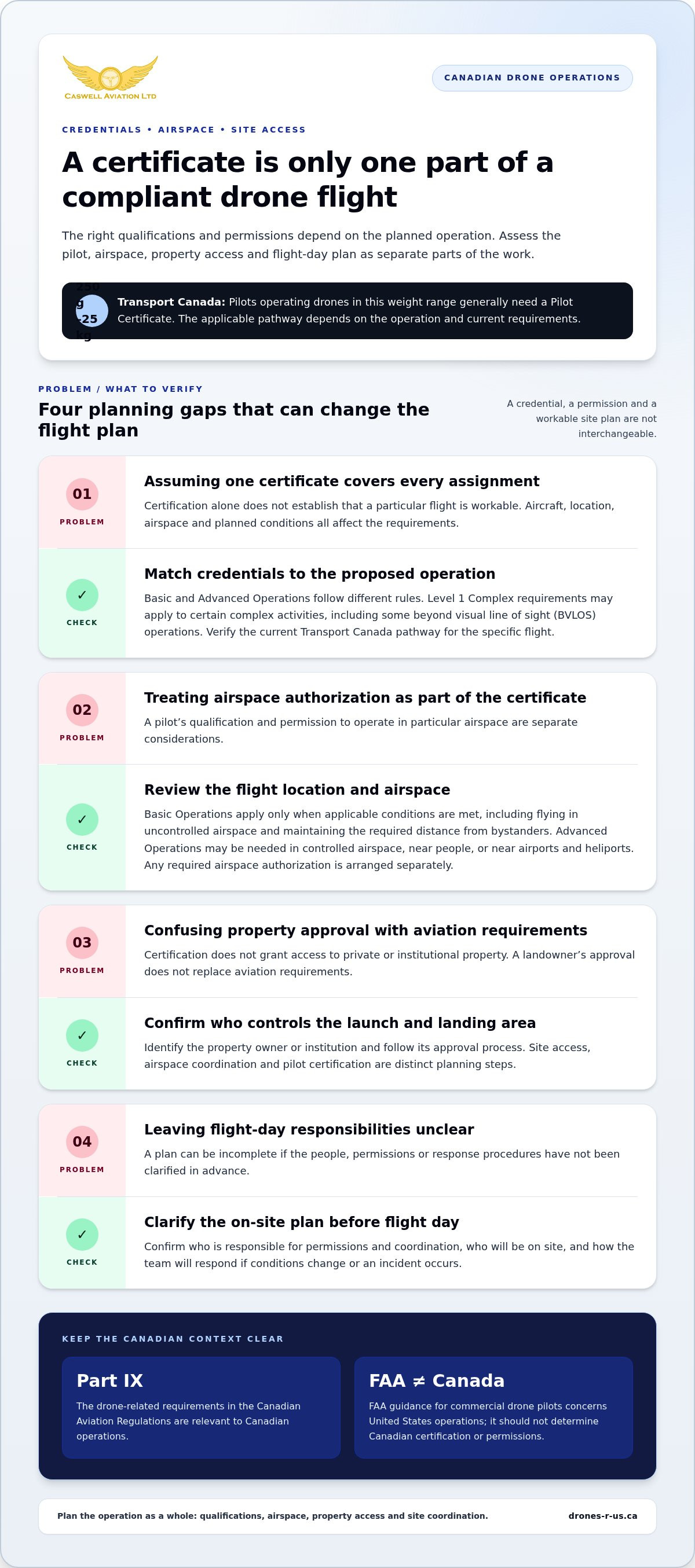
A pilot’s certificate is only one part of a compliant drone operation. Requirements depend on factors such as the aircraft, flight location, airspace and planned conditions. In Canada, pilots operating drones between 250 g and 25 kg generally need a Transport Canada Pilot Certificate, with Basic and Advanced operations following different rules. Level 1 Complex Operations applies to certain complex activities, including some beyond visual line of sight operations. Check current Transport Canada requirements for the proposed flight rather than assuming one certificate covers every job.
Consider credentials, operating conditions and permissions together. Each affects whether the planned flight can proceed as intended.
Check the relevant certificate and operating context
Basic Operations apply only when the operation meets the applicable conditions, including flying in uncontrolled airspace and maintaining the required distance from bystanders. Advanced Operations may be needed for flights in controlled airspace, near people or near airports and heliports, with any required airspace authorization arranged separately. Level 1 Complex requirements may apply to operations such as BVLOS flights. Review Transport Canada’s current drone safety and certification guidance for the applicable pathway. Don’t infer the required certificate from the project’s commercial purpose alone.
Plan site access, airspace coordination and incident procedures
Certification doesn’t grant access to private or institutional property, and a landowner’s approval doesn’t replace aviation requirements. Identify who controls the launch and landing area, then follow the property owner’s or institution’s approval process. A university’s contractor rules, for example, apply to that institution’s sites, not automatically to other locations. Controlled-airspace coordination is a separate step, and its requirements should be checked against current rules and the specific operation.
Before flight day, clarify who is responsible for permissions and coordination, who will be on site, and how the team will respond if conditions change or an incident occurs. For broader Canadian rules, consult the applicable provisions of the Canadian Aviation Regulations, including the drone-related requirements in Part IX. The FAA guidance for commercial drone pilots concerns United States operations, so it shouldn’t be used to determine Canadian certification or permissions.
Caswell Aviation’s drone training and professional flight reviews provide aviation education relevant to understanding certification pathways. For aerial imagery planning, explore drone photography and video services and consider how the project scope, site process and operating requirements fit together.
How to assess a drone pilot beyond the certificate
A certificate is an important qualification signal, but it doesn’t show whether a pilot’s experience, approach and deliverables suit your assignment. Professional fit depends on meeting applicable requirements and producing the result you need. Assess the proposed work as a complete service, not just a credential.
Compare experience with the project’s actual needs
Look for examples relevant to your subject, environment and intended use. A portfolio of broad landscape footage may show visual skill, but it doesn’t automatically demonstrate experience capturing detailed images of a structure or working around a particular site’s constraints. Relevant examples help you judge style and quality, but they don’t promise the same result under different operating conditions.
Focus on specific evidence rather than general claims. For photography or video, review framing, image consistency and how well the work serves its purpose. For other imagery, consider whether the examples resemble the subject and viewpoints in your brief. Use your project requirements, rather than a search phrase alone, to guide your assessment.
Assess deliverables and communication before booking
Agree on what you’ll receive and how the work will be coordinated. Define file types, whether editing is expected, intended usage, key viewpoints and delivery milestones. Discuss how weather, access changes or safety considerations could affect the plan. Don’t assume a flight can proceed in every condition.
Use this framework to assess the proposed fit:
| Area | What to assess |
|---|---|
| Relevant experience | Do examples relate to your subject, setting and intended use? |
| Operation fit | Does the proposed approach account for the assignment’s conditions and applicable requirements? |
| Deliverables | Are the images or video, file types, editing expectations and usage needs clearly described? |
| Communication | Are responsibilities, updates and project changes discussed clearly? |
| Planning | Does the plan account for site access, timing and possible weather or safety-related changes? |
A strong comparison doesn’t require the most elaborate portfolio or the longest résumé. It needs a clear connection between relevant work, the proposed operation and the output you want. When considering “hiring a certified drone pilot Calgary,” compare how each proposed plan addresses those points. A project-specific plan makes the fit visible and gives both sides a practical basis for agreeing on scope.
Plan the drone project: scope, access, safety and deliverables
A practical project plan connects the result you want with the site, people and operating conditions involved. Put the details in a concise brief before confirming the work. This gives everyone a shared reference and helps prevent assumptions about access, flight areas or final files.
Prepare a concise project brief
Use this sequence to shape the assignment:
- Define the objective. State what the aerial imagery needs to show and how it will be used.
- Describe the subject and flight area. Identify the relevant structures, property boundaries, viewpoints or areas to avoid.
- Set timing and access details. Note preferred timing, site entry arrangements, on-site contacts and coordination needs.
- List known constraints. Include relevant site activity, nearby people, access limits and known operational or airspace considerations.
- Separate must-haves from options. Identify essential images, video or viewpoints separately from optional creative shots or edits.
- Agree on delivery. Specify the expected outputs, file formats, editing expectations, intended use and how delivery will be coordinated.
Be specific without trying to design the flight yourself. Identify the areas or features that matter and explain why; the operator can use that context to develop a suitable approach. Name the property owner, manager or institutional contact responsible for access, and establish who will communicate with them. Site approval and aviation requirements are separate planning items.
Agree on operational coordination and final outputs
Before the scheduled flight, agree on how the team will review changes to weather, access or safety conditions. Clarify who communicates a change, who makes the operational decision and how the parties will revise the plan if conditions no longer support the intended work. Airspace checks and safety planning must reflect the actual location and operation, not a generic assumption.
Project checklist: define the objective, map the intended area, identify access contacts and constraints, plan safety and airspace checks, then agree on the final deliverables.
Regulatory requirements can change and may vary with the operation. Verify current Transport Canada rules and any applicable permissions before planning the flight. A completed checklist isn’t automatic approval to fly; it helps organize the decisions that still need to be addressed for the specific project.
For aerial imagery tailored to your requirements, explore drone photography and video services and use your project brief to guide the discussion.
Book aerial photography or video with Caswell Aviation
Once you’ve defined the project and considered the planning requirements, match the imagery to its intended use. Caswell Aviation provides aerial photography and video tailored to client requirements. A clear brief helps align the requested perspectives, final outputs and project coordination from the outset.
Match the service to the intended use
A photography brief might focus on specific still images, such as a wide view of a site or selected angles of a subject. A video brief may call for moving footage that establishes a location, shows a process or supports a larger production. A combined assignment can include both, but list essential stills and video separately so neither gets lost in a general request for “aerial content.”
Describe where the images will appear and what they need to communicate. A presentation, website and internal project record may call for different perspectives or formats. Identify essential views, creative preferences and whether editing is part of the expected output. This gives the service scope a practical purpose without assuming a particular flight path or result.
Take the next step with a clear project brief
Before discussing the assignment, gather a few core details: the project objective, subject, intended use, site and access context, preferred timing, and the photographs or video you want delivered. Include relevant contacts and known constraints, such as areas to avoid or on-site coordination needs. Keep optional shots distinct from must-have deliverables.
Caswell Aviation tailors aerial imagery and video to client requirements. Sharing a defined scope creates a useful starting point for discussing the work, coordinating the project and clarifying final outputs. It also helps distinguish between a photography-focused assignment, a video brief and a combination of both.
If you’re ready to plan aerial imagery for your project, visit Caswell Aviation to discuss your requirements.
Move from project brief to aerial imagery
A sound drone assignment starts with a defined result, not a certificate alone. Clarify what you need captured, how you’ll use the imagery and what site access or coordination the project involves. Then assess whether the pilot’s qualifications and proposed approach fit the operation, and verify applicable Transport Canada requirements before proceeding.
Caswell Aviation provides aerial photography and video tailored to client requirements. A clear brief helps connect your intended use with the perspectives and final deliverables you need. The company also offers drone training for Transport Canada Advanced and Level 1 Complex certification pathways, along with professional flight reviews.
Ready to discuss your aerial photography or video project? Share your project requirements with Caswell Aviation and take the next step with a clear scope. Thoughtful planning keeps the focus on useful results.
Frequently Asked Questions
What certification does a drone pilot need for commercial work in Canada?
There isn’t one certificate for every commercial drone operation. For drones weighing between 250 g and 25 kg, Transport Canada’s rules generally require a pilot certificate, with Basic or Advanced operations depending on the flight conditions. Some higher-complexity operations may require a Level 1 Complex certificate. The aircraft, airspace, location and planned operation affect the requirements, so verify current Transport Canada rules for the specific project.
How can I check whether a drone pilot is qualified for my project?
Review the pilot’s Transport Canada certificate and consider whether it fits the proposed operation. Then assess relevant experience, sample work, the project plan and how clearly the pilot explains deliverables and coordination. A certificate is an important qualification, but it doesn’t replace a site-specific plan. Match credentials and experience to the actual flight conditions and intended result.
Do I need permission to hire a drone pilot to fly over a property?
You may need the property owner’s or manager’s approval for access, takeoff or landing, and site activities. That approval is separate from aviation requirements and doesn’t itself authorize a flight in restricted or controlled airspace. Identify who controls the site and follow the applicable access process. The pilot must also assess the operation under current Transport Canada rules and arrange any required airspace coordination before flying.
What information should I give a drone pilot before requesting aerial photography?
Share the project objective, subject, site location, preferred timing and intended use of the images. Describe essential viewpoints, areas to avoid, access arrangements, on-site contacts and known constraints. Note whether you need still photographs, video or both, and outline preferred file formats or editing expectations. Separate must-have images from optional creative preferences. This brief gives the pilot useful context to scope the work and plan coordination.
Can a certified drone pilot guarantee that the flight will go ahead?
No. A certificate doesn’t guarantee that conditions will support a safe, compliant flight on a particular day. Weather, site access, airspace requirements or other operational safety factors may affect the plan. Before scheduling, agree on how changes will be communicated and who will coordinate with site contacts. The pilot should assess conditions for the specific operation and should not proceed if the flight can’t be conducted safely and within applicable requirements.
What should a drone photography or video project include?
A clear project scope should identify the objective, subject, intended use, proposed site and access context. Specify whether you need photographs, video or both, along with essential viewpoints and final deliverables. Discuss file formats, editing expectations, coordination responsibilities and how changes to weather, access or safety conditions will be handled. Caswell Aviation Ltd provides aerial photography and video tailored to client requirements, so a focused brief helps shape a useful project discussion.
Leave a comment