

How to Register a Commercial Drone in Canada and Meet the Rules
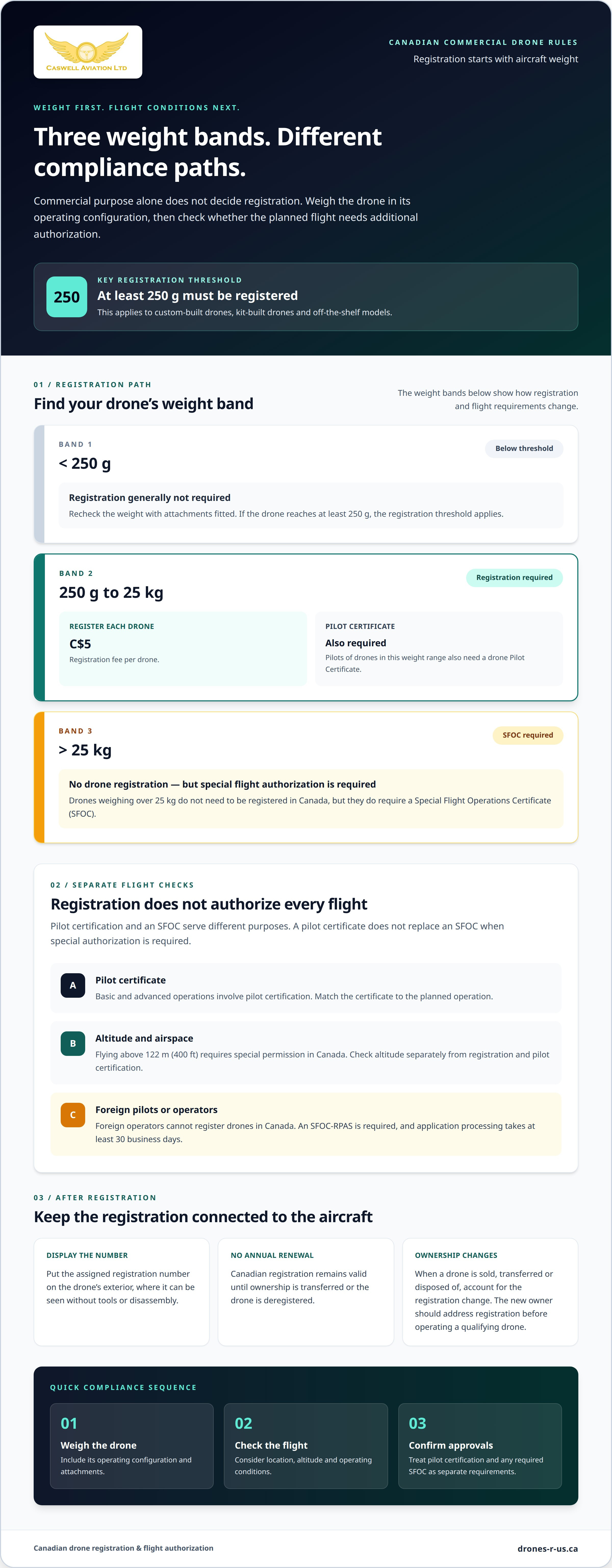
A drone’s weight, not its commercial purpose, determines whether it must be registered. For commercial drone registration in Canada, the key threshold is 250 g: according to Transport Canada, drones weighing at least 250 g must be registered, including custom-built drones and those built from a kit or bought off the shelf. Drones weighing less than 250 g don’t need to be registered.
That threshold is only one part of operating within the rules. You also need to know how to display a registration number and when a flight may require a Special Flight Operations Certificate (SFOC). This guide explains these requirements, outlines potential fines for non-compliance and shows how to approach each step methodically, so you can prepare your drone and operation before flying.
Key Takeaways
- Registration and flight authorization are separate questions: some operations may require additional approval depending on the aircraft and where it is flown.
- Make the registration number visible on the drone’s exterior, where it can be seen without tools or disassembly.
- Allow at least 30 business days for an SFOC application to be processed, and account for the extra requirements that apply to foreign operators.
- Understand the potential consequences before flying: non-compliance can lead to fines, with penalties varying by the violation and whether the operator is an individual or corporation.
- Use the appropriate training and flight review to prepare for the pilot certificate or operating requirements relevant to your planned flights.
Commercial operations and SFOC requirements
A commercial purpose alone doesn’t determine which approvals a flight needs. In Canada, the drone’s weight, flight location, altitude and operating conditions help determine whether registration, a pilot certificate or a Special Flight Operations Certificate (SFOC) applies.
Basic and advanced operations involve pilot certification, while an SFOC covers operations that need special authorization. These are separate requirements, so a pilot certificate doesn’t replace an SFOC when one is required.
- Classify the planned operation. Identify the drone, location, altitude and intended flight before deciding what approvals apply. Basic drone operations require a Pilot Certificate - Basic Operation or Advanced Operation. The operation’s category matters more than whether the flight earns revenue. A commercial photography flight, for example, still needs to meet the rules for its operating conditions. Record the planned activity so you can identify which requirements apply to that flight.
- Match the pilot certificate to the operation. A pilot certificate and an SFOC serve different purposes. The certificate addresses pilot qualifications; an SFOC provides special authorization for an operation that requires it. Don’t treat one document as a substitute for the other. Confirm the certificate requirement for the planned operation before flight, then assess separately whether the operation needs special permission.
- Assess flights involving drones over 25 kg. In Canada, drones weighing over 25 kg don’t need to be registered but require a Special Flight Operations Certificate. This is a distinct rule from the registration threshold for lighter aircraft. If the aircraft exceeds that weight, plan for the SFOC requirement rather than assuming registration alone permits the flight. Keep the weight and authorization decision tied to the specific drone and operation.
- Identify altitude and airspace permissions. Flying above 122 metres (400 ft) requires special permission in Canada. Treat this as a separate authorization question, even when the drone is registered and the pilot holds a certificate. Map the proposed flight area and altitude before setting the mission plan. A flight below that height may still have other operating requirements, so altitude alone doesn’t settle every compliance question.
- Plan foreign-operated flights early. Foreign pilots or operators can’t register drones in Canada and need an SFOC-RPAS to comply with the Canadian Aviation Regulations (CARs). This requirement applies to foreign operators working in Canada, so a registration from another country doesn’t replace the Canadian authorization. Allow at least 30 business days for SFOC application processing. Build that lead time into the project schedule before confirming flight dates or client deliverables.
Canadian drone registration thresholds
Use each drone’s weight to determine whether registration applies, and account for ownership changes. The registration threshold is separate from pilot certification and permissions for a particular flight. For commercial drone registration in Canada, start with the aircraft and its operating configuration.
-
Check which drones need registration
Weigh the drone in its operating configuration and apply Transport Canada’s threshold. Drones weighing at least 250 g must be registered, including custom-built drones and models built from a kit or bought off the shelf. Drones under 250 g generally don’t need registration, unless an attachment raises their weight above 250 g. For drones weighing from 250 g to 25 kg, pilots also need a drone Pilot Certificate. Apply the relevant Canadian Aviation Regulations requirements to the aircraft and operation.
-
Confirm the registration cost
Budget C$5 for each drone registration. The fee applies per drone, not per operator, so registering several aircraft means accounting for each separately. Keep registration costs distinct from pilot-exam fees or training costs; they’re separate expenses. Commercial use doesn’t change the stated registration fee. During commercial drone registration in Canada, confirm the amount in the registration process before submitting payment, and keep the payment record with the aircraft’s registration information.
-
Register the commercial drone
Gather the drone’s identifying details and operator information, then enter the information requested through Transport Canada’s registration process. Submit the registration and C$5 fee for each qualifying drone. Keep the resulting registration record available for the next compliance steps, including displaying the assigned number on the aircraft. Don’t treat a pilot certificate as a substitute for registering a drone that meets the weight threshold.
-
Manage ownership changes and cancellation
Track the registration for as long as you own the drone. Canadian registration remains valid until ownership is transferred or the drone is deregistered, and there’s no annual renewal. A sale changes the status of the existing registration; it doesn’t make that registration a permanent record for the next owner. If you dispose of a drone without transferring ownership, use the deregistration process rather than leaving the record active.
For a transfer, account for the change in ownership and the registration’s end point. The new owner should address registration before operating a drone that meets the threshold. If you’re also preparing for the required pilot certificate, drone training can help build knowledge of Canadian operating requirements.
Displaying a drone registration number
After registration, place the assigned number on the aircraft’s exterior. Registered drones should display their registration number on the aircraft. The number must be visible without tools or disassembly.
- Copy the assigned number exactly. Use the registration number issued for that specific drone, not a pilot certificate number or another aircraft’s identifier. Canadian registration numbers follow the C-XXXX format, with C followed by four alphanumeric characters. Preserve every character and the hyphen when preparing the marking. A copied or transposed character can make the displayed number differ from the aircraft’s registration record.
- Choose an exposed exterior surface. Place the marking where it can be seen on the drone without removing a cover, opening a compartment or using tools. The rule focuses on exterior visibility, not on a particular arm, panel or side. Select a spot that remains exposed when the aircraft is assembled for flight. Avoid placing the number inside a battery bay or beneath a removable shell.
- Make the characters easy to read. Arrange the C-XXXX sequence clearly, with the hyphen in its correct position. Choose a placement where the number doesn’t blend into the surface or disappear behind installed equipment. The regulations require display and visibility; clear presentation helps avoid confusion when identifying the registered aircraft. Don’t add decorative characters that could make the assigned sequence harder to distinguish.
- Test visibility on the assembled drone. Inspect the marking after installing the battery, propellers and any equipment used for the flight. Confirm that no component covers the C-XXXX sequence. If a camera, payload or other attachment blocks the number, move the marking to another exposed exterior area. This practical check catches obstruction that may not be apparent while the drone is disassembled.
- Keep the marking attached and legible. Before each operation, look for peeling, damage, dirt or wear that obscures a character. A number that can’t be read clearly defeats the purpose of displaying it. If the aircraft’s surface or configuration changes, reassess the chosen location. The key test remains the same: the assigned number must be visible externally without tools or disassembly.
- Check every registered aircraft separately. If a fleet includes several registered drones, match each displayed number to its own registration record. Don’t move one drone’s marking to another aircraft during maintenance or equipment changes. A simple fleet record linking each C-XXXX number to its drone helps prevent mix-ups before a commercial flight and keeps identification consistent across the aircraft.
Fines for flying without meeting requirements
-
Identify the requirement before each flight.
List the drone’s weight, pilot credentials and planned operating conditions before launch. Registration alone doesn’t establish that every flight meets Transport Canada requirements. A commercial flight without meeting applicable requirements may result in a C$5,000 fine. A recreational flight without meeting requirements may result in a C$1,000 fine. These amounts differ by operation type, so don’t assume a commercial job is assessed like recreational flying. Record the approvals and qualifications relevant to the planned operation.
-
Assess restricted airspace separately.
Check whether the planned location involves restricted airspace before deciding the flight is ready. The maximum fine for an individual flying a drone in restricted airspace in Canada is C$3,000. For a corporation, the listed maximum is C$15,000. These are different maximums based on who is responsible, not a general price for every compliance issue. A corporate job therefore needs clear responsibility for reviewing the flight location and applicable restrictions.
-
Prevent conduct that endangers aviation safety.
Plan the operation to avoid putting aviation safety at risk. In Canada, endangering aviation safety can lead to a penalty of up to C$25,000 and/or imprisonment. This potential consequence is distinct from the listed fines for flying commercially or recreationally without meeting requirements. A pilot certificate or a completed registration doesn’t remove the need to operate safely. Review the flight plan and the aircraft’s weight before proceeding.
-
Match the consequence to the specific breach.
Don’t treat C$1,000, C$5,000, C$3,000, C$15,000 and C$25,000 as interchangeable amounts. The first two figures relate to recreational or commercial non-compliance; the restricted-airspace maximums distinguish individuals from corporations. The C$25,000 penalty concerns endangering aviation safety. The applicable consequence depends on the nature of the conduct described, so identify the relevant rule rather than relying on one headline figure.
-
Complete a pre-flight compliance check.
Before dispatch, confirm the drone’s registration status, the pilot’s required certificate and any permission specific to the operation. Then review the flight location and planned conditions. For example, a registered aircraft still needs separate consideration if its route enters restricted airspace. Assess each mission on its own rather than assuming approval for an earlier flight covers a new one. This helps prevent avoidable breaches and their potential financial or legal consequences.
Which commercial drones must be registered in Canada with Transport Canada?
Determine registration by the aircraft’s weight, not by whether a flight is paid or commercial. Apply the threshold to each drone before planning its operation.
-
Apply the 250 g threshold.
According to Transport Canada, in Canada, drones weighing at least 250 g must be registered, including custom-built drones and drones built from a kit or off the shelf. The rule applies to commercial aircraft as well as other qualifying drones. A photography drone weighing 250 g meets the threshold; a lighter aircraft does not, unless an attachment increases its weight above 250 g. Don’t use the intended job as a substitute for checking weight.
-
Assess the aircraft in its operating configuration.
Record the drone’s weight and consider any attachment that changes it. For example, a drone under 250 g may cross the registration threshold after equipment is added. Reassess the weight when you change the aircraft’s configuration, rather than relying on its original packaging or a previous setup. For custom-built models, include the completed aircraft in your assessment before deciding whether registration applies.
-
Include every build type in the decision.
Don’t assume a drone avoids registration because it was assembled by its owner. Transport Canada’s threshold covers custom-built aircraft, drones made from kits and off-the-shelf models when they weigh at least 250 g. The source of the aircraft doesn’t change the threshold. Apply the same weight-based decision to each drone in a commercial fleet, even when the aircraft have different designs or were acquired in different ways.
-
Separate registration from pilot certification.
For drones weighing from 250 g to 25 kg, pilots need a drone Pilot Certificate. Treat these as separate checks: registering the aircraft doesn’t itself establish that the pilot holds the required certificate. A commercial operator should account for both the aircraft’s weight and the planned operation before flight.
-
Use the threshold to organize your fleet records.
Group aircraft by weight and registration status, then note any attachments that affect the threshold. A fleet list can help distinguish a sub-250 g drone from a model that reaches 250 g after equipment is installed. Keep each aircraft’s identifying details with its weight assessment. If pilot qualifications are also part of your preparation, explore drone pilot training to build knowledge of Canadian operating requirements.
Caswell Aviation Ltd
Caswell Aviation Ltd can help you build the pilot knowledge needed to operate within Canadian drone rules. Its online courses and in-person training support pilots pursuing Transport Canada Advanced and Level 1 Complex certification. Advanced and Level 1 Complex Flight Reviews provide a practical next step for pilots preparing for those qualifications. These services complement the registration steps above: identify which aircraft must be registered, display its number, and separately address pilot and flight requirements. If your work involves aerial imagery, Caswell Aviation Ltd also offers drone aerial photography and video. For smart-controller handling, it offers Fitek Gear drone harnesses. Choose the training or review that aligns with your operating plans, then contact Caswell Aviation Ltd to discuss your next step.
Make compliance part of every flight plan
Build registration and operating checks into your regular flight-planning routine, rather than treating them as paperwork for a single project. A clear process helps you account for the aircraft, pilot qualifications and mission requirements whenever your equipment or plans change. That discipline makes commercial drone registration in Canada one part of a broader operational practice, not the only decision to make before a flight.
Where you need support developing pilot skills or preparing for a review, Caswell Aviation Ltd offers online courses, in-person training, and Advanced and Level 1 Complex Flight Reviews. Its drone aerial photography and video services also support projects where you need imagery captured professionally. Choose the support that matches your next operational goal and keep your preparation focused on the work ahead.
Discuss your training or flight-review goals with Caswell Aviation Ltd, and take your next step with a clear plan.
Frequently Asked Questions
Do all drones need to be registered?
No. Canadian registration depends on weight, not whether the drone is used for paid work. Drones weighing under 250 g generally don’t need registration, but an attachment can change the calculation if it raises the aircraft’s weight above 250 g. For example, assess a lightweight camera drone with its installed equipment, not just its weight as sold. Custom-built, kit-built and off-the-shelf drones are treated alike when they meet the threshold.
What are the penalties for flying an unregistered drone in Canada?
Flying commercially without meeting Transport Canada requirements may result in a C$5,000 fine. The listed potential fine for recreational non-compliance is C$1,000. Other breaches carry different consequences: flying in restricted airspace has maximum fines of C$3,000 for an individual and C$15,000 for a corporation. Endangering aviation safety can lead to a penalty of up to C$25,000 and/or imprisonment. The applicable consequence depends on the conduct involved.
What are the drone marking and registration number display requirements in Canada?
A registered drone must display its assigned registration number on the exterior, where it’s visible without tools or disassembly. Under CARs 900.14, the number must be displayed on registered drones. Canadian numbers use the format C-XXXX, with four alphanumeric characters after the C. Check the assembled aircraft before flight: a battery, payload or other installed equipment shouldn’t hide the marking or make its characters difficult to read.
What pilot certificate is required for commercial drone operations in Canada?
The required certificate depends on the operation, not simply on whether the flight is commercial. For drones weighing from 250 g to 25 kg, pilots need a drone Pilot Certificate. Basic operations require a Pilot Certificate - Basic Operation or Advanced Operation, according to the applicable operating category. For example, a paid aerial-imaging flight still needs the certificate appropriate to its operation. A certificate doesn’t replace any separate SFOC requirement.
Are there different registration rules for foreign drone operators in Canada?
Yes. Foreign pilots or operators can’t register drones in Canada and need an SFOC-RPAS to comply with the Canadian Aviation Regulations. A foreign operator planning work in Canada should build the authorization into project planning rather than relying on a registration from elsewhere. Allow at least 30 business days for SFOC application processing. The authorization requirement is distinct from pilot certification and from the rules governing a drone’s weight.
How do Canadian drone registration rules differ for drones under 250 grams?
Drones weighing less than 250 g generally don’t need registration, and micro-drone operations don’t require a pilot certificate. Operators should still follow Transport Canada safety guidelines. Reassess the weight if you add equipment: an attachment that pushes the drone above 250 g changes its registration status. Proposed registration and marking requirements for micro-drones under 250 g may begin in 2027, so this exemption may change.
Leave a comment