

Drone Flight Review Calgary: Your Guide to Advanced RPAS Certification in 2026
If you’re searching for a drone flight review, you may be wondering what the assessment involves, what the reviewer expects and how to prepare your documents, aircraft and site plan. The flight review is about more than precise control: it assesses your preparation, regulatory knowledge and ability to operate safely.
Start by understanding Transport Canada’s requirements and building a methodical routine for each stage. This guide explains the flight review, outlines the documentation and site planning to prepare, and gives you a practical checklist for assessment day. It also covers how Advanced training and a Transport Canada-compliant flight review can support your goal of earning an Advanced Pilot Certificate.
Caswell Aviation Ltd provides online and in-person training, along with Advanced and Level 1 Complex flight reviews. With a clear preparation plan, you can approach the assessment ready to demonstrate the safety-focused decision-making expected of an RPAS pilot.
Key Takeaways
- Understand how the Advanced exam leads into the practical flight review.
- Prepare a site survey, emergency procedures and checklists before review day.
- Know what to expect during the reviewer briefing, pre-flight inspection and site safety walkthrough.
- Give pre-flight planning and emergency practice enough time to reduce avoidable errors.
- Explore how online and in-person training, along with Advanced and Level 1 Complex flight reviews, can support your certification goals.
The Role of the Flight Review in Canadian Drone Regulations
The Advanced Pilot Certificate involves two distinct steps: passing Transport Canada’s Small Advanced Exam and completing an in-person flight review with a qualified reviewer. The exam tests your knowledge of rules and procedures; the review assesses how you apply that knowledge to planning, preparation and safe aircraft operation. Passing the written exam alone does not grant the certificate.
The exam contains 50 questions, has a 60-minute time limit and requires a score of at least 80%. After passing, you can arrange the practical assessment. The review goes beyond basic aircraft control. The reviewer assesses whether you make sound decisions, follow procedures and conduct the operation safely. You need to show that you can apply regulatory knowledge in an operating situation, not just recall it for an exam.
An Advanced Pilot Certificate supports operations that are not permitted under Basic privileges, including flights in controlled airspace and certain operations near people. These privileges are not blanket permission to fly anywhere: controlled-airspace operations still require the applicable airspace authorization, and each flight must meet the relevant conditions. Understanding the broader uses of drone technology can be useful, but operating privileges depend on meeting Canadian aviation requirements.
Advanced vs. Basic Operations: Why the Review Matters
Basic operations are limited to lower-risk conditions. If a planned flight involves controlled airspace or people nearby, you may need Advanced privileges, subject to the applicable requirements and authorizations. The deciding factor is the operation, not whether you are being paid. A commercial purpose does not automatically require an Advanced certificate, and payment does not remove the need to follow the rules that apply to the flight.
The certificate itself does not expire. However, Transport Canada’s current recency requirements call for recurrent training every 24 months. Keep track of your training and confirm current requirements before planning operations. This is separate from the flight review required to obtain the Advanced certificate.
Prerequisites Before You Book Your Assessment
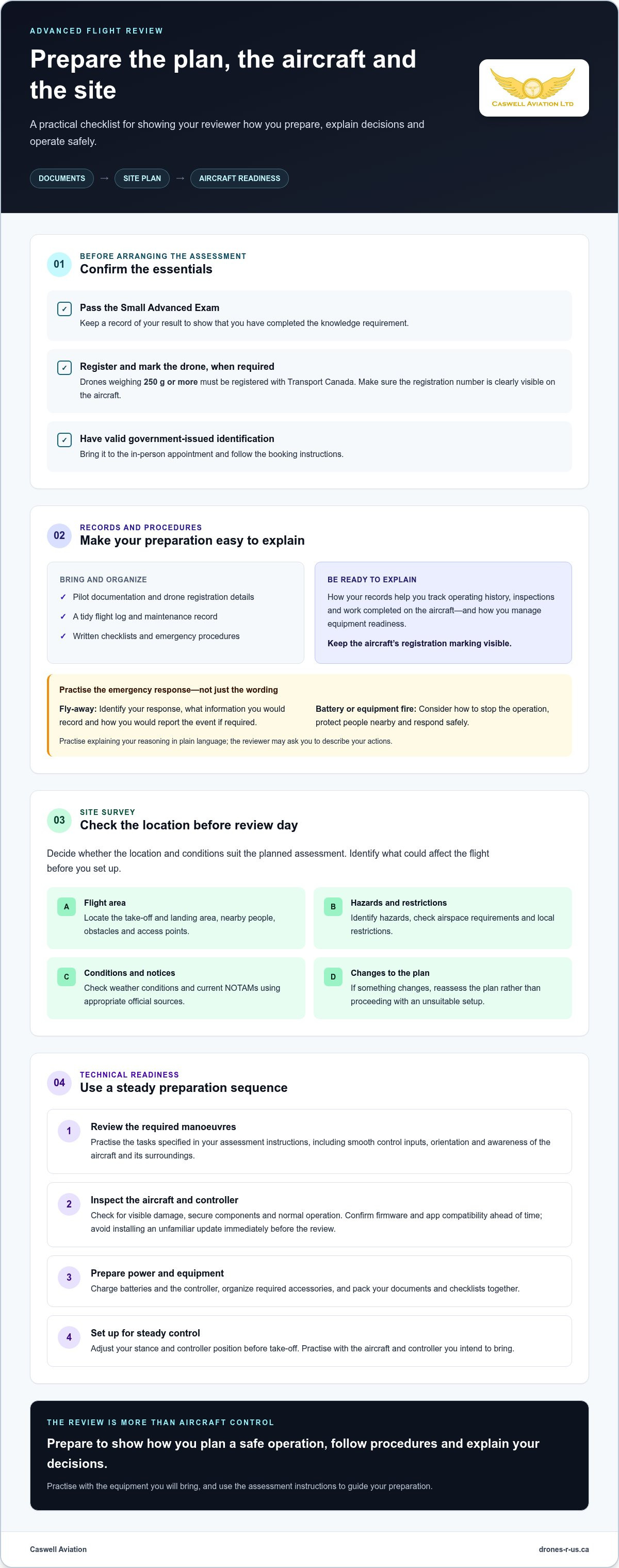
Prepare the essentials before arranging your assessment. They help the reviewer confirm your eligibility and assess the aircraft you intend to operate.
- Pass the Small Advanced Exam. Keep a record of your result so you can demonstrate that you have completed the knowledge requirement.
- Register and mark your drone. Drones weighing 250 g or more must be registered with Transport Canada, and the registration number must be clearly visible on the aircraft.
- Bring government-issued identification. Have valid identification ready for the in-person appointment and follow the booking instructions.
Treat these prerequisites as part of your flight review preparation, not last-minute administration. Caswell Aviation provides Advanced and Level 1 Complex flight reviews, supported by online and in-person training. A methodical start helps you move from exam completion to practical assessment with a clearer plan.
Essential Preparation for Your Advanced Flight Review
A strong flight review begins before the aircraft leaves its case. Prepare to show that you can plan a safe operation, explain your decisions and follow a consistent process. Practise with the aircraft and controller you intend to bring, and review the assessment instructions so your practice reflects the required tasks rather than a generic flying routine.
Documentation and Standard Operating Procedures
Keep your records together and easy to retrieve. A tidy flight log and maintenance record help you track operating history, inspections and work completed on the aircraft. They are also useful references when explaining how you manage equipment readiness. Bring your pilot documentation and drone registration details, and make sure the aircraft’s registration marking is visible.
Prepare written checklists and emergency procedures that you can follow under pressure. They should make your actions clear, not simply fill a page. For a fly-away, identify how you would respond, what information you would record and how you would report the event if required. For a battery or equipment fire, consider how you would stop the operation, protect people nearby and respond safely. Practise explaining your reasoning in plain language, since the reviewer may ask you to describe your actions.
Site Survey and Technical Readiness
Survey the proposed location before review day. Identify the take-off and landing area, nearby people, obstacles, access points and hazards that could affect the flight. Check airspace requirements, local restrictions, weather conditions and current NOTAMs using appropriate official sources. Decide whether the location and conditions suit the planned assessment. If something changes, reassess the plan rather than pressing ahead with an unsuitable setup.
Use a simple readiness sequence:
- Review the required manoeuvres. Practise the tasks specified in your assessment instructions, including smooth control inputs, orientation and awareness of the aircraft and its surroundings.
- Inspect the aircraft and controller. Check for visible damage, secure components and normal operation. Confirm firmware and app compatibility ahead of time, and avoid installing an unfamiliar update immediately before the review.
- Prepare power and equipment. Charge batteries and the controller, organize required accessories, and pack your documents and checklists together.
- Set up for steady control. Adjust your stance and controller position before take-off. A properly fitted Fitek Gear harness for a smart controller can support stable handling during practice and assessment.
Rehearse the sequence from site check to shutdown, not just the flight itself. Caswell Aviation’s Advanced flight reviews and training can support a disciplined approach to preparation.
What to Expect During Your In-Person Flight Assessment
The flight review is a structured assessment, not a race through manoeuvres. The reviewer will explain how the session will proceed, confirm the planned operation and give you an opportunity to ask relevant questions. Listen closely to the briefing. If a direction is unclear, clarify it before starting rather than guessing once the aircraft is in the air.
Next comes preparation on site. Expect to walk through the operating area with the reviewer, identify hazards and discuss how you will keep people and property clear of the flight path. You will inspect the aircraft and control station, check that the setup is ready and explain what you will do if conditions change. Use this part of the assessment to demonstrate a deliberate process, rather than rushing through a checklist.
Flight Tasks and Manoeuvres
The flight portion assesses safe, controlled operation. The exact tasks can depend on the review instructions and operating setup, so follow the reviewer’s briefing. Practise foundational control skills in advance, such as a stable take-off and landing, maintaining orientation, and flying a square pattern or circles with smooth, deliberate inputs. The goal is to maintain control and awareness throughout, not to show off speed or complexity.
The reviewer may also ask you to explain or demonstrate your response to an abnormal situation, such as a simulated lost-link event. Know the procedure for your aircraft and describe the reasoning behind it. Do not improvise an emergency response to appear decisive. Explain what you would do, then carry out the instructed simulation safely.
What the Reviewer Is Assessing
Technical control matters, but it is only part of sound airmanship. The reviewer observes how you prepare, communicate, maintain situational awareness and respond to instructions. If a visual observer is part of the operation, use clear, agreed language and acknowledge information promptly. If you lose sight of the aircraft or receive a hazard call, prioritize safety over completing the manoeuvre.
Expect oral questions as well as practical tasks. The reviewer may ask about your site assessment, airspace checks, emergency actions or selected procedures. Answer in plain language and relate your response to the operation in front of you. If you are unsure, say so rather than guessing. Calm, accurate communication is stronger than a rehearsed answer that does not fit the situation.
After landing, secure the aircraft and wait for the reviewer’s direction before packing it away. A post-flight discussion gives you a chance to hear feedback and understand the assessment outcome. The reviewer will explain the applicable results and submission process; follow their instructions for any required next steps. If an item needs improvement, turn the feedback into a specific practice target. Caswell Aviation conducts Advanced and Level 1 Complex flight reviews, with a focus on disciplined, safe operations.
Overcoming Common Mistakes and Flight Review Anxiety
A flight review can feel high-pressure, but procedural errors often cause more trouble than imperfect stick control. Weak pre-flight planning can leave you unable to explain the site, conditions or decisions behind the operation. Slow down and check your plan before take-off. A deliberate process shows sound judgement, not hesitation.
Rushing is especially risky during an emergency drill. Listen to the reviewer’s instruction, pause long enough to identify the scenario, then follow the procedure you have prepared. Avoid rapid control inputs just to appear confident. The reviewer needs to see that you can think clearly, communicate and protect people and property while responding to an unexpected event.
Five Errors to Watch For
Use this list as a final error-prevention check. Each item is easier to manage when it is part of your normal routine, rather than something you are trying to remember at the last moment.
- Skipping airspace and NOTAM checks. Review the location and current notices before the assessment, then be ready to explain how they affect your plan.
- Rushing the site assessment. Identify obstacles, people and changing conditions before deciding where and how to operate.
- Neglecting battery readiness. Check charge levels and watch for low-voltage warnings. Do not begin a task if the battery state gives you reason to doubt the available power.
- Depending too heavily on automation. Know what your aircraft’s automated modes do, but stay alert and ready to respond if the situation changes or the reviewer asks you to demonstrate manual control.
- Hurrying through emergency actions. A rushed response can lead to missed steps. Practise explaining the procedure calmly before carrying it out.
For more context on review-day pitfalls, read this guide to common drone pilot errors in Canada.
Build Confidence Through Practice
Practise the required manoeuvres in a suitable, safe area where the planned operation is permitted. Rehearse the full sequence, including your briefing, checks, flight tasks and shutdown, instead of repeating only the airborne portion. A mock review with a mentor pilot can help you get used to answering questions while following a structured process. Treat practice as a way to find gaps, not as a pass-or-fail test.
Manage nerves by treating the reviewer as a professional colleague assessing your readiness. Listen carefully, communicate clearly and ask for clarification when needed. Set up your equipment before the assessment begins. A properly fitted Fitek Gear harness for a smart controller can support stable controller handling during manoeuvres. It is one practical part of an organized setup, alongside a familiar aircraft and well-rehearsed procedures.
Strengthen your preparation with professional drone training and flight review support from Caswell Aviation.
Professional Training and Reviews with Caswell Aviation
Certification involves more than passing an exam or completing a flight task. Pilots need to understand the rules, prepare a safe operation and demonstrate consistent judgement in practice. Caswell Aviation supports that process with online and in-person drone training, plus flight reviews for Advanced and Level 1 Complex certificates.
Advanced candidates can build their knowledge through training, then demonstrate practical competency in the flight review. Level 1 Complex operations involve additional preparation: requirements include a minimum of 20 hours of ground school from a recognized flight school, passing the Level 1 Complex online exam and completing a Complex Flight Review. The right learning path depends on the certificate you are pursuing and the skills you need to strengthen.
Training and Review Support
Online learning offers a structured way to review course material, while in-person training gives you a setting to work through concepts and operational questions directly. Use training to identify gaps before assessment day, then turn feedback into specific practice goals. A flight review is an assessment, but it can also help clarify where your planning, procedures or operating habits need more attention.
Caswell Aviation works with Advanced and Level 1 Complex candidates. Whether you are preparing as an individual or coordinating training for a team, focus on building repeatable procedures that pilots can apply consistently. For a team, shared checklists and clear communication practices can help establish a common approach to safe operations.
Equipment That Supports a Steady Setup
Familiar, well-organized equipment helps you focus on the flight rather than adjusting your setup during a manoeuvre. Fitek Gear harnesses are designed for smart controllers and can support a stable controller hold during assessment tasks. Practise with the gear you intend to use so you know how it sits, how it affects your stance and whether you can access the controls comfortably.
A harness is an equipment aid, not a substitute for sound technique or preparation. Check its fit before the assessment, keep the controller accessible and make sure your movement remains unrestricted. For longer field operations or complex tasks, an organized setup can help you maintain attention on the aircraft, the operating area and the reviewer’s instructions.
Caswell Aviation brings training and Advanced and Level 1 Complex flight reviews together to support pilots through preparation and assessment. If you are ready to take the next step, book your professional flight review today.
Carry Your Review Preparation Into Every Flight
A flight review is a milestone, but the habits you build for it matter well beyond assessment day. Keep using a deliberate planning process, communicate clearly about risks and decisions, and reassess whenever the operation or conditions change. That steady approach helps turn certification preparation into a lasting professional practice.
Plan your training and assessment steps with care. Caswell Aviation offers online and in-person training, Advanced and Level 1 Complex flight reviews, and specialized Fitek Gear harnesses for smart controllers. Book your Advanced flight review with Caswell Aviation and put your preparation into practice.
Frequently Asked Questions
How do I book a drone flight review in Canada for 2026?
Pass the Small Advanced Exam, then arrange an Advanced flight review with a flight-review provider such as Caswell Aviation. Have your exam result and proposed aircraft details ready to share as requested. Follow the appointment instructions and review the preparation requirements. Transport Canada rules can change, so check current official guidance as you plan your certification steps.
What documents must I present to the reviewer during the flight review?
Bring valid government-issued identification, evidence that you passed the Small Advanced Exam, and your drone registration details if the aircraft requires registration. Keep the registration number visible on the aircraft. It is also practical to bring your flight and maintenance records, operating checklist and emergency procedures, even if the reviewer has not specifically requested each item. Follow the appointment instructions for any additional materials.
Can I fail a Transport Canada drone flight review?
Yes. A reviewer may determine that you have not yet demonstrated the required knowledge, preparation or safe operating ability. For example, difficulty explaining an operational decision or responding appropriately to an instruction may affect the assessment, even if your aircraft handling is controlled. Listen to the reviewer’s feedback and identify specific areas to practise before arranging any further assessment. Do not treat a difficult moment as a reason to rush the next task.
How long does a typical Advanced flight review take to complete?
There is no single duration that applies to every review. The appointment can depend on the reviewer’s process, the operating location, the assessment tasks and conditions on the day. Allow flexibility rather than scheduling another commitment immediately afterward. Review the appointment instructions for timing and arrival details, and organize your documents and equipment so the assessment can begin efficiently.
Do I need a flight review for a Basic drone pilot certificate?
No. The practical flight review is part of obtaining an Advanced Pilot Certificate, not a Basic certificate. Basic operations have different limits, so consider the conditions of your planned flight, including where it will take place and who may be nearby. If your intended operation requires Advanced privileges, complete the Advanced certification requirements before conducting it under those privileges.
What happens after I successfully pass my flight review?
After a successful review, follow the reviewer’s instructions for recording or submitting the result and completing any remaining certificate steps with Transport Canada. Keep a copy of the result with your pilot records, and check that your certification status is properly reflected before relying on Advanced privileges for an operation. Continue to plan each flight according to its location, conditions and applicable requirements.
Can I use any drone for my flight review, or must it be a specific model?
A specific brand or model is not identified as a universal requirement. The aircraft you bring must be suitable for the assessment tasks and meet the requirements that apply to its operation. Practise with that same aircraft and controller so you are familiar with their setup and response. Share your aircraft details during booking and follow the reviewer’s instructions about equipment for the assessment.
Is the flight review conducted in controlled or uncontrolled airspace?
The location depends on the planned assessment and applicable airspace requirements. A review may use a suitable site in controlled or uncontrolled airspace, but controlled-airspace operations require the applicable authorization. An Advanced certificate alone does not provide clearance to enter controlled airspace. Review the proposed location before the appointment and follow the reviewer’s directions on where the assessment can be conducted safely and lawfully.
Leave a comment