

Drone Videography Services: A Practical Guide to Professional Aerial Video
The most polished-looking drone package isn’t automatically the right one for your project. Choosing drone videography services that Canadian businesses can put to work starts with the intended use: footage for your own editing workflow calls for different deliverables than finished video for a marketing campaign.
Caswell Aviation Ltd’s Photography / Video Basic Package includes up to one hour of on-site filming, up to 30 unedited photos, and up to 30 minutes of unedited video. The Photography / Video Advanced Package includes the same filming time, with up to 30 edited photos and up to 10 minutes of edited video. The Basic Package is $250 + GST, and the Advanced Package is $500 + GST. Knowing what each includes makes it easier to choose the media that fits your project.
This guide explains what aerial video can deliver, how to match a package to your project, and what to include in a shoot brief. It also covers how to prepare for filming and assess whether aerial footage supports your marketing or documentation goals.
Key Takeaways
- Start with the purpose of the footage, then choose views and deliverables that support its marketing or documentation use.
- For drone videography services Alberta projects, a focused brief helps align the shoot with the intended audience and final media use.
- Use a short preparation checklist to identify key subjects, preferred views, and site access details before filming.
- Caswell Aviation’s defined packages provide a practical starting point, with aerial photography and video services available across Canada.
What professional drone videography services can deliver
Professional drone videography captures aerial footage around a specific communication, marketing, or documentation goal. Its practical value is showing a subject in relation to its surroundings, adding a perspective that ground-level images alone may not provide.
For property marketing, footage can show a building’s position within its site and give viewers a broader sense of the setting. Destination promotion can use aerial views to establish landscape and place. Commercial clients may also use aerial imagery to document industrial sites or environmental areas. The right approach depends on what the audience needs to see, not simply on putting a camera in the air.
Aerial video sits within the wider field of aerial photography and videography, which includes imagery captured from airborne platforms such as drones. For drone videography services Alberta clients can use effectively, let the project objective guide the framing, areas covered, and choice between edited and unedited media.
Match aerial footage to the project objective
Start by identifying the main point each view needs to communicate. A property brief might prioritize the building, its grounds, and the relationship between them. A destination brief may focus on the setting and the features that help viewers understand the place. For industrial or environmental imagery, the intended documentation use should determine which areas and perspectives matter most.
This purpose shapes practical capture decisions. A close view can make a feature easier to see, while a wider view can establish scale or context. A sequence of views may help communicate how a site is laid out. Naming the intended audience and use in the brief helps keep coverage focused. It also helps you decide whether unedited media suits the project or edited footage is the more useful deliverable.
Separate videography from mapping deliverables
Video and mapping serve different purposes. Aerial video provides moving imagery for communication, marketing, or documentation. A mapping project is organized around a different output: Caswell Aviation Ltd’s separate Mapping Package includes post-imagery photo-stitching. This service is distinct from a photography or video package, and photo-stitching is its stated inclusion.
Before planning a shoot, decide whether the project needs footage for people to watch or a mapping deliverable. If the aim is to show a property, destination, industrial site, or environmental area, describe the story or information the video should convey. If the requirement centres on stitched imagery, consider the Mapping Package. Making this distinction early helps match the service to the project’s actual purpose.
How a drone video project moves from brief to deliverables
A clear brief connects the project goal to the footage captured and the deliverables selected. It gives the filming team useful direction before the shoot and helps you choose media that fits its intended use. For drone videography services Alberta clients can plan efficiently, specify the subject, audience, key scenes, site context, and where the finished media will appear.
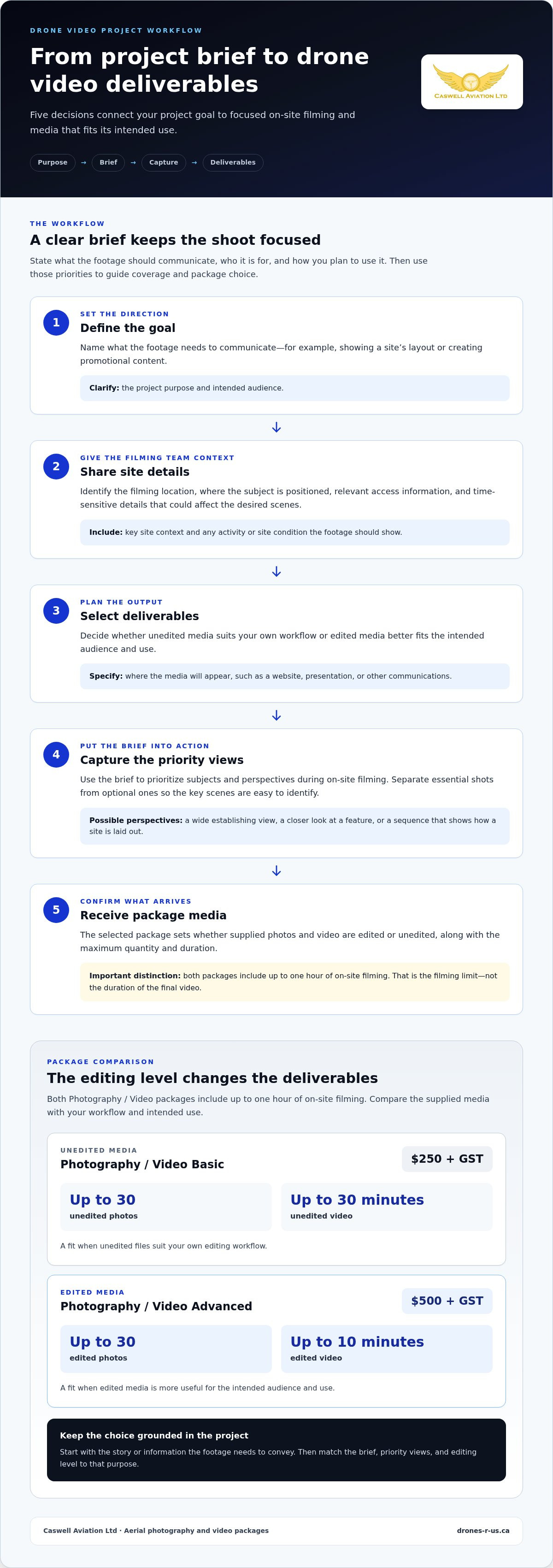
The project moves through five practical decisions:
- Define the goal. State what the footage needs to communicate, such as showing a site’s layout or creating promotional content.
- Share site context. Identify the filming location, the subject’s position, relevant access information, and any time-sensitive details that could affect the desired scenes.
- Select deliverables. Decide whether unedited media suits your workflow or edited media is a better fit for its intended audience and use.
- Capture footage. Use the brief to prioritize the subjects and perspectives during on-site filming.
- Receive package media. The selected package determines whether the supplied photos and video are edited or unedited, as well as the maximum quantity and duration.
Build a useful aerial video brief
Keep the brief direct. Name the subject and intended audience, then list essential scenes and perspectives, such as a wide establishing view or a closer look at a particular feature. Include time-sensitive context, like an activity or site condition the footage should show. Finally, explain where you plan to use the media, whether on a website, in a presentation, or in other communications. That helps guide choices about the footage and package.
Understand the capture and delivery scope
Both Photography / Video packages include up to one hour of on-site filming. That is the filming limit, not the duration of the final video. Capture and editing are separate parts of the deliverable: the Basic Package supplies unedited media, while the Advanced Package supplies edited media. Consider this distinction when deciding whether your team will handle further editing or needs edited outputs.
For an overview of Caswell Aviation’s professional drone photography and video, compare the package deliverables with your brief. Before filming, separate essential shots from optional ones and make the priority scenes easy to identify. A short, organized brief helps focus coverage within the on-site filming period. Include the audience and final use, too, so the footage is planned with its purpose in mind.
Basic or Advanced: compare drone videography deliverables
The main difference between Caswell Aviation Ltd’s Photography / Video packages is the editing level of the supplied media. Both include up to one hour of on-site filming, but the photo quantities and video durations differ. Choose based on whether your project can use unedited files or needs edited media. The filming limit is shared, so focus your comparison on the deliverables your project requires.
Use this comparison to match your brief to the package scope:
| Package | Price | Editing level | Photo quantity | Video duration | On-site filming |
|---|---|---|---|---|---|
| Photography / Video Basic Package | $250 + GST | Unedited | Up to 30 unedited photos | Up to 30 minutes of unedited video | Up to one hour |
| Photography / Video Advanced Package | $500 + GST | Edited | Up to 30 edited photos | Up to 10 minutes of edited video | Up to one hour |
The quantities and durations are package limits. Compare them with your planned use: consider who will work with the footage and whether you need edited or unedited media.
When the Basic Package fits the brief
The Basic Package supplies up to 30 unedited photos and up to 30 minutes of unedited video for $250 + GST. It can suit a brief where unedited media is appropriate and your workflow can work with the supplied files. Plan how you’ll use the footage before choosing this option, and don’t assume editing is included. The package includes up to one hour of on-site filming.
When the Advanced Package fits the brief
The Advanced Package supplies up to 30 edited photos and up to 10 minutes of edited video for $500 + GST, with up to one hour of on-site filming. Consider it when edited media better suits the project’s intended use. Its listed deliverables are edited photos and video, so don’t assume it also supplies unedited versions. Compare the video duration with the amount of content your project needs.
To choose, work backwards from the finished media you need. If your team intends to work with unedited files, consider the Basic Package limits and how those files fit your workflow. If the brief calls for edited outputs, compare the Advanced Package limits with the content planned for your campaign or documentation. In either case, align the desired scenes with the one-hour on-site filming limit, then prioritize the most important subjects and views. This gives the filming plan a clear scope and helps you select deliverables that serve the project.
Prepare for a drone videography shoot with a practical checklist
A focused brief turns a general request for aerial footage into a practical filming plan. For drone videography services Alberta clients can prepare by identifying the subject, desired views, site details, and intended use before the shoot. This gives the filming team clear priorities and keeps the requested coverage aligned with the project goal.
Use this checklist to organize the essentials:
- Objective: State what the footage should communicate and who it is for.
- Subject: Identify the property, asset, or area the footage should show.
- Must-have scenes: List the essential subjects and preferred perspectives, such as a wide view for context or a closer view of a particular feature.
- Site information: Share relevant access instructions and any known site restrictions.
- Intended use: Explain where the media will appear, such as a website, presentation, or marketing material.
Keep the shot list short and prioritize scenes. An open-ended request can make it harder to distinguish essential coverage from optional ideas. If a scene depends on a specific activity or site condition, include that context in the brief so it can inform the plan.
Organize the project information in advance
Describe the subject precisely enough to distinguish it from nearby buildings, equipment, or landscape features. Add practical access instructions and any known site restrictions that could affect where filming can take place. Then separate must-have scenes from secondary preferences. This gives the brief a useful order: what the footage must show, what would be helpful, and where the finished media will be used.
Set realistic expectations for aerial filming
A planned flight must account for safe operating conditions and applicable requirements. Conditions at the site can affect whether a flight proceeds as planned, so a requested scene should not be treated as guaranteed footage. Before filming, consult current Transport Canada guidance for applicable drone operating rules. Requirements can depend on the operation and its circumstances; use current official guidance rather than relying on assumptions or outdated advice.
For projects involving corporate communications, a corporate drone video planning guide can also help organize the message and intended audience. Keep the filming brief practical: clear priorities are more useful than a long list of possible shots, and the selected package should match the type of media you intend to use.
Once your objectives, site information, and priority scenes are in place, explore Caswell Aviation Ltd’s aerial photography and video services as a starting point for planning your project.
Choose Caswell Aviation for defined aerial video packages
Choosing an aerial video package is easier when you know what the finished media needs to do. Caswell Aviation’s Photography / Video packages give commercial and private clients a clear starting point: the Basic Package supplies unedited media, while the Advanced Package supplies edited media. Both include up to one hour of on-site filming, so the key decision is the type and scope of media your project requires.
For businesses comparing drone videography services Alberta projects can use, clear deliverables help connect the filming plan to practical needs. Consider who will use the files, where they’ll appear, and whether the available photo quantity and video duration suit that use. Caswell Aviation provides aerial photography and video services across Canada.
Select a package based on the finished media you need
Choose Basic when unedited photos and video fit your workflow. It includes up to 30 unedited photos and up to 30 minutes of unedited video. Choose Advanced when edited media is the better fit, with up to 30 edited photos and up to 10 minutes of edited video. Match those limits to your intended use, rather than assuming the packages supply the same video duration or editing level.
Before deciding, estimate how much video your project needs and whether your team will work with unedited files. A short piece for a specific communication may call for a different deliverable than footage your team plans to review and use in its own workflow. The package details provide a basis for that decision without requiring an open-ended list of production assumptions.
If your primary need is mapping rather than watchable video, consider Caswell Aviation’s separate Mapping Package, which includes post-imagery photo-stitching. It is distinct from the Photography / Video packages and should be considered according to the project’s required output.
Take the next step with a clear project brief
Prepare four details before making an enquiry: the subject to be filmed, the purpose of the footage, priority scenes or views, and your preferred deliverable. Add where you plan to use the media and whether unedited or edited files better suit that use. A concise brief makes it easier to relate the project goal to the package limits and on-site filming scope.
For broader context on aerial work across the country, explore aerial imagery services in Canada as you refine the intended use of your footage. When you’re ready, review Caswell Aviation’s aerial video services and prepare your project brief.
Turn your aerial video idea into a clear next step
Aerial footage is most useful when it helps someone understand something they couldn’t see as clearly from the ground. Before moving ahead, consider the viewer’s perspective: what should they notice, understand, or remember after seeing the video? That question can keep the creative direction practical and prevent attractive images from becoming disconnected from their purpose.
For teams considering drone videography services Alberta, align the people who will approve or use the finished media. Agreeing on the intended message early can make decisions about scenes and final use more straightforward. It gives the project a meaningful measure of success beyond simply capturing aerial views.
When you’re ready to plan your project, contact Caswell Aviation to discuss your aerial video requirements. Bring your central objective and the message you want viewers to take away.
Frequently Asked Questions
What does a drone videography service include?
Inclusions depend on the selected package. Caswell Aviation’s Photography / Video Basic Package provides up to 30 unedited photos and up to 30 minutes of unedited video for $250 + GST. The Photography / Video Advanced Package provides up to 30 edited photos and up to 10 minutes of edited video for $500 + GST. Both include up to one hour of on-site filming. Use these limits to plan what media you need and how you’ll use it after delivery.
What is the difference between edited and unedited drone video?
Unedited video is supplied without editing, while edited video is supplied in edited form. Caswell Aviation’s Basic Package includes up to 30 minutes of unedited video; its Advanced Package includes up to 10 minutes of edited video. Choose based on whether your workflow calls for unedited files or edited media. The packages describe different deliverables, so don’t assume either includes both versions.
Can drone videography be used for real estate marketing?
Yes. Aerial footage can help viewers understand a property’s setting, scale, and surrounding features. For a residential home, an aerial perspective may show how the home sits within its lot; acreage, farm, and vacation-property content can use aerial views to give context to the wider site. The brief should identify the property and intended audience. The views captured depend on the agreed project and operating conditions.
Can a drone film in controlled airspace?
It depends on the airspace, aircraft, operation, and applicable Transport Canada requirements. Controlled airspace isn’t blanket permission to fly, and requirements can vary with the circumstances of the planned operation. Consult current Transport Canada guidance for the rules that apply to your situation. Safe, compliant operation takes priority over any planned shot, so the filming plan must account for whether the proposed flight can be conducted safely and lawfully.
What information should I provide before booking drone video?
Share the project objective, subject, intended audience, essential views, site access details, and intended use of the media. For drone videography services Alberta clients can plan more clearly, these details help connect the purpose of the shoot with the package’s editing level and deliverables. For example, note whether the footage is for a property listing or an internal presentation. A concise brief helps set priorities without assuming a particular flight plan.
Can drone video be captured in poor weather?
Weather affects whether aerial filming is safe and suitable, and conditions can change whether a planned shoot proceeds. There isn’t a single weather description that determines every operation, so don’t treat a shoot date or desired scene as guaranteed. Keep the project’s essential subjects and priority views clear. That gives planning a practical focus if conditions affect what can safely be filmed, without assuming a specific threshold or rescheduled date.
How long is the on-site filming included in Caswell Aviation’s video packages?
Both the Basic and Advanced Photography / Video Packages include up to one hour of on-site filming. This is the shared filming limit for those packages, not a statement that the finished video will be one hour long. The packages differ in editing level and media limits, while the stated on-site filming duration remains the same. Plan priority subjects and views within that filming time.
Leave a comment