
Drone Pilot Training in Calgary: A Professional Guide to Transport Canada Certification
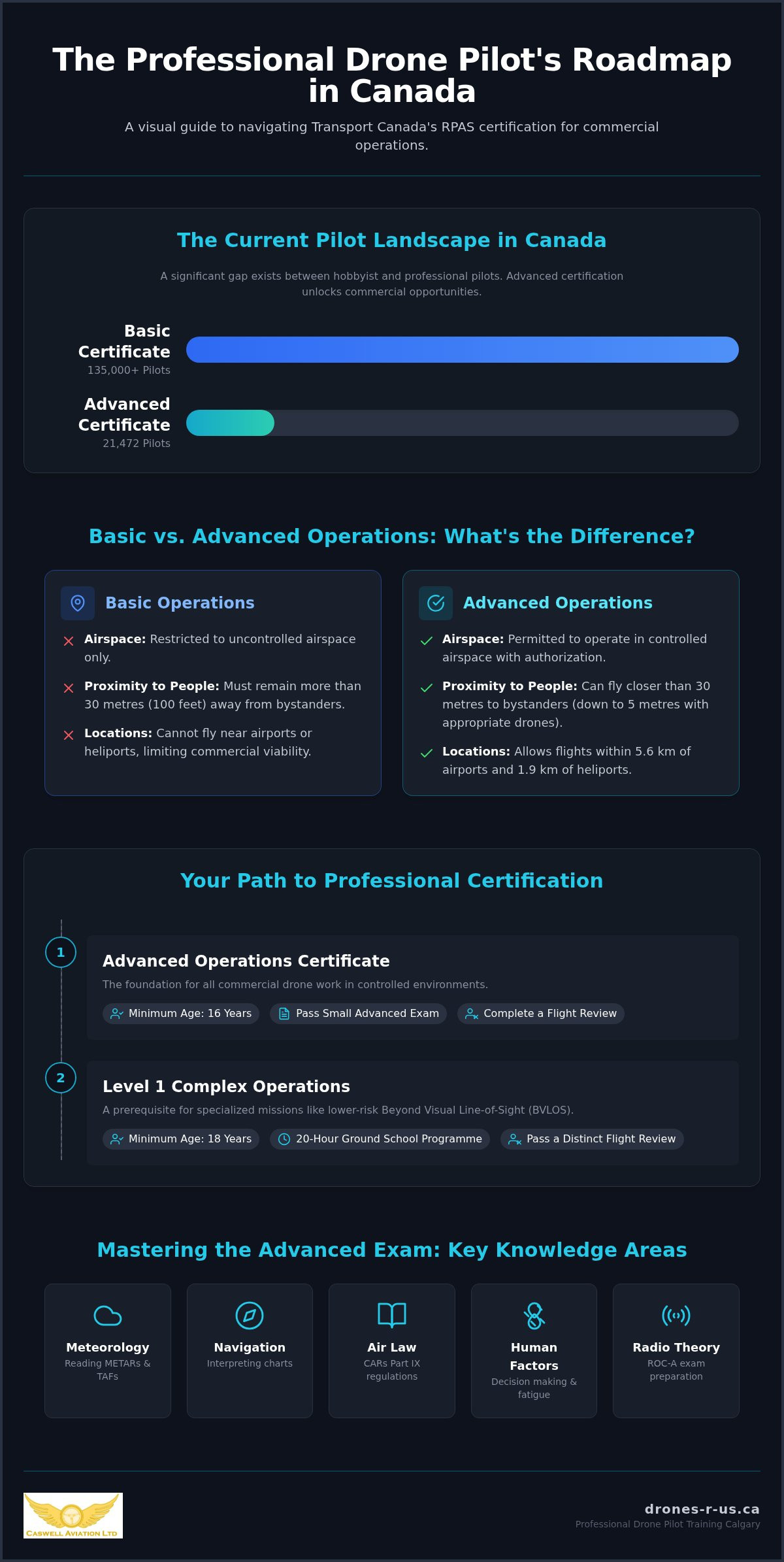
As of mid-2026, over 135,000 pilots in Canada hold a Basic certificate, yet only 21,472 have successfully obtained their Advanced credentials. It’s understandable why that gap exists. The transition from hobbyist flying to professional operations often feels like a maze of regulatory hurdles. You likely feel confused by the shifting requirements between Advanced and Level 1 Complex certificates, or perhaps you're anxious about the technical demands of an upcoming flight review.
This guide simplifies that path, providing a professional roadmap to master Transport Canada's standards and secure your commercial standing. We'll examine the specific requirements for drone pilot training Calgary professionals need, from mandatory 20-hour ground school sessions to the ergonomic gear that ensures safety and comfort during long flight days. By adopting an aviation-centred mindset, you can move past the technical noise and focus on building a compliant, high-performance career in the skies.
Key Takeaways
- Understand the Remotely Piloted Aircraft Systems (RPAS) framework to navigate the legal distinctions between Basic and Advanced certificates.
- Master the specific 20-hour ground school requirements and examination criteria for Level 1 Complex operations.
- Prepare for a successful Transport Canada flight review while securing your ROC-A for professional airspace communication.
- Select the ideal learning format by comparing flexible online modules with comprehensive drone pilot training Calgary in-person sessions.
- Enhance operational safety and precision by integrating ergonomic Fitek Gear harnesses into your professional flight kit.
Navigating Transport Canada Drone Regulations and Licensing
The Canadian aviation landscape changed significantly with the implementation of Part IX of the Canadian Aviation Regulations. This framework governs Remotely Piloted Aircraft Systems (RPAS), ensuring that all pilots operate within a structured, safe environment. Whether you're flying for recreation or commercial gain, understanding the Transport Canada Drone Regulations is the first step toward professional compliance. For those pursuing commercial work, certification isn't just a recommendation; it's a legal requirement to mitigate risks and ensure public safety.
According to Part IX of the Canadian Aviation Regulations, a Pilot Certificate - Advanced Operations authorizes a pilot to operate a drone in controlled airspace and within 30 metres of bystanders, provided the aircraft meets specific safety assurance standards. This is why choosing a comprehensive drone pilot training Calgary path is vital for those who want to move beyond recreational limits.
The Importance of a Professional Aviation Mindset
Transitioning from a hobbyist to a professional pilot requires a shift in how you view every flight. You aren't just "flying a drone" anymore; you're managing an aircraft within a complex national airspace. Professional training introduces you to Safety Management Systems (SMS), which are structured processes for identifying hazards and managing risks. Implementing these systems in your daily operations reduces liability for small businesses. It ensures that every mission is repeatable, safe, and legally defensible.
Basic vs. Advanced: Which Certificate Do You Need?
The distinction between Basic and Advanced operations depends on where you fly and how close you get to people. Basic operations are restricted to uncontrolled airspace and must remain more than 30 metres away from bystanders. If your mission requires you to fly within controlled airspace or closer to people, you must hold an Advanced certificate. This includes flights within 5.6 kilometres of airports or 1.9 kilometres of heliports.
Many pilots find that drone pilot training Calgary programs are the most efficient way to bridge this gap. Even if your current projects seem simple, holding an Advanced certificate provides operational flexibility. You won't have to turn down a lucrative contract just because the site is near a heliport or a busy park. This certification signals to clients that you possess the discipline and technical knowledge required for high-stakes aerial work.
Advanced and Level 1 Complex RPAS Certification Requirements
Professional certification requires more than just basic stick skills; it demands a deep understanding of the Canadian aviation environment. To move from Basic to Advanced operations, you must demonstrate proficiency in meteorology, navigation, and air law. These subjects aren't just academic hurdles. They're the foundation of safe flight in congested or controlled areas. When you seek out drone pilot training Calgary instructors, you're looking for mentors who can translate these complex topics into practical operational knowledge. This training is essential for pilots who must be at least 16 years old for Advanced operations or 18 for Level 1 Complex missions.
The Advanced Written Exam: Preparation Strategies
The Small Advanced Exam is a rigorous assessment administered through the Transport Canada online portal. Many candidates struggle with the technical nuances of human factors, radio theory, and the interpretation of aeronautical charts. Consulting the official Transport Canada Drone Pilot Licensing portal provides the regulatory baseline, but you'll need to supplement this with focused study. Pay close attention to meteorology, specifically how to read METARs and TAFs, as weather theory is a frequent stumbling block. Use your study time to build a library of resources you can reference quickly, and don't let the technical jargon of air law discourage your progress.
Level 1 Complex Operations: Beyond the Advanced Certificate
Level 1 Complex operations represent a significant step up in responsibility and capability. This certification is a prerequisite for lower-risk Beyond Visual Line-of-Sight (BVLOS) missions conducted under an RPAS Operator Certificate (RPOC). Unlike the Advanced certificate, Level 1 Complex status requires a mandatory 20-hour ground school programme. This curriculum covers advanced flight planning, emergency procedures, and the specific technical requirements for hardware used in BVLOS environments.
Preparing for the Level 1 Complex flight review is a distinct challenge. It tests your ability to manage high-risk scenarios and maintain situational awareness without a direct line of sight to the aircraft. It's a precise process that demands discipline and a high degree of technical competence. If you're ready to advance your career, enrolling in a structured online drone course can help you meet the 20-hour requirement while balancing your existing professional commitments. Transitioning to this level moves you into the top tier of Canadian pilots, and finding the right drone pilot training Calgary provider is essential for mastering these high-stakes skills.
Choosing Between Online Courses and In-Person Drone Training
Selecting a training format is a strategic decision that affects your certification timeline and operational readiness. Busy professionals often require a balance between theoretical depth and schedule flexibility. High-quality drone pilot training Calgary options typically offer both digital and physical pathways to accommodate different learning styles. The choice depends on whether you prefer a self-paced environment or the direct mentorship of a veteran practitioner.
Maximizing Efficiency with Online Ground School
Online platforms provide a structured environment to tackle the comprehensive RPAS syllabus at your own pace. These courses utilize interactive tools and practice exams that mirror the Transport Canada online portal. This format is often the most cost-effective path for mastering theoretical subjects like air law and meteorology. By breaking the 20-hour ground school requirement for Level 1 Complex operations into manageable modules, you can maintain your professional workflow while advancing your credentials. Efficiency is the primary driver here, allowing you to study during off-hours without sacrificing your daily productivity.
The Value of Instructor-Led In-Person Sessions
Certain skills require the physical presence of a mentor to master. In-person training allows for real-world scenarios and emergency procedure drills under expert supervision. These sessions provide immediate instructor feedback, which is vital for correcting technical habits before they become safety risks. Beyond the technical training, these classes offer a chance to network with industry veterans and other professional pilots. This community engagement is supported by the Aerial Evolution Association of Canada, which promotes industry standards and best practices nationwide. Direct interaction helps demystify the in-person flight review requirements, giving you the confidence to perform under pressure.
Evaluating a flight school involves looking beyond the initial cost. You should verify their regulatory compliance and the experience level of their flight reviewers. A blended approach often yields the highest success rates. This involves combining the theoretical efficiency of online drone courses with the practical rigour of in-person flight practice. This method ensures you aren't just prepared to pass an exam but are truly ready to manage a flight deck in complex environments. Choosing the right drone pilot training Calgary centre means finding a partner that understands the demands of professional aviation and provides a modular path to success.
Mastering the Advanced Flight Review and ROC-A Examination
The practical flight review serves as the final gateway to your Advanced Pilot Certificate. It is a face-to-face assessment where a Transport Canada-approved reviewer evaluates your ability to manage an aircraft safely under real-world conditions. This process is less about flashy manoeuvres and more about demonstrating a disciplined, aviation-centred mindset. Aspiring professionals often find that the best drone pilot training Calgary programmes focus heavily on the administrative and safety preparations that occur before the motors even start.
Flight Review Preparation Checklist
Success during the review depends on your ability to present a complete operational package. Your reviewer will act as a bystander or a crew member, and you must brief them accordingly. Ensure you have the following documentation ready and organized:
- Site Survey: A detailed assessment of the flight area, including nearby obstacles, power lines, and emergency landing zones.
- Emergency Procedures: Clear, written protocols for scenarios such as a lost link, fly-away, or fire.
- Technical Manoeuvres: The ability to fly precise patterns, such as squares and circles, while maintaining a consistent altitude and heading.
- Pre-flight Inspection: A methodical check of the aircraft's physical condition and battery health.
Obtaining Your ROC-A for Aeronautical Radio Operations
The Restricted Operator Certificate-Aeronautical (ROC-A) is a lifelong credential issued by Innovation, Science and Economic Development (ISED) Canada that is mandatory for pilots using aeronautical radios to coordinate with air traffic control and manned aircraft. While it is a separate certification from your RPAS licence, it is essential for anyone operating in controlled airspace. You cannot legally communicate with a control tower without it.
The examination process for the ROC-A involves both a written test and an oral component to verify your understanding of radio telephony. You must master the phonetic alphabet and standard aviation phrases to ensure clear, concise communication. This reduces the risk of mid-air collisions and ensures that you are seen as a professional peer by manned aircraft pilots. If you're ready to finalize your credentials, you can book an Advanced flight review to demonstrate your competency and complete your certification path. Mastering these communication protocols is a core part of the drone pilot training Calgary professionals rely on to maintain safety in busy corridors.
Professional Gear and Training Solutions for Canadian Pilots
Professional aviation involves more than just passing a test. It requires maintaining your skills and your physical well-being during demanding operations. Many pilots focus exclusively on the technical aspects of drone pilot training Calgary but overlook the physical toll of a ten-hour flight day. Longevity in this industry depends on how you manage your workflow and the equipment you use to interface with your aircraft. Establishing a sustainable routine early in your career prevents burnout and reduces the risk of operational errors caused by exhaustion.
Ergonomics and Safety: The Fitek Gear Advantage
Long-duration flight operations, such as infrastructure inspections or aerial mapping, place significant strain on a pilot's neck, shoulders, and back. Smart controllers are increasingly capable but also heavier than their predecessors. Professional pilots prioritize ergonomic solutions like Fitek Gear harnesses to distribute this weight evenly across the torso. This choice is a safety consideration rather than a mere luxury. By reducing physical fatigue, you maintain higher levels of concentration and control during the final hours of a mission. A stable controller allows for more precise thumbstick movements, which is critical when operating in the close-quarters environments typical of Advanced or Level 1 Complex missions.
Starting Your Professional Journey with Caswell Aviation Ltd
Building a career in the Canadian RPAS sector requires a partner that offers more than just a certificate. You need a veteran mentor who understands the transition from traditional industries into modern flight technology. Caswell Aviation Ltd provides a holistic path to professional status, combining comprehensive online courses with hands-on, in-person training. Whether you need an Advanced flight review or are pursuing the mandatory 20-hour ground school for Level 1 Complex certification, having access to seasoned expertise ensures you're prepared for the realities of the field.
Remember that aviation is a culture of continuous learning. Transport Canada requires pilots to maintain their recency, ensuring that their knowledge of current regulations and safety protocols remains sharp. Engaging with a local drone pilot training Calgary provider allows you to stay informed about regulatory shifts and technical advancements. Choosing a training partner like Caswell Aviation Ltd ensures you have the tools and the knowledge to operate safely for years to come. Your journey doesn't end with the issuance of a licence; it begins with the commitment to professional standards and operational excellence.
Securing Your Future in Canadian Aviation
Achieving professional certification is a significant milestone that transforms your relationship with the national airspace. By mastering the distinction between Advanced and Level 1 Complex operations, you ensure your business remains compliant and capable of handling high-stakes missions. Technical proficiency must be paired with operational longevity. Integrating ergonomic solutions like Fitek Gear harnesses into your workflow reduces the physical strain of long flight days, allowing you to maintain the precision required for complex aerial work.
Selecting a training partner with deep industry expertise is essential for navigating these requirements successfully. As experts in Transport Canada Advanced and Level 1 Complex certifications, Caswell Aviation Ltd provides the veteran-led mentorship you need to excel. Whether you require a professional flight review or comprehensive drone pilot training Calgary programmes, the right preparation builds a foundation for a safe and prosperous career.
Start your professional drone training with Caswell Aviation Ltd today and take the first step toward mastering the skies. The path to certification is structured and manageable when you have the right guidance.
Frequently Asked Questions
How do I become a licensed drone pilot in Canada in 2026?
To become a licensed drone pilot in 2026, you must register your drone with Transport Canada for a $10 fee and pass the appropriate online exam. For Basic operations, passing the Small Basic Exam is sufficient. However, professional pilots usually require the Advanced certificate, which involves passing the Small Advanced Exam and completing an in-person flight review. Pilots must be at least 14 for Basic and 16 for Advanced certification.
What is the difference between a Basic and Advanced drone certificate?
The primary difference lies in operational flexibility regarding airspace and proximity to people. A Basic certificate restricts you to uncontrolled airspace, more than 30 metres from bystanders, and away from airports. An Advanced certificate allows you to operate in controlled airspace with NAV CANADA authorization and within 30 metres of bystanders. Most commercial missions require Advanced status to ensure you can operate in urban environments or near aerodromes without legal restrictions.
Do I need a flight review for a Level 1 Complex drone certification?
Yes, a specific flight review is required for Level 1 Complex certification in addition to the review already completed for your Advanced certificate. This level is mandatory for lower-risk Beyond Visual Line-of-Sight (BVLOS) missions. You must also hold an Advanced certificate, be at least 18 years old, and complete a mandatory 20-hour ground school programme. These requirements ensure pilots can manage the increased risks associated with complex commercial operations.
How long does it take to complete the Advanced drone pilot training?
The timeline for completing drone pilot training Calgary professionals choose varies based on the learning format. Online courses are self-paced, allowing you to master the theoretical syllabus over several weeks. In-person instructor-led courses typically span two to three days and often include the required flight review. Once you pass the Small Advanced Exam and the practical review, Transport Canada issues your digital certificate almost immediately through their online portal.
What is a ROC-A and why do drone pilots need it?
A Restricted Operator Certificate-Aeronautical (ROC-A) is a lifelong credential required for pilots who need to communicate with air traffic control or manned aircraft using aeronautical radios. Drone pilots need this certificate to operate legally in controlled airspace where radio coordination is mandatory. It ensures that all participants in the aviation environment use standardized terminology and protocols, which significantly reduces the risk of mid-air collisions and communication errors.
Can I take my drone training and written exam online?
You can complete both your ground school training and the written Transport Canada exams online. Transport Canada hosts the Small Basic and Small Advanced exams on their web portal, providing immediate results upon completion. Many pilots prefer online drone pilot training Calgary courses because they offer the flexibility to study complex topics like meteorology and air law around a full-time work schedule. However, flight reviews must always be conducted in person.
What are the recency requirements for drone pilots in Canada?
Drone pilot certificates in Canada don't expire, but you must meet recency requirements every 24 months to remain flight-legal. You can satisfy this by completing a flight review, passing a Transport Canada exam, or attending a safety seminar. Keeping a record of these activities is essential, as you must be able to produce proof of recency if requested by a peace officer or Transport Canada inspector during operations.
What gear is essential for professional drone pilots in the field?
Essential gear for professional operations includes a registered aircraft, a smart controller, and ergonomic support such as a Fitek Gear harness. These harnesses are vital for reducing fatigue during multi-hour missions. Additionally, starting in late 2026, many drones will require mandatory Remote ID modules for compliance. Pilots should also carry a high-visibility vest, a landing pad, and a tablet or smartphone with updated aeronautical charts and weather applications for real-time situational awareness.
Leave a comment