

Best Drone Controller Harness: 2026 Review and Comparison for Canadian Pilots
Research indicates that human error is a factor in up to 80% of aviation accidents, with fatigue often serving as the silent catalyst. If you have spent a full day operating an enterprise drone, you understand that supporting a 2kg controller with a basic neck strap is a recipe for chronic pain and diminished flight precision. It's difficult to maintain the steady hand required for complex missions when your neck and shoulders are under constant strain. You likely already realize that standard accessories aren't built for the rigours of professional aviation.
Finding the best drone controller harness is not simply a matter of comfort; it's a critical safety requirement for maintaining the standards of Advanced operations. This guide will show you how to identify a system that shifts the centre of gravity from your neck to your core, making even the heaviest hardware feel nearly weightless. We will compare the leading ergonomic solutions for 2026, focusing on bracket stability and material quality to ensure your long-term physical health and improve your performance during long-range missions.
Key Takeaways
- Understand how shifting the centre of gravity from the neck to the lumbar region prevents long-term cervical spine strain during extended operations.
- Learn to select the best drone controller harness based on your specific mission profile, from high-mobility patrols to intensive agricultural spraying.
- Discover why a four-point mounting bracket provides the zero-play stability necessary for precise stick control with heavy enterprise hardware.
- Compare the functional differences between sling-style supports and full-chest harnesses to determine which architecture suits your fleet requirements.
- Evaluate the modular engineering of Fitek Gear to understand why it is the preferred choice for pilots maintaining Transport Canada Advanced standards.
The True Cost of Pilot Fatigue in Professional RPAS Operations
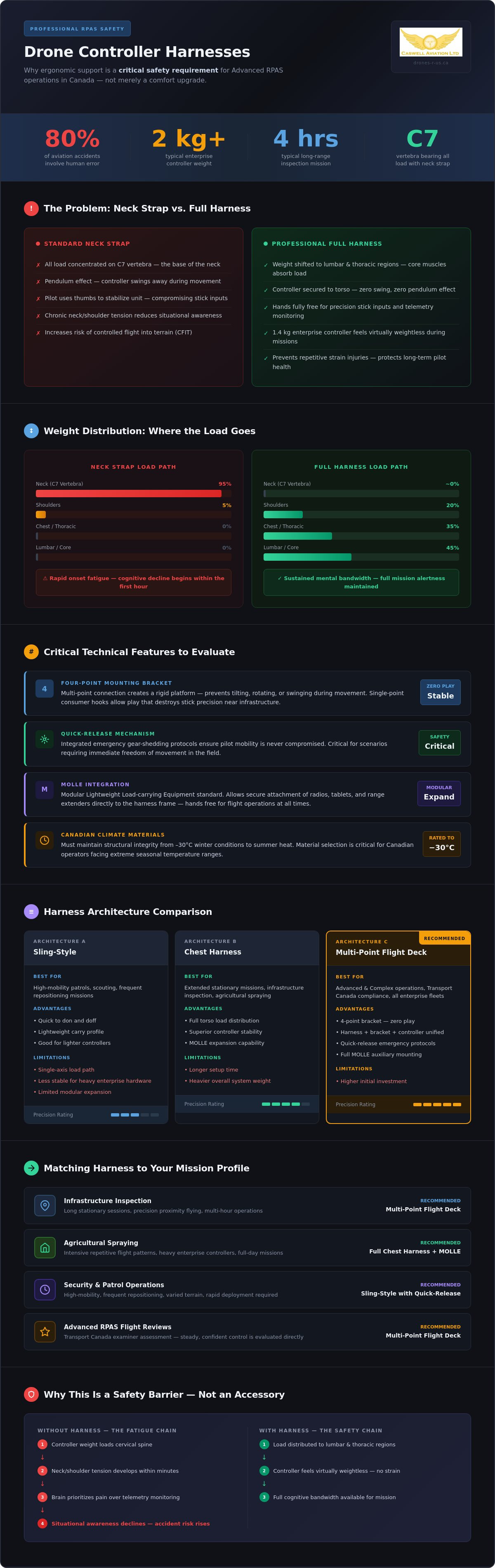
A professional Unmanned Aerial Vehicle (UAV) operator understands that equipment weight is a cumulative burden. During a four-hour infrastructure inspection or an agricultural spraying mission, a standard neck strap concentrates several kilograms of force directly onto the cervical spine. This creates a physics problem where the neck acts as a fulcrum for a heavy, swinging load. Identifying the best drone controller harness is not about personal comfort; it's about establishing a weight-distribution system that protects the pilot's physical health and operational longevity.
Transport Canada emphasizes human factors in its knowledge requirements because pilot fatigue is a primary catalyst for accidents. When a pilot experiences chronic neck or shoulder tension, their situational awareness inevitably declines. The brain begins to prioritize physical discomfort over the monitoring of telemetry, airspace, and obstacle avoidance. For those conducting Advanced or Complex operations, a professional harness serves as a critical safety barrier that maintains the pilot's mental bandwidth for the duration of the mission.
Neck Straps vs. Full Harnesses: A Safety Analysis
Simple neck straps allow for the pendulum effect, where the controller swings away from the body during movement. This instability forces the pilot to use their thumbs to stabilize the unit while simultaneously attempting precise stick inputs. These micro-corrections compromise flight precision and increase the risk of a controlled flight into terrain. The best drone controller harness eliminates this movement by securing the hardware to the torso. This configuration prevents repetitive strain injuries and ensures that a 1.4kg enterprise controller feels virtually weightless by shifting the load to the core muscles.
Quantifying Pilot Endurance and Mission Success
Physical stability is the foundation of mission success. When the weight of a smart controller is distributed across the lumbar and thoracic regions, a pilot can realize complex flight paths with significantly higher accuracy. This is especially relevant during flight reviews where examiners look for steady, confident control. The flight deck is the specialized integration of the harness, mounting bracket, and controller that creates a singular, stable interface for the pilot. By maintaining a stable flight deck, you ensure that your focus remains on the mission objectives rather than your own fatigue levels.
Technical Features of the Best Drone Controller Harnesses
Engineering a stable flight deck requires a deep understanding of human anatomy and load distribution. Academic research, such as the Assessment of UAS Pilot Discomfort, demonstrates how improper equipment suspension leads to rapid onset fatigue and cognitive decline. The best drone controller harness addresses this by shifting the weight of the hardware from the C7 vertebra at the base of the neck to the larger muscle groups of the lumbar and thoracic regions. This relocation of the centre of gravity allows pilots to support enterprise-grade controllers for several hours without the physical strain associated with traditional neck straps.
The mounting bracket is the most critical interface between the pilot and the machine. While many consumer-grade systems rely on a single-point hook, professional configurations utilize a four-point connection. This multi-point system creates a rigid platform that prevents the controller from tilting, rotating, or swinging during movement. By eliminating this instability, the harness provides a steady base for high-precision stick inputs. This is particularly important when performing delicate manoeuvres in proximity to infrastructure where every millimetre of stick movement counts.
Operational safety is further enhanced through integrated quick-release mechanisms. These protocols allow for immediate gear shedding in emergency situations, ensuring the pilot's mobility isn't compromised. For pilots who require additional field tools, MOLLE (Modular Lightweight Load-carrying Equipment) integration provides a standardized system for attaching auxiliary equipment. This allows for the secure mounting of handheld radios, tablets, or range extenders directly to the harness frame, keeping the pilot's hands free for flight operations.
Material Science: Durability in the Canadian Climate
Canadian pilots operate in environmental extremes that demand specialized materials. A harness must maintain its structural integrity from -30°C during winter inspections to +30°C in open summer fields. Breathable mesh is essential for moisture management, while closed-cell foam padding provides comfort without absorbing rain or sweat. In sub-zero conditions, standard plastic buckles often become brittle and snap. High-quality systems use cold-weather rated polymers and UV-resistant nylon to ensure the gear remains reliable across all seasons.
Adjustment and Customization for Different Body Types
Proper fit is a prerequisite for safety and performance. Multi-point adjustment systems prevent harness creep, ensuring the controller stays at the optimal height even while the pilot is traversing uneven terrain. These adjustments also allow the pilot to set the specific viewing angle of the screen to minimize glare and reduce neck flexion. Many professional operators find that the best drone controller harness is one that fits seamlessly over high-visibility safety vests and winter parkas. If you are refining your professional toolkit, selecting ergonomically optimized gear is a vital step toward maintaining long-term operational health.
Comparing Harness Architectures: Sling vs. Chest vs. Multi-Point
Selecting the best drone controller harness requires matching the architecture to your specific operational environment. While a basic strap might suffice for a fifteen-minute flight, professional missions lasting several hours demand a more sophisticated support structure. The market is generally divided into three categories: sling-style, full-chest, and multi-point bracket systems. Each offers a different balance between mobility and weight-bearing capacity.
The Sling-Style Advantage: When Mobility is Priority
Sling-style supports are designed for rapid deployment and high mobility. These systems use a single diagonal strap that crosses the chest, which is ideal for real estate photography or short-duration hobby flights where the pilot is frequently moving between locations. The primary drawback is asymmetrical weight distribution. Over time, this creates uneven tension in the trapezius and shoulder muscles. These systems also struggle with lateral stability; if you lean or turn quickly, the controller tends to swing or tilt. For pilots using heavy tablets or secondary monitors, the lack of a central mounting point can lead to significant fatigue.
The Full Harness: The Heavy-Duty Flight Deck
For industrial and agricultural missions, the full-chest harness is the professional standard. This architecture utilizes a symmetrical H-frame or X-frame design to distribute the load evenly across both shoulders and the upper back. By centering the weight, it eliminates the need for constant posture correction. This is a critical factor in mitigating the issues identified in the FAA study on UAS Operator Fatigue, which notes that physical strain directly impacts cognitive performance and situational awareness.
Full harnesses are particularly effective when paired with heavy hardware like the DJI RC Plus or the Autel Smart Controller. These enterprise units often weigh upwards of 1.2kg, making them difficult to manage without a stable platform. The symmetrical loading ensures that the pilot remains balanced, which is essential for Beyond Visual Line of Sight (BVLOS) operations and complex industrial inspections where the pilot must remain stationary and focused for extended periods.
Evaluating Lateral Stability and Multi-Point Brackets
The most advanced systems integrate multi-point brackets that secure the controller at four distinct contact points. This maximizes lateral stability, ensuring the screen remains at a fixed angle regardless of pilot movement. Preventing the controller from tilting during a mission allows for consistent viewing angles and more precise stick control. When evaluating your fleet needs, the best drone controller harness will be the one that provides a zero-play interface between your body and your control hardware. This stability is the difference between struggling with your equipment and executing a flawless flight path.
This commitment to a zero-play interface and ergonomic stability is also a hallmark of professional racing simulations, where Apevie Simulators provides high-performance hardware designed for maximum control.
Selecting the Best Harness for Your Mission Profile
A professional pilot's equipment needs change based on the specific requirements of the mission. While a simple strap might suffice for a five-minute aerial photo, industrial operations demand a more integrated solution. Choosing the best drone controller harness involves evaluating how the gear interacts with your body during specific tasks, such as navigating steep terrain or managing long-duration flight blocks. The goal is to create a seamless interface between the pilot and the technology.
Agricultural and Industrial Field Work
Agricultural drone services often involve ten-hour days in the field, where pilots manage high-capacity spray drones. These systems typically utilize heavy smart controllers, like the DJI RC Plus, which weighs approximately 1.4kg. Supporting this weight manually while performing frequent battery swaps and chemical refills leads to rapid exhaustion. A full-chest harness allows the pilot to maintain a stable flight deck while keeping their hands free to assist with ground operations. If you are looking to scale your fleet, investing in Professional Drone Training for Industrial Operations ensures your team understands the ergonomic standards required for these high-stakes environments.
Mapping and Surveying: Precision is Paramount
Precision mapping requires consistent gimbal control and steady stick inputs over long transects. Muscle fatigue in the forearms and shoulders often results in micro-tremors, which can degrade the quality of the data collection. A stable harness architecture eliminates these tremors by providing a rigid base for the controller. This stability allows the pilot to better realize fine details in live mapping feeds and maintain focus on telemetry without the distraction of physical strain. For pilots in Search and Rescue (SAR), the integration of MOLLE attachments on the harness allows for the secure mounting of handheld radios and secondary communications gear, ensuring all critical tools are within reach.
Whether you are inspecting vertical infrastructure or capturing cinematic media, the integration of your harness with other field gear is essential. Many professional pilots find that the best drone controller harness is a modular system that allows them to balance the rig with high-visibility vests or specialized camera bags. To ensure you have the right equipment for your next mission, you should explore our specialized drone accessories designed for Canadian flight conditions.
Why Fitek Gear is the Professional Standard for 2026
Professional aviation demands equipment that eliminates operational variables. While many entry-level accessories focus on basic aesthetics, Fitek Gear is engineered as a precision tool for the flight deck. The core of this system is the proprietary bracket technology, which provides zero-play stability for enterprise smart controllers. Unlike generic straps that rely on a single tension point, Fitek utilizes a rigid mounting interface that locks the controller into a fixed position. This engineering ensures that your screen remains perfectly angled and your sticks remain accessible without the hardware shifting during high-stakes manoeuvres.
The modularity of the Fitek system allows it to grow alongside your fleet. As you transition between different platforms, the harness remains the constant foundation, requiring only a bracket swap to accommodate new hardware. This versatility is why Caswell Aviation Ltd instructors rely on this specific gear during Advanced Flight Reviews and industrial missions. Moving from a hobbyist neck strap to a professional aviation harness is a significant step in a pilot's career. It represents a shift from simply flying a drone to managing a complex aerial system with the discipline and rigour of a Master Practitioner.
Integrating Fitek with Your Professional Workflow
Setting up your harness correctly is the first step toward a successful mission. Begin by adjusting the primary torso straps to ensure the weight sits squarely on your lumbar region rather than your shoulders. Once the frame is secure, click the controller bracket into the four-point attachment system. You can then organize your auxiliary tools, such as handheld radios or range extenders, using the integrated MOLLE attachment points. This methodical setup ensures that your hands remain free for pre-flight checklists and battery management. To secure the industry standard for your fleet, you can Shop Fitek Gear Drone Harnesses for Smart Controllers directly through our specialized retail centre.
The Long-Term ROI of Ergonomic Gear
Investing in high-quality ergonomic gear provides a measurable return on investment through improved pilot health and mission endurance. Reducing physical fatigue allows you to maintain peak cognitive performance during the final hours of a long deployment, which is often when critical errors occur. Beyond the physiological benefits, professional gear projects a sense of authority and competence to your clients and stakeholders. When you arrive on-site with a stable, integrated flight deck, you demonstrate a commitment to safety and operational excellence. Ultimately, the best drone controller harness is an investment in the longevity of your aviation career, ensuring you can perform at the highest level for years to come.
Securing Your Professional Aviation Future
Maintaining the high standards of Advanced RPAS operations requires more than just technical skill; it requires the right physical foundation. By prioritizing a weight-distribution system that protects your cervical spine and stabilizes your flight deck, you eliminate the fatigue that leads to critical errors. Selecting the best drone controller harness is a definitive step toward professionalizing your workflow and ensuring your long-term physical health in the field. This transition from basic accessories to aviation-grade equipment reflects a commitment to safety and precision.
Caswell Aviation Ltd provides equipment that is expertly curated by Transport Canada Flight Reviewers. These systems are designed specifically for heavy Smart Controllers to ensure zero-play stability during your most demanding missions. We offer nationwide shipping across Canada to support pilots from coast to coast, ensuring you have access to the same gear used by industry experts.
Upgrade your flight deck with a professional Fitek Gear harness from Caswell Aviation Ltd.
Invest in your precision and your health today to ensure many years of safe, successful flight operations. We look forward to seeing you in the field with a more stable and efficient setup.
Frequently Asked Questions
What is the best drone controller harness for the DJI RC Plus?
The Fitek Gear system with a dedicated smart controller bracket is the optimal choice for the DJI RC Plus. Because this controller weighs approximately 1.4kg, it requires the four-point stability and lumbar weight distribution that a full-chest harness provides. This configuration prevents the hardware from tilting or swinging during flight operations, ensuring the best drone controller harness performance for heavy enterprise equipment.
Can I use a drone harness with a high-visibility safety vest?
You can use a drone harness effectively with a high-visibility safety vest. Most professional architectures feature adjustable straps that allow the frame to sit securely over standard field PPE without obscuring reflective strips. It is important to adjust the harness tension after putting on your vest to ensure the flight deck remains stable on your torso and doesn't shift during movement.
Do drone harnesses fit all body types and sizes?
Professional harnesses are designed with multi-point adjustment systems to accommodate a wide range of body types and sizes. These systems typically allow for customization at the shoulders, chest, and waist to ensure the centre of gravity remains correctly positioned. A proper fit is essential to ensure the best drone controller harness functions as intended by shifting weight to the core muscles rather than the neck.
How do I attach a smart controller to a multi-point harness?
Attaching a smart controller involves securing a specialized mounting bracket to the back of the device using the manufacturer-provided mounting holes. Once the bracket is fixed, it clicks into the four receiving points on the harness frame. This creates a rigid, zero-play connection that is much more secure than a single-point lanyard hook, providing a stable platform for high-precision stick inputs.
Is a drone harness required by Transport Canada for advanced operations?
Transport Canada does not explicitly mandate the use of a harness for Advanced operations in Part IX of the Canadian Aviation Regulations. However, examiners often look for equipment that demonstrates a pilot's ability to mitigate fatigue and maintain precise control during flight reviews. Using a professional harness is considered an industry best practice for meeting the safety and human factors requirements of complex missions.
What are the benefits of MOLLE attachments on a drone harness?
MOLLE attachments allow for the integration of auxiliary tools directly onto your harness frame, keeping your hands free for flight controls. This system is particularly useful for mounting handheld radios, tablets, or range extenders during industrial inspections or search and rescue missions. By organizing your gear this way, you maintain a clean workspace and ensure that critical tools are always within reach.
How do I maintain and clean my drone controller harness after field use?
You should maintain your harness by wiping down the straps and padding with a damp cloth and mild soap after field use. Avoid using harsh chemicals or machine washing, as these can degrade the structural integrity of the nylon and the UV-resistant coatings. Always air dry the gear completely before storing it to prevent the growth of mould or mildew in the breathable mesh layers.
Can a drone harness help with screen glare during outdoor flights?
A drone harness helps manage screen glare by allowing you to set and lock a specific viewing angle for your controller. Unlike a neck strap that allows the screen to move freely, a rigid bracket system keeps the display at the optimal tilt relative to your eyes. This stability makes it easier to use sunshades effectively and improves your ability to monitor telemetry in bright, open-field conditions.
Leave a comment